



Introduction
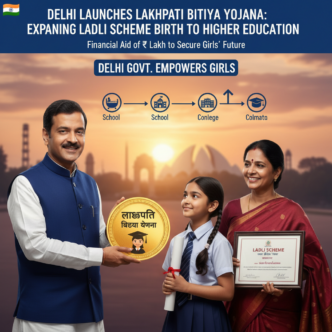
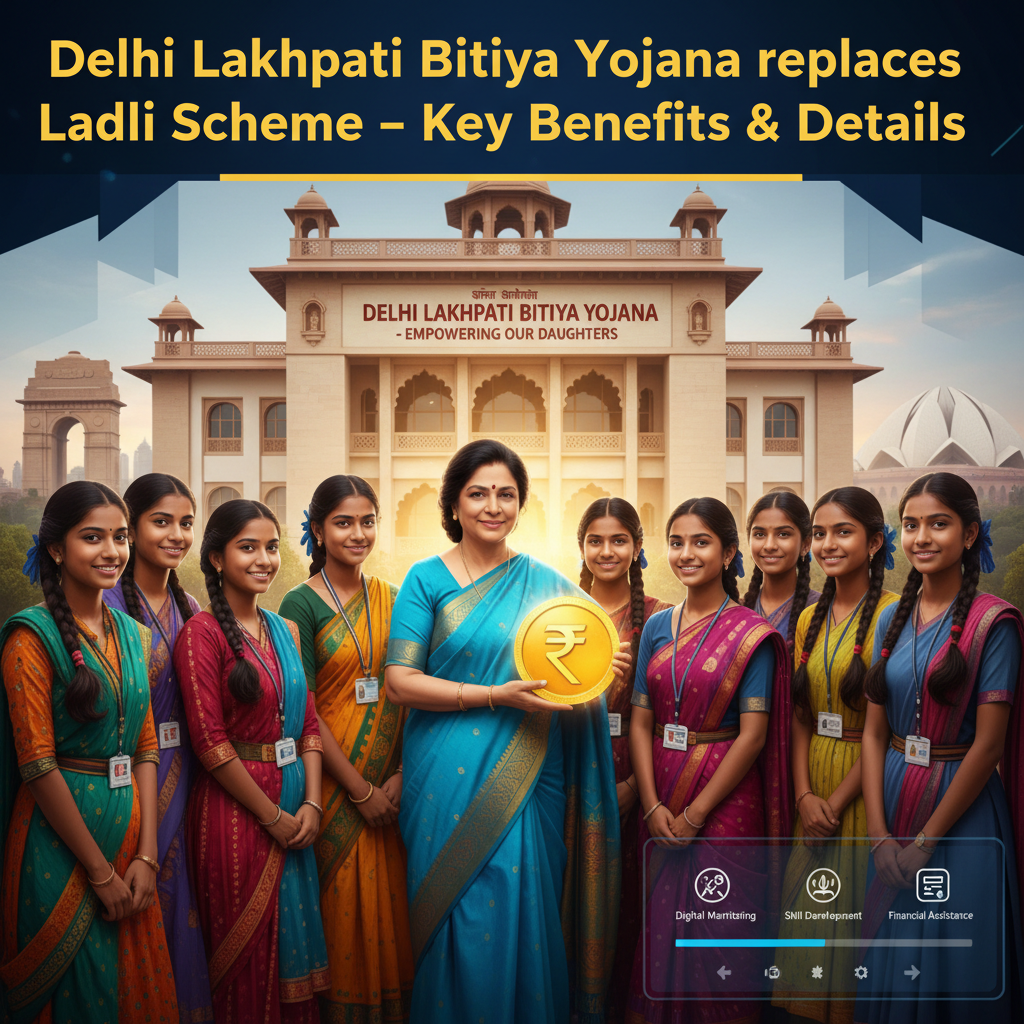
Delhi’s finance ministry, under the leadership of Chief Minister Rekha Gupta, has announced a transformative shift in its welfare policy by replacing the long‑standing Ladli scheme with a more ambitious Delhi Lakhpati Bitiya Yojana. The new programme is designed to deliver a substantially larger financial assistance package to girl children from economically weaker sections, thereby reinforcing the state’s commitment to gender equity, education, and economic empowerment. By expanding eligibility, introducing multi‑tiered disbursements, and integrating skill‑development components, the initiative seeks to create a holistic ecosystem that not only addresses immediate monetary needs but also equips young women with the tools to build sustainable livelihoods.
Background of the Ladli Scheme
The Ladli scheme was introduced over a decade ago as part of Delhi’s broader strategy to reduce gender disparity in education and employment opportunities. Under the original framework, families received a one‑time cash incentive of INR 50,000 when a girl child completed secondary education, marking a milestone in her academic journey. While the scheme succeeded in encouraging school attendance among marginalized families, policymakers identified several shortcomings. The amount was increasingly inadequate in the face of rising tuition fees, living expenses, and inflation. Moreover, the single‑installment model limited ongoing financial support, and the eligibility criteria did not fully capture the diverse socio‑economic realities of Delhi’s urban and rural populations.
According to a 2023 report by the Delhi Statistical Office, the uptake of the Ladli scheme was approximately 1.2 million beneficiaries, yet several districts reported low enrollment rates among girls from migrant and tribal communities. Civil society analyses highlighted the need for a more inclusive approach that could reach families engaged in informal sectors and those residing in peripheral urban zones. These gaps prompted the state government to revisit the design of the scheme and envision a more robust, future‑ready programme. 
Rationale for Replacement
Officials outlined three decisive motivations behind replacing Ladli with the Delhi Lakhpati Bitiya Yojana. First, the fiscal reality of rising education costs demanded a higher quantum of financial assistance to ensure that families could afford not only school fees but also ancillary expenses such as textbooks, transport, and extracurricular activities. Second, expanding eligibility was deemed essential to cover a broader spectrum of beneficiaries, including girls from informal‑sector families, migratory workers, and tribal populations residing in the national capital’s outskirts. Third, the government aimed to fuse financial aid with capacity‑building initiatives, thereby aligning monetary support with long‑term skill development and employment prospects. By addressing these three pillars, the administration sought to create a more resilient and empowering framework for young women across Delhi.
Key Features and Implementation Timeline
Enhanced Financial Assistance: Under the new Delhi Lakhpati Bitiya Yojana, each eligible girl will receive a lump‑sum assistance of INR 2 lakh when she turns 18, a fourfold increase over the previous INR 50,000 grant. This substantial amount is intended to cover higher‑education fees, vocational training, or seed capital for small enterprises.
Multi‑Tiered Disbursement: To promote sustained schooling, the funds will be released in three installments – INR 50,000 at age 14, another INR 50,000 at age 16, and the remaining INR 1 lakh at age 18. This staggered approach incentivizes families to keep their daughters enrolled through secondary education and discourages early dropout.
Skill Development Grants: A dedicated budgetary allocation will finance vocational training, entrepreneurship workshops, and digital literacy programmes for beneficiaries. Partnerships with technical institutes and industry bodies will ensure that training aligns with market demands, thereby enhancing employability prospects.
Eligibility Expansion: The scheme now embraces girls from all socio‑economic backgrounds, with particular focus on those belonging to marginalized communities, informal‑sector families, and tribal groups. The expansion also includes children of single parents and families residing in slum clusters, ensuring that no eligible beneficiary is left out.
Digital Monitoring Portal: A user‑friendly online portal will streamline enrollment, track disbursement milestones, and enable beneficiaries to upload proof of schooling and skill‑training participation. Real‑time dashboards will provide transparency, reduce administrative delays, and facilitate data‑driven policy adjustments.
The rollout follows a phased timeline: a pilot phase covering ten districts commenced in March 2026, with full statewide implementation scheduled for July 2026. During the pilot, the government will monitor enrollment rates, assess impact on school retention, and collect feedback from stakeholders. A comprehensive evaluation report is slated for release by the end of 2026, informing refinements before a nationwide launch.
Impact, Vision, and Community Response
Stakeholders project that the Delhi Lakhpati Bitiya Yojana will boost enrollment among girls from marginalized communities by an estimated 15 percent, reducing dropout rates and fostering higher completion of secondary education. The integration of skill‑development modules is expected to elevate employability, potentially lifting household incomes and contributing to broader economic growth. Moreover, the scheme aligns with the Delhi Women Empowerment Mission, which encompasses complementary initiatives in health, safety, and employment, thereby creating a synergistic ecosystem for gender equity.
Early reactions from civil society groups, educators, and parent‑associations have been largely positive. Many lauded the increased fund size, the emphasis on digital transparency, and the inclusion of skill‑training components. However, advocacy organisations have called for stronger safeguards against corruption, urging the government to institute robust verification mechanisms that prevent fund leakage and ensure that assistance reaches the intended beneficiaries directly.
Chief Minister Rekha Gupta described the programme as a “cornerstone of our vision for a society where every girl can aspire to become a ‘Lakhpati’ – a woman of strength, confidence, and contribution.” The initiative is positioned as a flagship element of the state’s broader agenda to promote gender equality, with parallel programmes in maternal health, workplace safety, and women‑led entrepreneurship already in place.
Financially, the Delhi government has earmarked an additional INR 2,500 crore from the state’s fiscal surplus to fund the Lakhpati Bitiya Yojana. Economic analysts suggest that while the initial outlay is significant, the long‑term returns could outweigh the costs through a more educated female workforce, reduced dependency on welfare programmes, and enhanced economic productivity.
Community feedback underscores the importance of continuous engagement. Gram sabhas and local NGOs are being roped in to sensitize families about the scheme’s benefits, assist with enrollment on the digital portal, and monitor the disbursement process. Such collaborative approaches are expected to enhance outreach, build trust, and ensure that the programme’s objectives are met efficiently.
Stay updated with the latest Yojana schemes and government initiatives for better awareness and eligibility. For personalized guidance on accessing these benefits, reach out to us.