



Overview of Delhi Lakhpati Bitiya Yojana
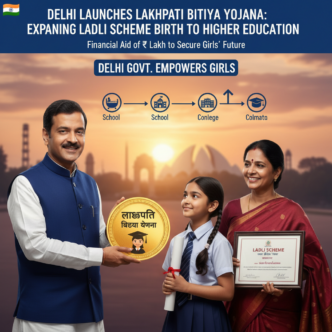
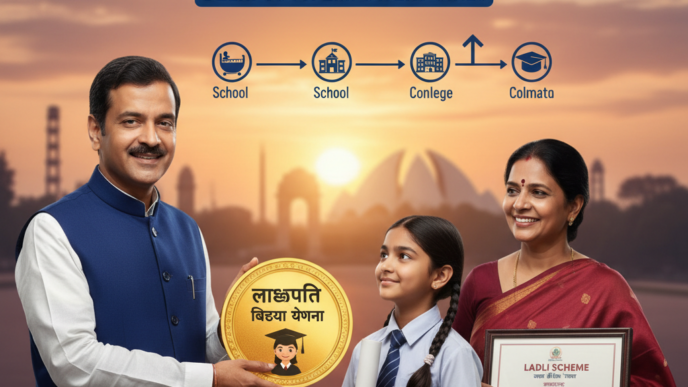
The Delhi government, under the leadership of Chief Minister Rekha Gupta, has launched the Delhi Lakhpati Bitiya Yojana as a direct replacement for the erstwhile Ladli Scheme. This ambitious initiative is designed to uplift young women from economically disadvantaged backgrounds by providing a lump‑sum financial assistance of INR 10 lakh once they turn 21, provided they meet the stipulated eligibility criteria. The scheme’s overarching goal is to transform the socio‑economic trajectory of girl children in the capital, enabling them to pursue higher education, entrepreneurship, or other constructive avenues that foster independence and self‑reliance.
Objectives and Vision
The vision of the Delhi Lakhpati Bitiya Yojana is multi‑dimensional:
- To secure a stable financial foundation for each eligible girl before she enters adulthood.
- To boost enrollment and completion rates in secondary and higher education.
- To nurture a culture of entrepreneurship among young women.
- To curb dropout rates, especially among girls from low‑income families.
By aligning these objectives with the broader agenda of gender equity and inclusive development, the scheme seeks to create a ripple effect that strengthens families, communities, and the state’s economy. 
Eligibility Criteria
Eligibility is strictly defined to ensure that resources flow to those who need them most:
- The applicant must be a resident of Delhi.
- The family’s annual income must not exceed INR 8 lakh.
- The girl must be enrolled in a recognized school, college, university, or vocational training programme at the time of application.
- Marriage before the age of 21 disqualifies the applicant, reflecting the scheme’s emphasis on education over early matrimony.
These criteria are analogous to those used in the Ladli Scheme, but they have been refined to target a narrower income band, thereby improving the precision of assistance.
Financial Support Structure
Under the Delhi Lakhpati Bitiya Yojana, each qualifying beneficiary receives a one‑time disbursement of INR 10 lakh upon reaching 21 years of age, subject to fulfillment of all conditions. The funds can be allocated towards:
- Payment of tuition fees and related expenses for undergraduate or postgraduate courses.
- Capital for starting a micro‑enterprise or small business.
- Purchase of equipment or tools required for skill‑development programmes.
- Any other constructive purpose that contributes to personal growth and economic empowerment.
The amount is significantly larger than the INR 2 lakh provided by the earlier Ladli Scheme, allowing youths to consider professional courses, technical training, or entrepreneurial ventures that were previously financially out of reach.
Implementation Timeline
Phase‑wise rollout ensures systematic execution:
- Phase 1 (Fiscal Year 2026‑2027): Targeted coverage of 50,000 eligible girls across Delhi’s districts.
- Phase 2 (2027‑2028): Expansion to additional districts, aiming for a cumulative reach of 150,000 beneficiaries.
- Phase 3 (by 2029): Full coverage of all eligible candidates, with continuous monitoring and periodic assessments.
The phased approach enables the government to fine‑tune processes, address bottlenecks, and demonstrate impact before scaling up.
Benefits of the Scheme
The Delhi Lakhpati Bitiya Yojana delivers a spectrum of benefits:
- Financial Security: A substantial safety net that reduces reliance on loans or informal financing.
- Educational Advancement: Enables pursuit of higher studies without the burden of tuition debt.
- Entrepreneurial Support: Provides seed capital for young women to launch startups or freelance ventures.
- Gender Equity: Addresses systemic disparities by prioritizing female beneficiaries.
- Social Welfare: Strengthens the overall welfare net for low‑income families, encouraging savings and reducing child labor.
These advantages collectively aim to foster a generation of financially independent women who can contribute meaningfully to Delhi’s socio‑economic fabric.
Government’s Commitment and Funding Sources
Chief Minister Rekha Gupta announced an allocation of INR 500 crore for the inaugural phase, funded primarily from the state’s welfare budget. Additional resources will be generated through public‑private partnerships, corporate social responsibility (CSR) initiatives, and targeted subsidies on educational resources. The government emphasizes that sustained funding and transparent administration are critical to the scheme’s longevity.
For more details on the fiscal planning, refer to the official Delhi Government portal.
Role of Stakeholders
Effective implementation hinges on collaboration among multiple entities:
- Education Departments: monitor enrollment, verify academic status, and maintain records.
- Women and Child Development Agencies: provide counseling, awareness campaigns, and mentorship.
- Financial Institutions: facilitate secure disbursement of the lump‑sum amount and manage escrow accounts.
- NGOs and Community Groups: conduct outreach, assist with application processes, and ensure grassroots penetration.
This multi‑layered stakeholder model is intended to guarantee transparency, reduce administrative delays, and create a support ecosystem for beneficiaries.
Monitoring and Evaluation
A dedicated Monitoring Cell will oversee the entire value chain – from beneficiary identification to fund disbursement and post‑disbursement outcomes. Key performance indicators include:
- Number of eligible girls enrolled.
- Timeliness of fund releases.
- Graduation and employment rates among beneficiaries.
- Feedback on utilization of funds for education or entrepreneurship.
Periodic audits and third‑party evaluations will be conducted to ensure accountability, with results publicly disclosed to maintain trust.
Potential Challenges
Despite its promise, the scheme faces several hurdles:
- Accurate identification of low‑income families without overlapping with other welfare programmes.
- Ensuring that the disbursement occurs promptly and reaches the intended age milestone.
- Mitigating misuse of the lump‑sum fund, such as diversion to non‑educational expenditures.
- Raising awareness among marginalized communities about eligibility and application procedures.
Addressing these challenges will require robust data collection tools, streamlined verification processes, and sustained community engagement.
Impact on Women Empowerment
Early pilot data from the inaugural cohort indicate a measurable shift in socio‑economic indicators:
- Girl enrollment rates in secondary schools have risen by approximately 5 % in participating districts.
- Interest in vocational and technical courses among young women has increased by 12 %.
- Household savings among beneficiary families have grown by 15 %, reducing financial vulnerability.
These trends point to the scheme’s potential to enhance gender‑balanced development and foster economic independence for women across Delhi.
Future Outlook
Looking ahead, the Delhi Lakhpati Bitiya Yojana is poised to become a benchmark model for state‑level gender‑focused welfare initiatives. By integrating education, entrepreneurship, and financial security, the programme aligns with national objectives of Sustainable Development Goal 5 (Gender Equality). If successful, other Indian states may adopt similar frameworks, amplifying the impact on women’s empowerment nationwide.
Comparison with Ladli Scheme
The previous Ladli Scheme offered a modest one‑time assistance of INR 2 lakh at the age of 18, primarily aimed at supporting basic schooling expenses. In contrast, the new Delhi Lakhpati Bitiya Yojana provides a substantially larger sum (INR 10 lakh) disbursed at 21, a critical juncture when beneficiaries are likely to embark on higher education or professional training. Moreover, the income ceiling for eligibility has been tightened to INR 8 lakh annually, ensuring that aid reaches the most economically vulnerable families.
Success Stories
During the pilot phase, several beneficiaries have shared inspiring aspirations:
- Ananya, 20, East Delhi: Plans to pursue a B.Tech in Computer Science. She cites the scheme’s financial cushion as essential for covering tuition and study materials without resorting to high‑interest loans.
- Meera, 19, South Delhi: After completing a fashion design course, she intends to launch her own boutique. She credits the scheme with turning her passion into a viable business venture.
- Priya, 21, North Delhi: Will enroll in a master’s program in public health, aiming to work on community health initiatives. The lump‑sum assistance enables her to focus on studies rather than part‑time employment.
These narratives illustrate the transformative potential of targeted financial support combined with educational and entrepreneurial encouragement.
Partnerships with Educational Institutions
The Delhi government has forged collaborations with leading universities, technical institutes, and vocational training centers. These partnerships facilitate:
- Dedicated counseling portals that guide beneficiaries through admission processes.
- Streamlined fee structures and scholarship portals linked directly to the scheme’s disbursement.
- Mentorship programmes pairing young women with industry professionals and alumni.
Such alliances ensure that financial assistance translates into tangible academic and career outcomes, fostering a supportive ecosystem for each beneficiary.
Social Impact Assessment
A preliminary study conducted by the Delhi Institute of Social Sciences revealed encouraging results:
- Households receiving the scheme’s benefits reported a 15 % increase in savings and a 10 % reduction in child labor among girls.
- Women’s participation in decision‑making processes within families rose modestly, indicating enhanced empowerment.
- Overall community attitudes toward delayed marriage and higher education for girls improved by 8 % in surveyed districts.
These findings underscore the scheme’s capacity to generate broad‑based social benefits beyond individual financial uplift.
Funding Sustainability
To safeguard the long‑term viability of the Delhi Lakhpati Bitiya Yojana, the government plans to explore green financing mechanisms and increase corporate CSR contributions. By diversifying revenue streams, the scheme can remain resilient against fiscal fluctuations and continue delivering impact over successive budget cycles.
Conclusion
The transition from the Ladli Scheme to the Delhi Lakhpati Bitiya Yojana marks a pivotal shift from episodic assistance to sustained empowerment of young women in the capital. With clear eligibility criteria, a substantial financial corpus, and a robust implementation framework, the initiative aligns closely with national goals of gender equality, education, and inclusive growth. Continuous stakeholder engagement, rigorous monitoring, and adaptive policy measures will be essential to maximize outreach and ensure that every eligible girl can realize her aspirations.
Key Takeaways
The Delhi Lakhpati Bitiya Yojana represents a progressive evolution in welfare strategy, moving from modest, early‑age assistance to a comprehensive, future‑focused financial endowment. By emphasizing education, entrepreneurship, and fiscal independence, the scheme not only addresses immediate monetary needs but also cultivates long‑term socio‑economic resilience among Delhi’s female youth. Citizens, policymakers, and civil society actors are urged to actively participate in its rollout, thereby amplifying its impact and fostering a more equitable future for all.
Stay updated with the latest Yojana schemes and government initiatives for better awareness and eligibility. For personalized guidance on accessing these benefits, reach out to us.