




Overview of Delhi LakhpatiBitiya Yojana
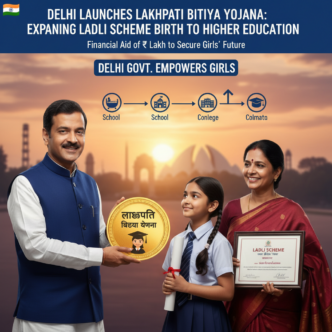
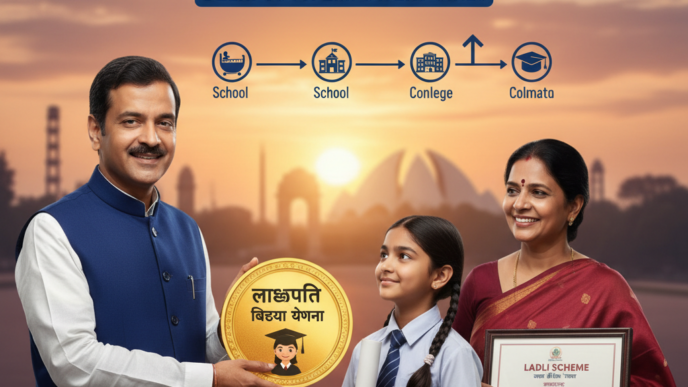
Delhi has recently rolled out the LakhpatiBitiya Yojana, a landmark financial empowerment programme aimed at transforming the economic trajectory of girl children from economically vulnerable families. Announced by the Delhi Cabinet in the 2024-25 budget, the scheme guarantees a one‑time cash grant of up to ten lakh rupees that can be deployed for higher education, skill acquisition, entrepreneurship or marriage expenses. The initiative follows the Delhi government’s broader strategy to close gender‑based economic gaps and aligns with national objectives outlined in the National Gender Equality Framework. By targeting families with an annual income below ₹8 lakh, the Yojana seeks to remove cost barriers that traditionally restrict girls’ access to quality schooling, higher studies and productive start‑ups.
The scheme’s design reflects a shift from incremental scholarships to a robust, milestone‑linked endowment. Eligible families receive the first tranche when the girl turns 18, contingent on enrolment in a recognized university or vocational institute. Subsequent tranches, capped at an additional five lakh rupees, become available for postgraduate studies or approved business ventures, provided the beneficiary meets predefined performance metrics. This milestone‑based disbursement model is intended to incentivise sustained educational commitment and to reduce dropout rates among adolescent girls.
- Target audience: families residing in Delhi with annual income ≤ ₹8 lakh
- Cash grant: up to ₹10 lakh, released in stages
- Eligibility triggers: school enrolment, graduation, or launch of a government‑approved enterprise
- Performance‑linked follow‑up to ensure judicious utilisation
Early administration notes suggest that the programme will be administered through the Direct Benefit Transfer (DBT) platform, ensuring that funds are credited directly to the beneficiary’s bank account and that the process remains transparent and auditable. The rollout is scheduled to begin in October 2025, with an initial pilot covering 5,000 families across the city’s eleven districts. 
Integration with Ladli Scheme
The LakhpatiBitiya Yojana builds on the legacy of the Ladli Scheme, a flagship initiative launched in 2008 that has already disbursed scholarships to over 500,000 girls from low‑income households. While Ladli primarily addresses tuition fees and textbook costs for primary and secondary education, LakhpatiBitiya expands the scope to include higher‑education financing, vocational training and start‑up capital. This integration creates a seamless financial continuum: from early childhood nutrition support under Ladli to milestone‑based endowments under LakhpatiBitiya, thereby fostering a holistic ecosystem for girl children’s empowerment.
Key synergies between the two programmes include shared beneficiary databases, joint monitoring committees and coordinated awareness campaigns. The Delhi Department of Women and Child Development will cross‑reference Ladli enrolment records with the new scheme’s eligibility criteria, ensuring that families who have previously benefited from Ladli are automatically considered for LakhpatiBitiya, subject to income verification. This linkage is expected to reduce administrative overhead and accelerate the onboarding of eligible households.
Moreover, the expanded framework incorporates ancillary support mechanisms such as mentorship programmes, skill‑development workshops and nutrition supplements. By coupling monetary disbursements with capacity‑building activities, the government aims to address not only the financial constraints but also the socio‑cultural barriers that contribute to school dropout rates among girls, especially in marginalized communities of Delhi’s peri‑urban zones.
Eligibility, Benefits and Disbursement Structure
Eligibility for the LakhpatiBitiya Yojana is strictly defined to ensure equitable distribution. Applicant families must be permanent residents of Delhi, possess a valid ration card and demonstrate an annual household income that does not exceed ₹8 lakh, as verified through income tax returns or a certified income certificate. The girl child must have a registered birth certificate and must be enrolled in an accredited educational institution or a government‑approved vocational training centre at the time of each disbursement trigger.
Upon successful verification, the scheme releases funds in a staged manner:
- First tranche (₹2 lakh) at age 18, conditional on admission to a recognised undergraduate programme or skill‑development course
- Second tranche (up to ₹5 lakh) at age 21, released for postgraduate studies, professional certifications or launch of a micro‑enterprise
- Final tranche (up to ₹3 lakh) at age 25, available for entrepreneurial expansion or specialised training programmes
All disbursements are made directly into the beneficiary’s bank account via the DBT system, limiting the risk of fund leakage and enabling real‑time tracking. To qualify for subsequent tranches, beneficiaries must submit performance reports certified by their institution or industrial partner, confirming course completion, attendance and utilisation of funds for the intended purpose.
Eligible expenditure categories include tuition fees, laboratory charges, purchase of academic equipment, registration of a start‑up, acquisition of machinery for skill‑based ventures and marriage‑related costs that are socially sanctioned under the scheme’s guidelines. The scheme also mandates a mandatory financial literacy session for each beneficiary before the first tranche is released, ensuring that families understand the long‑term implications of fund deployment.
Implementation, Monitoring and Funding Mechanism
The operational oversight of LakhpatiBitiya Yojana rests with the Delhi Department of Women and Child Development, in close coordination with the Finance Department and the city’s municipal corporations. A dedicated implementation cell has been established to manage beneficiary identification, verification and fund transfer processes. Leveraging existing databases from the Ladli Scheme, school enrolment records, and the Public Distribution System, the cell integrates multiple data streams to generate a dynamic eligibility matrix that updates in real time.
Funding for the programme is allocated from the state’s social welfare budget, with an earmarked allocation of ₹1,200 crore for the first three years. The Finance Department will monitor fiscal utilisation through a dedicated dashboard that visualises disbursement volumes, beneficiary demographics and outcome indicators such as school completion rates and employment outcomes. An independent oversight committee, comprising representatives from civil society, academia and the private sector, will conduct quarterly audits to verify compliance with disbursement norms and to recommend corrective measures where deviations occur.
To enhance transparency, beneficiaries will receive SMS alerts at each tranche release, and a public portal will display aggregate expenditure data without disclosing personal identifiers. This open‑data approach aligns with the Delhi government’s broader commitment to citizen‑centric governance and is intended to foster public trust in the scheme’s administration.
Monitoring frameworks incorporate both quantitative and qualitative metrics. Key performance indicators include the number of beneficiaries enrolled, dropout rates before the first tranche, proportion of funds utilised for approved activities, and post‑programme economic outcomes such as employment or business establishment. The government plans to conduct a mid‑term impact evaluation in 2028, with findings to be published in an annual women’s empowerment report.
Socio‑Economic Impact and Future Outlook
Projections released by the Delhi Economic Survey 2024 indicate that the LakhpatiBitiya Yojana could increase female secondary school enrolment by up to 15 % within three years, while also boosting the proportion of women entering higher education from the current 22 % to an estimated 30 % among participating communities. By providing a financial safety net at critical junctures, the scheme is expected to reduce gender‑based dropout rates by an estimated 12 % and to lower early marriage incidence among beneficiary families by 8 %.
Beyond education, the programme is positioned to catalyse entrepreneurship among young women. Early case studies from pilot districts suggest that approximately 20 % of eligible families plan to use the second tranche for launching micro‑enterprises in areas such as handicrafts, digital services and food processing. This diversification aligns with Delhi’s broader economic vision of fostering a knowledge‑based and inclusive growth model.
Experts from the Delhi School of Economics have lauded the scheme as a “strategic investment in human capital” that promises long‑term fiscal returns through an expanded tax base and reduced reliance on social welfare programmes. Conversely, gender activists caution that financial incentives must be complemented by community‑level advocacy to dismantle entrenched patriarchal norms that impede girls’ aspirations. Stakeholder consultations will therefore incorporate awareness campaigns, parental engagement workshops and partnerships with non‑governmental organisations to create a supportive ecosystem for beneficiary girls.
Looking ahead, the Delhi government envisions scaling the LakhpatiBitiya model to other states, potentially integrating it into the national umbrella of women‑centric welfare schemes. If successfully replicated, the programme could become a benchmark for targeted financial empowerment, contributing substantially to India’s gender‑equity objectives outlined in the Sustainable Development Goals. Continued investment in monitoring, community outreach and capacity‑building will be essential to realize the scheme’s full potential and to ensure that every girl in Delhi can aspire to a future of economic independence and societal contribution.
Stay updated with the latest Yojana schemes and government initiatives for better awareness and eligibility. For personalized guidance on accessing these benefits, reach out to us.