




Delhi Lakhpati Bitiya Yojana to be launched by President Droupadi Murmu on March 2
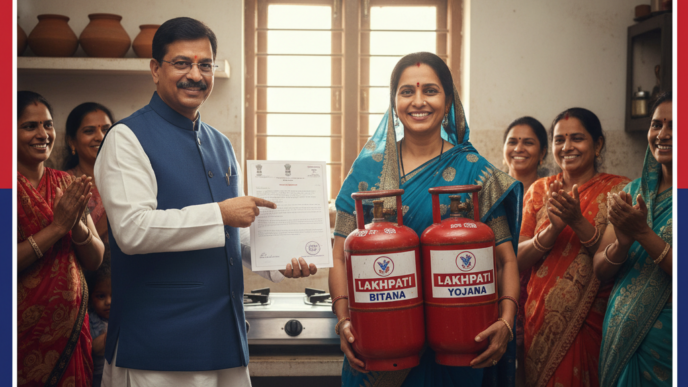
The Delhi government is set to roll out a transformative welfare programme called the Delhi Lakhpati Bitiya Yojana on March 2, 2026. President Droupadi Murmu will inaugurate the scheme at the India Habitat Centre, marking a historic moment for women’s economic empowerment in the national capital. Chief Minister Rekha Gupta will accompany her, underscoring the joint commitment of the central and state leadership to gender‑inclusive development. The initiative, unveiled through a press release on March 1, aims to provide a robust Economic Security Shield that will safeguard the financial future of daughters from economically vulnerable families. By combining seed capital, skill‑building, and mentorship, the scheme aspires to transform eligible beneficiaries into earners of at least one lakh rupees per annum, thereby fostering sustainable economic independence.
Scheme Overview and Objectives
The Delhi Lakhpati Bitiya Yojana is designed as a multi‑layered intervention that addresses the pronounced economic vulnerabilities faced by adolescent girls and young women across Delhi. The term “Lakhpati” signifies a woman who earns a minimum of ₹1,00,000 annually, a benchmark the government hopes to achieve through targeted interventions. Core objectives include: enhancing access to quality education, facilitating entrepreneurship, and promoting financial literacy among the girl child. The programme will be implemented in a phased manner, beginning with a pilot in select districts such as South East Delhi, North West Delhi, and East Delhi, before scaling up statewide. By integrating educational incentives with livelihood opportunities, the scheme aligns with the broader national agenda of Beti Bachao Beti Padhao and seeks to break the intergenerational poverty cycle that disproportionately affects women.
Strategically, the scheme envisions three interlocking pillars: (1) direct financial assistance in the form of a seed capital grant, (2) capacity‑building through skill development and mentorship, and (3) continuous monitoring via a digital dashboard to ensure transparency. This integrated approach is intended to move beyond isolated cash transfers, instead fostering an ecosystem where beneficiaries can convert modest investments into sustainable enterprises or secure pathways to higher education. The Delhi government has partnered with the Department of Social Welfare, private sector NGOs, and technology firms to design the digital infrastructure that will track fund utilisation, progress metrics, and impact evaluations in real time. 
Economic Security Shield: Seed Capital and Support Mechanisms
Under the centrepiece of the Economic Security Shield component, each eligible daughter will receive an initial grant of ₹10,000, disbursed in installments contingent upon compliance with predefined milestones. These milestones may include school attendance, completion of vocational courses, or demonstrable progress in a micro‑enterprise venture. The funds can be allocated toward a wide array of activities: launching a small‑scale business, purchasing essential equipment, financing tuition fees, or investing in certifications that enhance employability. In addition to the monetary grant, beneficiaries will be enrolled in a structured mentorship programme that connects them with seasoned professionals across sectors such as technology, healthcare, and handicrafts. These mentors will provide guidance on business planning, market access, and personal finance management, thereby augmenting the likelihood of successful venture scaling.
The scheme also incorporates a suite of complementary services, including:
- Skill Development Workshops: Tailored training modules in digital literacy, entrepreneurship, and allied trades.
- Financial Literacy Sessions: Interactive classes on budgeting, savings, and investment strategies.
- Micro‑Enterprise Incubation: Access to co‑working spaces and micro‑credit linkages for aspiring business owners.
- Digital Dashboard Monitoring: Real‑time tracking of fund disbursement, utilisation, and outcome metrics on a publicly accessible platform.
By embedding accountability mechanisms and leveraging technology, the Delhi government aims to ensure that resources are channeled efficiently and that the intended impact—economic upliftment of girls—is realised without wastage.
Eligibility, Benefits and Implementation Details
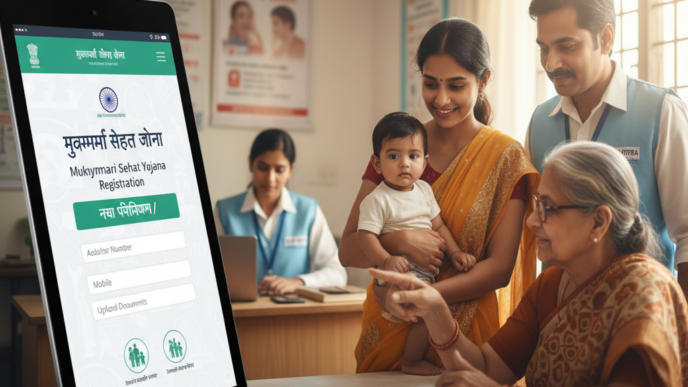
Eligibility for the Delhi Lakhpati Bitiya Yojana is determined based on a combination of socio‑economic criteria. Primarily, the scheme targets girls belonging to families whose annual income falls below the official poverty line, as defined by the World Bank methodology. Additional criteria include residence in Delhi, enrollment in a recognized educational institution or participation in a government‑approved skill‑training programme, and age between 16 and 25 years at the time of application. The selection process will be executed through a transparent enrollment system that involves community leaders, local NGOs, and the Delhi Social Welfare Department. Applications can be submitted online via the Delhi Government Services Portal or offline through designated centres in each pilot district.
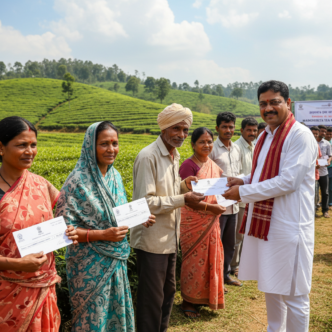
Successful applicants will receive the seed capital in three instalments—₹3,000, ₹4,000, and ₹3,000—upon verification of progress against predetermined benchmarks. The instalment schedule is designed to incentivise sustained engagement, whether through academic achievement or entrepreneurial activity. Beyond the monetary grant, beneficiaries will gain access to a suite of benefits, including:
- Free enrollment in certified skill‑development courses.
- One‑on‑one mentorship from industry experts.
- Eligibility for micro‑enterprise financing through partner banks.
- Inclusion in a network of like‑minded peers for collaborative ventures.
The rollout will be overseen by the Delhi Social Welfare Department in collaboration with private sector partners and civil‑society organisations. A dedicated project management unit will coordinate with district magistrates to ensure seamless implementation, while the digital dashboard will provide stakeholders with real‑time visibility into fund flow, beneficiary progress, and impact assessment.
Anticipated Social Impact and Way Forward
The Delhi Lakhpati Bitiya Yojana is poised to generate far‑reaching social dividends that extend beyond individual beneficiaries. Economically empowered women are known to reinvest up to 90 % of their earnings back into their families and communities, leading to improved health outcomes, higher school enrolment rates for children, and reduced incidences of gender‑based violence. By fostering a culture that values the economic contribution of girls, the scheme aims to shift societal attitudes that have historically marginalised women’s participation in the formal economy. Moreover, the pilot’s data—collected via the digital dashboard—will furnish policymakers with evidence‑based insights, enabling iterative refinements and informed scaling decisions across other states.
Experts in social welfare and gender studies have lauded the initiative as a holistic model that transcends conventional cash‑transfer programmes. Dr. Anita Desai, a senior researcher at the Indian Institute of Social Welfare, remarked that “the convergence of financial literacy, mentorship, and concrete income‑generating pathways creates a multiplier effect that can accelerate women’s economic integration.” If the pilot proves successful, Delhi could set a precedent for other Indian states to emulate, potentially catalysing a nationwide shift toward gender‑responsive welfare frameworks. The government has already earmarked ₹150 crore for the initial phase, with plans to expand the budgetary allocation contingent upon demonstrable impact metrics.
In the long term, the vision is to embed the principle of “Lakhpati” into the cultural lexicon, symbolising not just a financial threshold but a societal norm where every daughter can aspire to economic self‑sufficiency. The interplay of policy, technology, and community engagement heralds a new era of inclusive growth, positioning Delhi as a benchmark for innovative, gender‑centric development models across India.
Stay updated with the latest Yojana schemes and government initiatives for better awareness and eligibility. For personalized guidance on accessing these benefits, reach out to us.