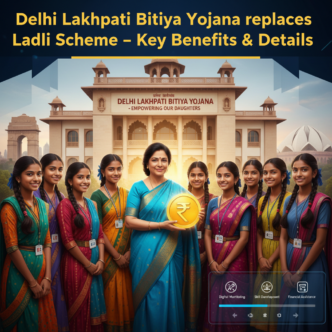





Overview of Delhi LakhpatiBitiya Yojana
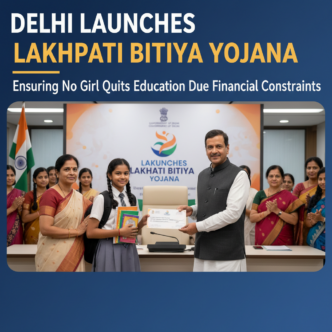
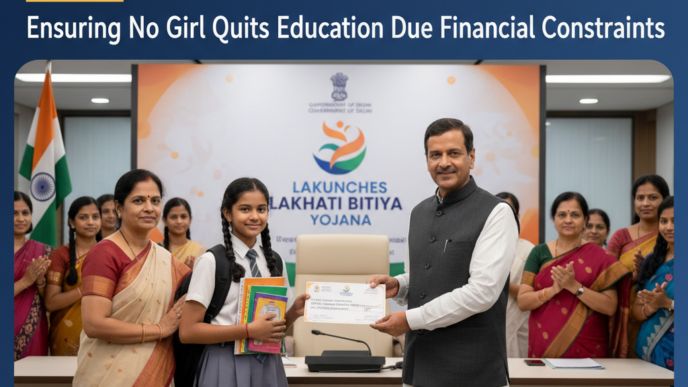
Chief Minister Rekha Gupta has unveiled the Delhi LakhpatiBitiya Yojana, a targeted welfare scheme designed to empower girl students by providing a one‑time cash incentive of Rs 1 lakh upon successful completion of secondary education. The initiative forms part of the Delhi government’s broader strategy to boost female enrollment in higher education and reduce dropout rates among economically weaker sections. By tying the disbursement to continued academic pursuit, the scheme not only rewards academic achievement but also serves as a financial safety net for families who might otherwise consider ending a girl’s education early. Officials expect the programme to reach more than 50,000 beneficiaries in its inaugural year, signaling a significant investment in gender‑focused educational upliftment.
Objectives and Eligibility Criteria
The primary aim of the Delhi LakhpatiBitiya Yojana is to remove monetary barriers that compel many girls to discontinue studies after Class 12. To qualify, applicants must meet the following conditions:
- Reside permanently in Delhi.
- Belong to a family with an annual income of not more than Rs 8 lakh.
- Secure a minimum of 60 % marks in the Class 12 board examinations.
- Be actively enrolled in a recognized college, university, or diploma program.
Eligibility is also contingent on the applicant’s continuation of studies; any interruption may suspend further disbursement. The scheme draws inspiration from best practices highlighted by the Education in India sector and aligns with national goals for Girl child education. 
Implementation Mechanism
Disbursement of the Rs 1 lakh incentive will be handled by the Delhi Social Welfare Department through direct bank transfers, ensuring transparency and minimizing leakage. Interested candidates must submit their applications online via the official Delhi Government portal, uploading key documents such as:
- Class 12 mark sheet.
- Income certificate issued by the local revenue office.
- Admission letter from the chosen higher‑education institution.
- Proof of Delhi residency.
The portal is designed to process applications within 30 days, after which the funds are credited to the beneficiary’s bank account. This streamlined mechanism mirrors successful cash transfer models used in other Indian states, aiming to reduce bureaucratic delays and enhance beneficiary trust.
Impact on Girls’ Education
Education analysts anticipate that the Delhi LakhpatiBitiya Yojana will have a multiplier effect on female enrollment rates across the capital’s higher‑education landscape. By addressing the financial constraints that often force families to halt a girl’s education, the scheme is expected to:
- Increase graduation rates among economically disadvantaged women.
- Encourage enrollment in traditionally male‑dominated fields such as engineering and technology.
- Reduce gender disparities in professional sectors, thereby fostering a more diverse workforce.
Early simulations suggest that the programme could lift the overall female tertiary enrollment ratio in Delhi by up to 3‑4 percentage points within the first three years, a measurable improvement that aligns with national data on gender gaps in education.
Funding and Governance
The financial outlay for the Delhi LakhpatiBitiya Yojana has been earmarked at Rs 500 crore for the upcoming fiscal year, sourced entirely from the state budget. The Finance Department will oversee the allocation and audit expenditures, while the Social Welfare Department conducts regular reviews to ensure compliance and effectiveness. To amplify reach, the government plans to collaborate with NGOs and community‑based organisations, particularly in rural and underserved districts, to raise awareness and assist with application processing. This multi‑agency approach reflects a governance model that blends fiscal responsibility with grassroots engagement.
Reactions from Stakeholders
Women’s rights organisations have lauded the Delhi LakhpatiBitiya Yojana as a “game‑changer” for gender equity, emphasizing that direct cash incentives can empower girls to make autonomous educational choices. Nonetheless, some academicians caution that monetary support alone may not suffice without complementary interventions such as counseling, mentorship, and infrastructure upgrades in schools. They suggest pairing the scheme with:
- Career guidance sessions.
- Scholarship‑linked tutoring programmes.
- Improved school facilities for girls.
These recommendations aim to address the holistic needs of beneficiaries, ensuring that the financial boost translates into sustained academic progress.
Comparison with Similar Programs
While the Delhi LakhpatiBitiya Yojana shares thematic overlap with the central Beti Bachao, Beti Padhao initiative, it differs markedly in its implementation model. Unlike many scholarship schemes that are tied to tuition fees or merit‑based awards, this programme offers a lump‑sum amount that beneficiaries can allocate toward a wide range of educational expenses, including textbooks, transport, and accommodation. This flexibility distinguishes it from traditional fee‑based aids and aligns with modern cash‑transfer philosophies that empower recipients to decide how best to utilise the funds.
Future Prospects and Expansion
Looking ahead, the Delhi government has indicated plans to broaden the Delhi LakhpatiBitiya Yojana to include students pursuing vocational training, diploma courses, and other non‑traditional pathways. A mentorship component is also slated for introduction, wherein beneficiaries will be paired with industry professionals to gain insights into career planning and employability. Such extensions aim to not only support education but also to enhance post‑graduation job prospects, thereby creating a more seamless transition from academic achievement to economic independence.
Conclusion
Chief Minister Rekha Gupta’s launch of the Delhi LakhpatiBitiya Yojana marks a decisive step toward empowering the girl child through education. By providing a substantial financial incentive tied to academic continuity, the scheme seeks to curb dropout rates, promote higher‑education enrollment, and foster a culture of academic excellence among young women in the capital. If executed with the envisioned transparency and supported by complementary measures, the initiative could serve as a replicable model for other states aiming to accelerate gender‑focused educational outcomes.
Stay updated with the latest Yojana schemes and government initiatives for better awareness and eligibility. For personalized guidance on accessing these benefits, reach out to us.