


Overview of Delhi LakhpatiBitiya Yojana
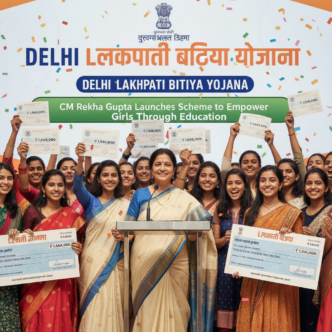
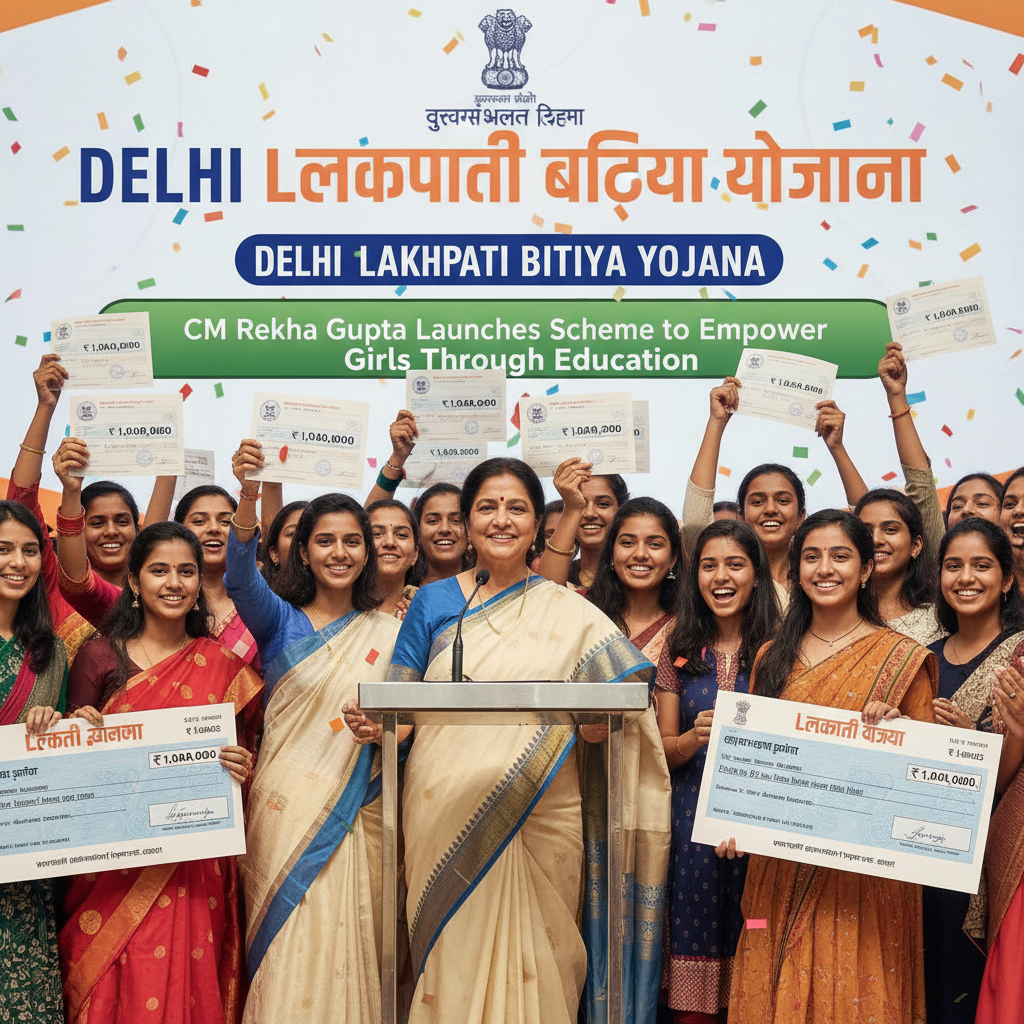
On February 11, 2026, Chief Minister Rekha Gupta unveiled the Delhi LakhpatiBitiya Yojana, a landmark scheme designed to empower one lakh girl students across the National Capital Territory. Under this initiative, each beneficiary will receive a seed capital of ₹1 lakh that can be deployed for tuition fees, textbooks, laboratory charges or seed money for a micro‑enterprise once the girl completes her secondary education. The programme reflects the Delhi government’s resolve to promote gender equity, boost higher‑education enrolment among women, and stimulate economic self‑reliance. By targeting families with an annual income of up to ₹8 lakh, the scheme seeks to bridge the financial gap that often forces talented girls to drop out of school or abandon higher‑studies. The announcement was made at a high‑profile press conference in the Secretariat, where the chief minister highlighted the larger vision of a “Women‑Led Development” agenda that aligns with national goals of inclusive growth.
Objective and Vision
The core ambition of the Delhi LakhpatiBitiya Yojana is to break the inter‑generational cycle of poverty by ensuring that young women possess the monetary resources required to pursue advanced education or skill‑development programmes. Analysts say that the scheme could lift the female gross enrolment ratio in Delhi’s universities by up to 5 % within five years, thereby narrowing the gender disparity that currently sees only 48 % of graduate‑level enrolments being women, according to the Ministry of Education’s 2024‑25 report. Beyond academic achievement, the vision extends to fostering entrepreneurship among female youth, enabling them to launch small ventures that contribute to the local economy. In the words of the chief minister, “When a girl is financially supported, she becomes a catalyst for change— in her family, her community, and the nation at large.” This pronouncement underscores a paradigm shift from scholarship‑based aid to a cash‑grant model that places decision‑making power directly in the hands of the beneficiaries.
Eligibility Criteria and Application Process
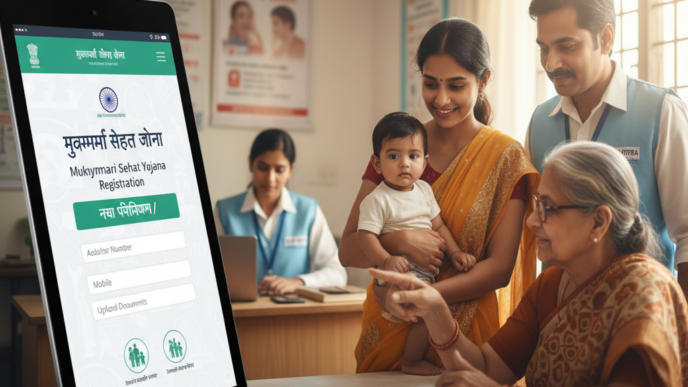
To qualify for the Delhi LakhpatiBitiya Yojana, a girl must be a resident of Delhi, have completed Class 12 with a minimum of 60 % marks, and secure admission in a recognised college, university, diploma programme, or certified vocational course. The applicant’s family must also demonstrate an annual income not exceeding ₹8 lakh, measured through the latest income‑tax returns or a government‑issued income certificate. Priority is given to candidates belonging to Scheduled Castes, Scheduled Tribes, and Other Backward Classes, as well as families with a history of low school attendance among girls. Eligible students can register through the dedicated portal delhischeme.gov.in/lakhpativitiya, where they are required to upload academic transcripts, income proof, and the admission letter. The online form generates a unique reference number for tracking, and a help‑desk (toll‑free 1800‑123‑4567) offers assistance throughout the process. For a deeper understanding of similar welfare programmes in India, readers may refer to the Wikipedia entry on Indian welfare schemes. 
- Resident of Delhi
- Class 12 completed with ≥60 % marks
- Family annual income ≤₹8 lakh
- Admission to a recognised higher‑education institution
- Belonging to SC/ST/OBC or economically disadvantaged category
Implementation, Funding and Disbursement Mechanism
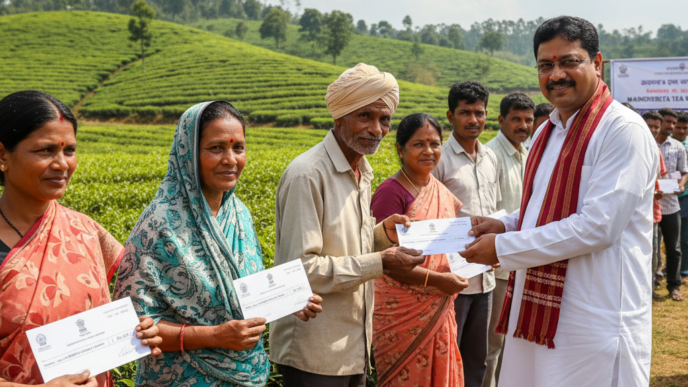
The rollout of the Delhi LakhpatiBitiya Yojana will be overseen by the Department of Social Welfare in coordination with the Delhi Education Board. A budgetary allocation of ₹100 crore has been earmarked for the first phase, drawn from the state’s welfare surplus and monitored by the Finance Department to prevent fiscal overstretch. Once an application is verified, the grant is transferred directly to the beneficiary’s bank account in two instalments: the first 50 % upon admission and the remaining 50 % after the completion of the inaugural academic year, provided the student meets the minimum attendance and academic performance benchmarks. To curb misuse, the disbursement will be linked to biometric verification at designated banks, and a real‑time analytics dashboard will track utilisation patterns. Independent auditors, comprising academicians, economists and civil‑society representatives, will conduct quarterly reviews, ensuring transparency and enabling course‑correction where necessary. For comparative insights into cash‑transfer programmes worldwide, the Wikipedia page on conditional cash transfers offers a useful reference.
Expected Impact and Comparative Perspective
Experts anticipate that the Delhi LakhpatiBitiya Yojana will generate a cascade of positive outcomes across social, economic and educational domains. By alleviating the financial burden on families, the scheme is projected to reduce dropout rates among girls from 18 % to under 10 % in the targeted cohorts, according to a pilot study conducted by the Delhi Institute of Economic Research in 2025. Moreover, the cash‑grant model is expected to boost female representation in STEM fields, where women currently account for only 23 % of enrolments, thereby fostering a more balanced labour market. The infusion of ₹1 lakh per girl also serves as seed capital for micro‑enterprises, potentially giving rise to hundreds of women‑led startups in sectors such as handicrafts, digital services and agritech. In a comparative lens, the Delhi initiative mirrors Kerala’s Kudumbashree micro‑credit programme but distinguishes itself through its straightforward, unconditional cash grant, which eliminates bureaucratic delays. Similarly, while Punjab’s Shagun scheme offers merit‑based scholarships, the Delhi scheme’s income‑based eligibility ensures broader outreach to economically vulnerable households.
- Higher enrolment of women in tertiary education
- Reduced gender gap in STEM disciplines
- Increased entrepreneurship among young females
- Enhanced economic independence and social status
Challenges, Mitigation Strategies and Future Roadmap
Scaling the Delhi LakhpatiBitiya Yojana to a national‑level model presents several implementation challenges, notably accurate beneficiary identification, safeguarding against fund leakage, and ensuring timely disbursement. To address these, the government will deploy a multi‑layer verification framework that combines Aadhaar‑linked biometric checks with real‑time verification of academic transcripts through the National Scholarship Portal. A dedicated monitoring dashboard, accessible to policymakers and civil‑society watchdogs, will flag anomalies and trigger automated alerts. Awareness campaigns will be launched in schools, community centres and via regional radio to educate families about eligibility criteria and the application timeline. Looking ahead, the Delhi government plans to expand the scheme’s ambit to include postgraduate studies, professional certifications and skill‑development courses, thereby creating a comprehensive support ecosystem for women from school to career. A pilot mentorship programme slated for 2027 will pair beneficiaries with industry leaders and alumni networks, offering guidance on career planning, startup pitching and professional networking. Ultimately, the vision is to integrate financial aid with academic and vocational mentorship, fostering a holistic environment where economic empowerment translates into sustained socio‑economic upliftment.
Stay updated with the latest Yojana schemes and government initiatives for better awareness and eligibility. For personalized guidance on accessing these benefits, reach out to us.