




Overview of Lakhpati Bitiya Yojana
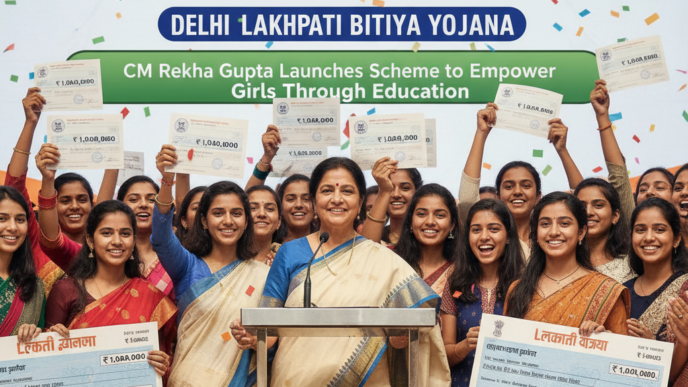
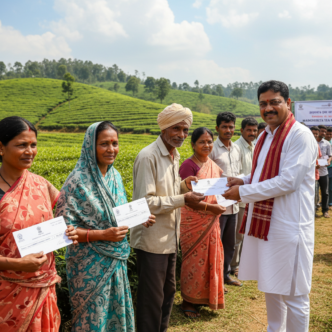
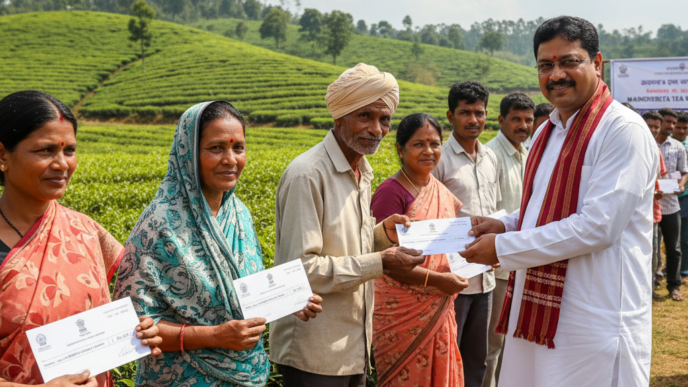
Delhi’s ruling coalition announced the launch of the Lakhpati Bitiya Yojana on 1 April 2026, marking a decisive shift from legacy cash‑transfer programmes to a dynamic, multi‑year empowerment model. The initiative is designed to enable women to achieve an annual income of at least one lakh rupees, thereby positioning them as active contributors to the state’s economy. By integrating direct financial assistance with targeted skill‑development and micro‑enterprise support, the scheme aspires to break entrenched cycles of poverty and marginalisation. Officials have described the programme as “a robust engine for gender‑inclusive growth that couples immediate relief with sustainable livelihood pathways.” The rollout will be piloted in two districts before a full‑scale state‑wide deployment later in the fiscal year.
Objectives and Benefits
The core objective of Lakhpati Bitiya Yojana is to accelerate financial inclusion among women who remain on the periphery of the formal economy. To that end, the scheme offers a suite of interlocking benefits:
- Annual cash grants released in installments to fund business ventures, education or vocational training.
- Complimentary participation in skill‑development workshops covering entrepreneurship, digital literacy and trades such as handicraft, food processing and apparel.
- Facilitation of micro‑loans through partner banks at preferential interest rates, coupled with mentorship from industry experts.
- Health and nutrition subsidies for beneficiaries who meet predefined income milestones, encouraging holistic well‑being.
- A digital certification that can be linked to credit‑scoring platforms, unlocking future financing opportunities.
By marrying monetary support with capacity‑building, the programme seeks to improve health outcomes, increase women’s participation in household decision‑making and stimulate local economic activity. Early estimates from the Department of Social Welfare suggest that if just half of the targeted beneficiaries launch micro‑enterprises, the initiative could generate up to 50,000 new jobs within three years. 
Eligibility Criteria
Access to Lakhpati Bitiya Yojana is strictly defined to ensure resources reach the most vulnerable women. Eligible applicants must:
- Be a resident of Delhi for a minimum of three consecutive years.
- Belong to a household whose annual income does not exceed six lakh rupees.
- Be a woman aged between 18 and 60 years.
- Fall into one of the following categories: widows, single mothers, women from Scheduled Castes or Tribes, or women employed in the informal sector such as domestic work, street vending or small‑scale manufacturing.
- Not be concurrently receiving overlapping cash‑transfer benefits from other state schemes.
Applications can be submitted online via the Delhi Services Portal or in person at designated community centres. Required documentation includes a valid Aadhaar card, address proof, and a self‑declared income statement. The government has set up a dedicated help‑desk to assist applicants throughout the verification process.
Financial Support Details
Beneficiaries receive a structured disbursement schedule spread over five years, designed to align cash inflows with economic milestones. The scheme’s financial architecture is as follows:
- First tranche: ₹10,000 released immediately after successful registration and verification.
- Subsequent installments of ₹20,000 each are triggered upon completion of a recognized skill‑development module or launch of a micro‑enterprise.
- An optional matching grant of up to ₹5,00,000 is available for scaling existing ventures, subject to approval by an independent review committee.
All payments are transferred directly to the beneficiary’s bank account, ensuring transparency and minimizing leakage. The disbursement model is tied to performance indicators such as income verification, business registration and participation in monitoring surveys, thereby fostering accountability.
Implementation Timeline
The rollout plan phases the programme’s expansion to balance pilot learning with rapid scaling. Key milestones include:
- 1 April 2026 – Launch of a pilot in East Delhi and South West Delhi targeting 5,000 women.
- Quarterly progress reviews conducted by a dedicated Monitoring Cell within the Department of Social Welfare.
- 1 July 2026 – Full statewide rollout covering all 11 districts, with an anticipated beneficiary base of 200,000 women.
- Mid‑term evaluation scheduled for 2028 to assess income uplift, enterprise creation and social outcomes.
- Comprehensive review before the next fiscal cycle to refine policy parameters and funding allocations.
Government officials have emphasized that the pilot phase will generate granular data on uptake, gender dynamics and implementation bottlenecks, enabling evidence‑based adjustments before nationwide implementation.
Comparison with Ladli Scheme
While the Ladli Scheme historically provided a one‑time cash transfer to girl children upon reaching adulthood, Lakhpati Bitiya Yojana adopts a fundamentally different, adult‑centric approach. Rather than a single lump‑sum payment, the new scheme offers a multi‑year support structure that dovetails with beneficiaries’ income trajectories. The focus shifts from passive receipt of funds to active empowerment through skill‑training, entrepreneurship mentorship and loan facilitation. Moreover, eligibility expands to include a broader spectrum of adult women — ranging from informal‑sector workers to single mothers — reflecting a nuanced understanding of gender‑based economic vulnerability. This evolution signals a strategic move from symbolic welfare gestures to a comprehensive policy framework aimed at sustainable income generation.
Expert Reactions
Policy analysts and gender‑economics scholars have lauded the scheme’s integrated design. Dr. Anjali Menon, a senior researcher at the Indian Institute of Technology Delhi, remarked that “Lakhpati Bitiya Yojana presents a pragmatic shift toward empowering women as economic agents rather than mere recipients of charity.” Civil‑society organisations, however, have issued cautious optimism. They stress that the scheme’s success hinges on robust monitoring, transparent grievance redressal and diligent auditing to prevent duplication with existing welfare programmes such as the Sukanya Samriddhi Yojana. Stakeholders have called for the establishment of an independent oversight committee to ensure equitable distribution and programme integrity.
Potential Impact on Women Empowerment
If effectively implemented, Lakhpati Bitiya Yojana could catalyze a measurable rise in women’s participation across Delhi’s formal economy. Projections indicate that up to 30 % of beneficiaries may launch micro‑enterprises within three years, creating an estimated 50,000 jobs and stimulating local markets. The emphasis on financial literacy and credit‑building is expected to enhance savings behaviour and improve access to larger commercial loans, fostering long‑term economic resilience. By guaranteeing a targeted income floor, the programme may also reduce incidences of domestic violence and increase women’s decision‑making authority within households. Over time, these shifts could translate into higher school enrolment for girls, as families experience reduced economic pressure and can invest more in education. The ripple effects may extend to community health indicators, as higher household incomes correlate with improved nutrition and access to healthcare.
Conclusion
The introduction of Lakhpati Bitiya Yojana represents a landmark moment in Delhi’s commitment to gender‑focused economic development. By moving beyond one‑off cash transfers to a structured, multi‑year support system, the government aims to create durable pathways out of poverty for women across the capital. Success will depend on seamless coordination among the Department of Social Welfare, partner banks, skill‑development agencies and community‑level implementation partners. Transparent data collection, regular impact assessments andponsive grievance mechanisms will be crucial to safeguarding the scheme’s credibility and efficacy. If these elements align, Lakhpati Bitiya Yojana could serve as a replicable model for other states seeking to promote women’s financial independence and social empowerment through innovative welfare design.
Stay updated with the latest Yojana schemes and government initiatives for better awareness and eligibility. For personalized guidance on accessing these benefits, reach out to us.