



Delhi LakhpatiBitiya Yojana: A Visionary Step Towards Empowering Girls
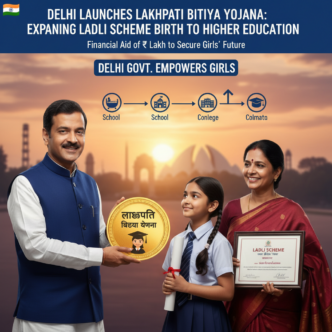
In a decisive move that underscores the Delhi government’s commitment to gender equity and financial inclusion, Chief Minister Arvind Kejriwal announced the Delhi LakhpatiBitiya Yojana. This scheme expands the existing Ladli Scheme, originally designed to support girl children, into a lifecycle framework that stretches from birth through higher education and beyond. By earmarking a targeted assistance of ₹1 lakh for families with a girl child born on or after April 1, 2024, the initiative seeks to remove economic barriers that traditionally hinder girls’ educational aspirations and broader socio‑economic upliftment.
How the Scheme Works: From Birth to Higher Education
The operational blueprint of the Delhi LakhpatiBitiya Yojana is multilayered, ensuring that financial aid is progressive rather than a one‑time lump sum. Upon registration, families receive a detailed informational kit that outlines eligibility, documentation requirements, and the timeline for disbursements. The Delhi Social Welfare Department maintains a secure digital repository where each beneficiary’s milestones are logged, and funds are automatically released when predefined conditions are met.
Key milestones that trigger payments include: 
- Completion of Secondary Education: A partial instalment of ₹20,000 is credited to help cover expenses for higher secondary studies.
- Enrollment in Undergraduate Programs: An additional ₹30,000 is released to support tuition, books, or ancillary costs for college education.
- Graduation or Diploma Completion: The final ₹50,000 is unlocked upon successful graduation, enabling beneficiaries to pursue employment, entrepreneurship, or skill‑upgrade courses.
By staggering the disbursements, the scheme not only incentivizes continuous academic engagement but also safeguards against misuse of funds, ensuring that assistance aligns with genuine educational progress.
Eligibility Criteria and Registration Process
Eligibility is deliberately inclusive to maximize outreach. Any resident family of Delhi that welcomes a girl child on or after April 1, 2024 automatically qualifies, irrespective of income level. To formalise the registration, families must furnish:
- A birth certificate issued by the municipal corporation.
- Proof of residence in Delhi (ration card, voter ID, or utility bill).
- An optional income declaration for statistical reporting only.
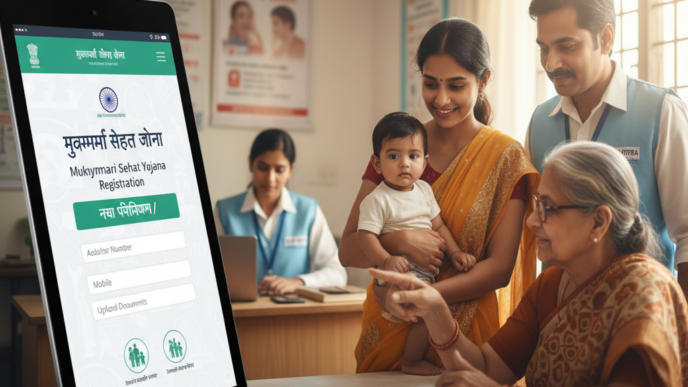
The registration can be completed either online via the official Delhi Government portal or offline at designated Anganwadi centres. Upon successful submission, a unique identification number is generated, linking the child’s details to the scheme’s digital ledger and facilitating seamless tracking of benefits.
Impact on Socio‑Economic Development
Early impact assessments project that the Delhi LakhpatiBitiya Yojana could lift thousands of girl children out of cycles of early marriage, child labor, and educational dropout. By guaranteeing a financial cushion of ₹1 lakh, the scheme directly addresses one of the most cited obstacles to female education—financial insecurity. Moreover, the integrated approach is expected to foster a cultural shift, encouraging families to view investment in girls’ education as a long‑term asset rather than a transient expense.
Stakeholders anticipate several downstream benefits:
- Accelerated increase in female enrollment rates across secondary and higher education institutions in Delhi.
- Reduced gender disparity indices, contributing positively to the state’s broader development goals.
- Enhanced economic participation of women, as beneficiaries are more likely to enter skilled employment or launch start‑ups after graduation.
These projected outcomes dovetail with Delhi’s vision of becoming a gender‑sensitive metropolis where equitable opportunities are the norm rather than the exception.
Policy Context and Government Support
The launch of the Delhi LakhpatiBitiya Yojana dovetails with a suite of existing welfare programmes aimed at uplifting women and children. It builds upon the foundations of the statewide Ladli Scheme, which already provides monetary assistance at critical life stages. By expanding its scope into a lifecycle‑based model, the government signals a strategic pivot toward holistic, evidence‑driven welfare.
Financially, the initiative is projected to require an annual allocation of approximately ₹200 crore, a figure comfortably accommodated within the Delhi budget’s social welfare segment. Chief Minister Arvind Kejriwal emphasized that this investment reflects the administration’s “unwavering resolve to empower the girl child and secure a brighter future for Delhi’s next generation.”
Challenges and Monitoring Mechanisms
While the scheme’s ambition is commendable, its success hinges on robust implementation and vigilant monitoring. Key challenges include:
- Accurate identification of beneficiaries to prevent duplication.
- Timely disbursement of funds across multiple educational stages.
- Ensuring transparency in the digital ledger to build public trust.
To mitigate these risks, the Delhi Social Welfare Department has instituted a multi‑tiered oversight structure:
- Monthly audits conducted by independent third‑party auditors.
- Real‑time data dashboards accessible to citizens for scheme transparency.
- A grievance redressal portal enabling beneficiaries to report discrepancies instantly.
These mechanisms are designed to foster accountability and ensure that the scheme’s intended impact is realized without procedural bottlenecks.
Future Outlook: Scaling Up the Model
Given the positive reception and demonstrable feasibility of the Delhi LakhpatiBitiya Yojana, policymakers are actively exploring avenues to replicate the model in other Indian states. Discussions are underway with the Ministry of Women and Child Development to integrate the scheme into the national framework of girl‑child welfare programmes. If adopted on a larger scale, the initiative could become a cornerstone of India’s strategy to achieve the Sustainable Development Goal (SDG) 5—gender equality—by 2030.
In conclusion, the Delhi LakhpatiBitiya Yojana represents more than a financial grant; it is a comprehensive empowerment tool that intertwines monetary support with educational incentives, fostering a generation of confident, educated women. By linking birth‑level assistance to higher education outcomes, Delhi sets a precedent for progressive, evidence‑based policymaking that other regions can emulate.
Stay updated with the latest Yojana schemes and government initiatives for better awareness and eligibility. For personalized guidance on accessing these benefits, reach out to us.