


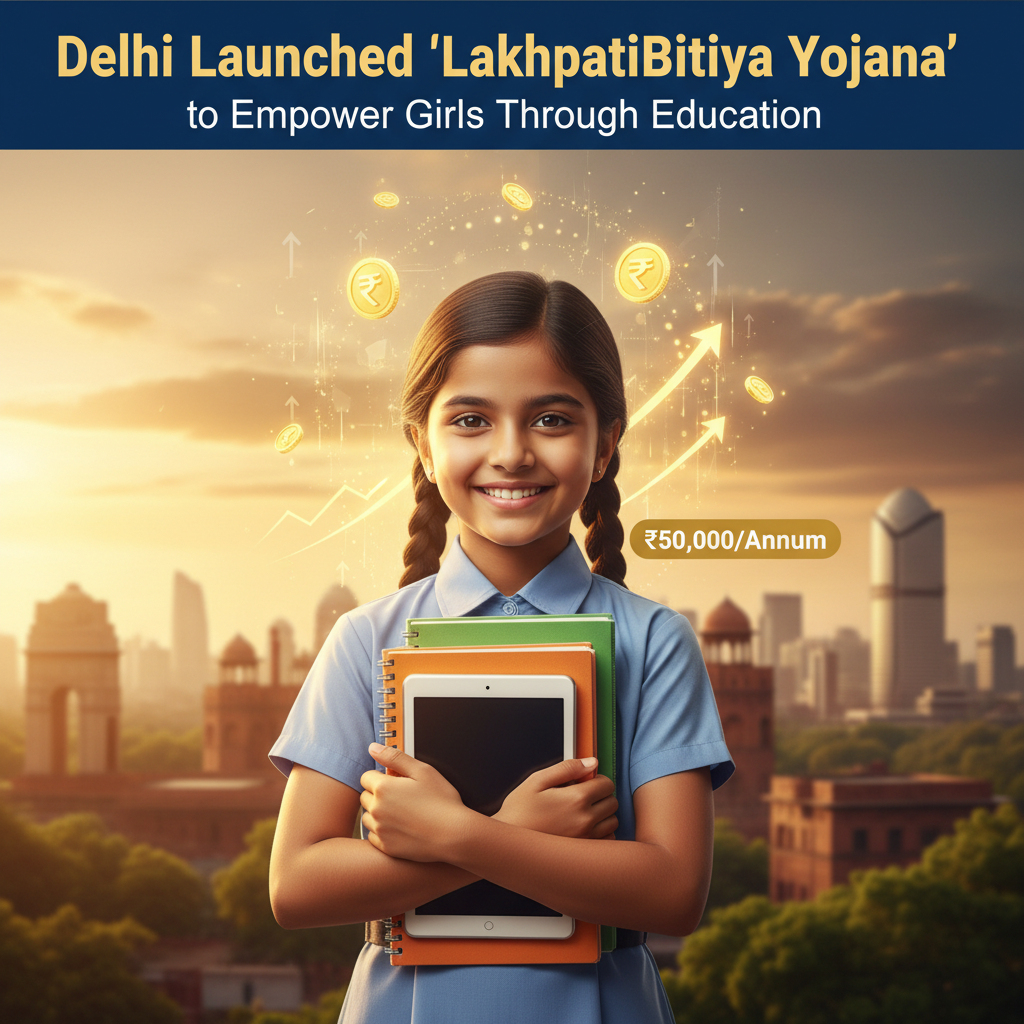
Overview of the Delhi LakhpatiBitiya Yojana
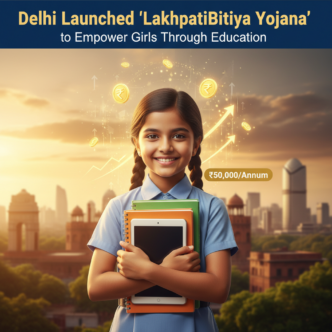
The Delhi government, under the leadership of Chief Minister Rekha Gupta, has unveiled the ‘LakhpatiBitiya Yojana’ as a transformative initiative aimed at empowering girls through education and fostering economic independence. This scheme is designed to provide financial incentives, scholarship support, and mentorship programs that encourage families to invest in their daughters’ academic futures. By targeting socio‑economic barriers, the initiative seeks to reduce dropout rates and promote higher education among female students across the National Capital Territory. The program aligns with national missions such as ‘Beti Bachao, Beti Padhao’ and reinforces Delhi’s commitment to gender equality and social upliftment, positioning the capital as a benchmark for progressive welfare policies.
Financial Incentives and Scholarship Structure
Under the LakhpatiBitiya Yojana, eligible girl students receive a stipend of up to INR 50,000 per annum, contingent upon regular school attendance and academic performance. The funds can be utilized for tuition fees, textbooks, or extracurricular activities that enhance educational development. In addition, the scheme offers merit‑based scholarships for higher secondary and undergraduate studies, ensuring that high‑achieving girls can pursue advanced courses without financial strain. These incentives are disbursed directly to beneficiaries through a secure digital portal, guaranteeing transparency and timely payments. The financial support is structured in three tiers: a baseline stipend for school‑going girls, a performance bonus for top‑scoring students, and a higher education grant for those admitted to reputed colleges or vocational institutes.
- Stipend Tier: Up to INR 50,000 annually for school attendance and grades.
- Performance Bonus: Additional incentive for students securing 90%+ marks in board examinations.
- Higher Education Grant: Up to INR 1,00,000 for undergraduate tuition and related expenses.
By leveraging technology, the disbursement mechanism reduces intermediaries, minimizes leakage, and provides real‑time tracking of fund utilization. Beneficiaries receive notifications on the ‘Delhi Services Portal’ when a payment is credited, and can also upload receipts to demonstrate how the funds were spent, thereby fostering accountability. 
Implementation Strategy and Stakeholder Collaboration
The rollout of the LakhpatiBitiya Yojana involves close coordination between the Department of Women and Child Development, the Education Department, and local municipal bodies. Each district will establish a dedicated implementation cell responsible for identifying beneficiaries, processing applications, and monitoring progress. Partnerships with NGOs and private educational institutions will facilitate mentorship programs, career counseling, and skill‑development workshops. This multi‑layered approach ensures that the scheme not only provides monetary support but also integrates holistic development pathways for young women. Municipal corporations will play a pivotal role in outreach, conducting community meetings and door‑to‑door campaigns to spread awareness about the enrollment process.
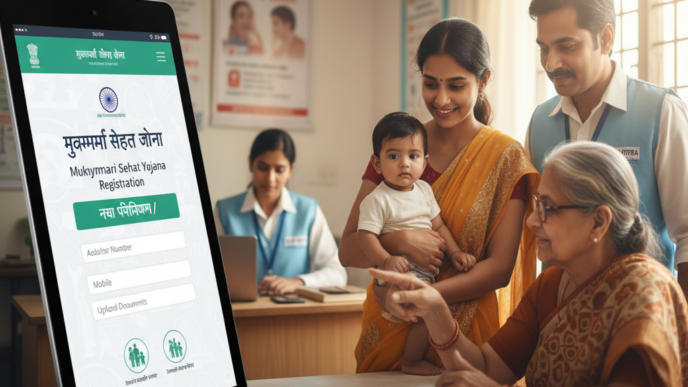
Technical support for the scheme is being provided by Delhi’s IT Department, which has developed a user‑friendly online portal linked to the central e‑governance platform. The portal enables parents to submit applications, upload required documents, and track the status of their request in real time. Additionally, the scheme incorporates a grievance redressal system that allows beneficiaries to raise concerns and receive swift resolutions. By engaging multiple stakeholders, the government aims to create a seamless ecosystem that maximizes reach and impact.
Expert collaborators include the Indian Institute of Technology Delhi’s Centre for Women’s Studies, which will design curriculum‑aligned mentorship modules, and the Confederation of Indian Industry’s Women’s Wing, which will organize industry‑specific skill workshops. These collaborations bring in expertise that enriches the scheme’s educational and vocational components, ensuring that girls receive not just financial aid but also guidance on career pathways aligned with market demands.
Eligibility Criteria and Enrollment Process
To qualify for the LakhpatiBitiya Yojana, families must meet specific income thresholds, with priority given to households belonging to the economically weaker sections (EWS). The annual family income should not exceed INR 8 lakh, and applicants must possess a valid income certificate issued by the local revenue office. Applicants must be enrolled in a government‑recognized school or college within Delhi and maintain a minimum attendance of 75 %. The enrollment process begins with an online application submitted via the ‘Delhi Services Portal’, followed by verification of documents such as income certificates, school admission letters, and academic records. Upon successful verification, beneficiaries receive a unique identification number that tracks disbursement and usage of funds.
The application window opens each fiscal year and runs for three months, allowing families adequate time to gather necessary paperwork. After submission, the verification process typically takes 15‑20 days, after which the applicant is notified of approval or rejection. In case of rejection, families can appeal the decision within a stipulated period, providing additional evidence to support their claim. The identification number assigned to each beneficiary is linked to a digital wallet that records all fund allocations, ensuring that the financial assistance can be audited by both the government and independent watchdogs.
To broaden outreach, the government has partnered with community leaders, women’s self‑help groups, and local NGOs to conduct awareness drives in slums, rural pockets, and marginalized neighborhoods. These drives include informational pamphlets, short video tutorials, and interactive Q&A sessions that demystify the application steps. Moreover, school teachers are being trained to assist students and parents in navigating the portal, thereby reducing the digital divide that could otherwise hinder participation.
Impact Assessment and Monitoring Mechanisms
The Delhi government has instituted a robust monitoring framework to evaluate the scheme’s effectiveness. Quarterly reports will be generated based on key performance indicators such as enrollment rates, dropout reduction percentages, and academic achievement metrics. An independent audit committee, comprising educators, economists, and gender‑rights activists, will review these reports to suggest policy refinements. Moreover, beneficiary feedback surveys will be conducted annually to capture on‑ground experiences and identify potential gaps in service delivery.
Early pilot data from the first two districts indicate a 9 % increase in girl enrollment in secondary schools compared to the previous academic year, and a 12 % decline in dropout rates among beneficiary families. The audit committee recommends scaling up the scheme to all 11 districts by the end of the fiscal year, while also introducing additional support services such as tutoring and mental‑health counseling. The monitoring system utilizes dashboards that visualize real‑time data, enabling policymakers to make evidence‑based decisions and allocate resources efficiently.
For deeper analysis, the government will collaborate with academic institutions such as Delhi University’s Department of Sociology to conduct longitudinal studies on the socio‑economic outcomes of scheme beneficiaries. These studies will assess variables like employment rates, income levels, and social mobility, providing a comprehensive picture of how the LakhpatiBitiya Yojana influences women’s empowerment over time. The findings will be published in open‑access repositories to promote transparency and facilitate knowledge sharing with other states seeking to replicate the model.
Broader Vision for Women Empowerment
Chief Minister Rekha Gupta highlighted that the LakhpatiBitiya Yojana aligns with the Delhi government’s larger agenda of gender equality and social upliftment. By investing in girls’ education, the administration aims to create a pipeline of skilled, confident women who can contribute meaningfully to the state’s economic development. The scheme also complements other welfare initiatives such as the ‘Beti Bachao, Beti Padhao’ campaign, reinforcing a coordinated effort to challenge gender stereotypes and promote female empowerment across all societal strata.
Beyond individual empowerment, the scheme is envisioned as a catalyst for broader societal change. Educated women are more likely to participate in the workforce, thereby boosting economic growth and reducing poverty rates. The World Bank has cited similar education‑focused welfare schemes as key drivers of inclusive development, and the Delhi government hopes to leverage such evidence to attract investment and collaborative projects.
Moreover, the program seeks to inspire a cultural shift by encouraging families to view daughters as assets rather than burdens. By showcasing success stories of beneficiary girls who have excelled in STEM fields, entrepreneurship, and public service, the government aims to create role models that inspire peers. Media partnerships with leading news outlets and digital platforms will amplify these narratives, ensuring that the achievements of LakhpatiBitiya participants receive widespread recognition.
Community Response and Anticipated Outcomes
Early reactions from civil society groups and local communities have been largely positive. Parent‑teacher associations (PTAs) have expressed enthusiasm about the financial relief offered to families, particularly those with multiple daughters. Educational experts predict that, if implemented effectively, the scheme could increase female enrollment in secondary schools by up to 12 % within the next three years. Such an uplift would not only improve literacy rates among women but also foster greater participation of girls in STEM fields, entrepreneurship, and leadership roles, thereby driving inclusive growth for Delhi.
Community leaders in areas like East Delhi and South Delhi have organized orientation sessions to guide prospective applicants through the portal, resulting in a surge of applications during the first enrollment phase. NGOs have also stepped forward to provide supplementary support, offering scholarships for extracurricular activities and facilitating internships with local businesses. These collaborative efforts have created a supportive ecosystem that not only financial aids but also mentors and guides young women toward fulfilling futures.
Public sentiment surveys conducted by independent research firms reveal that 78 % of respondents view the LakhpatiBitiya Yojana as a progressive step toward gender equity, while 65 % believe it will have a lasting impact on reducing child marriage rates. The scheme’s emphasis on education as a protective factor against early marriage aligns with findings from UNICEF, which link higher schooling levels to delayed marriage and improved health outcomes for girls.
Conclusion
The launch of the Delhi LakhpatiBitiya Yojana marks a significant milestone in the state’s commitment to education equity and women’s empowerment. By intertwining financial incentives with robust support structures, the scheme aspires to dismantle economic obstacles that have historically hindered girls’ educational aspirations. Continued vigilance, stakeholder collaboration, and data‑driven adjustments will be crucial to realizing its full potential and ensuring that every girl in Delhi can aspire to become a “Lakhpati” – a woman of a hundred thousand possibilities. As the program evolves, it holds the promise of transforming not just individual lives but the broader socio‑economic landscape of the National Capital Territory.
Stay updated with the latest Yojana schemes and government initiatives for better awareness and eligibility. For personalized guidance on accessing these benefits, reach out to us.