




Comprehensive Overview of the Lakhpati Bitiya Yojana
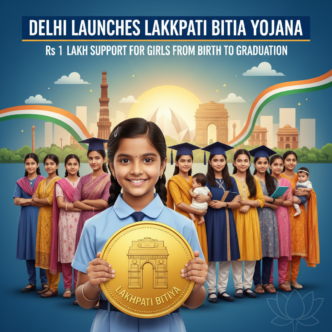
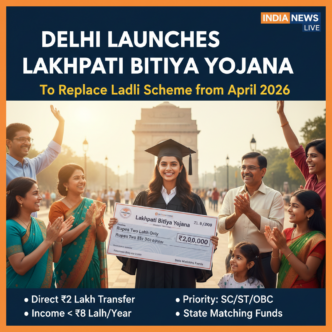
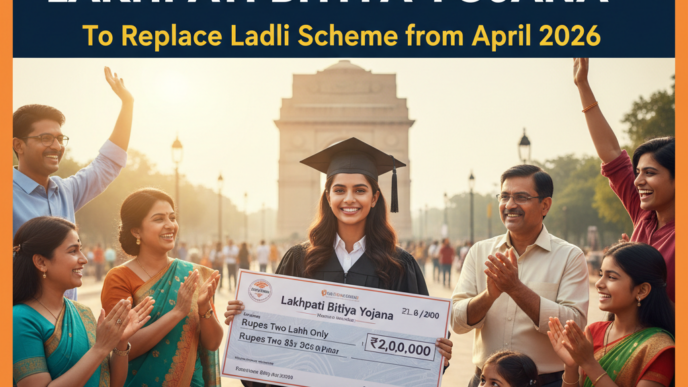
The Delhi Government’s Lakhpati Bitiya Yojana marks a watershed moment in the capital’s social welfare landscape, pledging a Rs 5 lakh endowment to every girl child upon her 18th birthday. The initiative is embedded in the larger vision of creating a gender‑sensitive ecosystem that nurtures female empowerment from the earliest stages of life. By coupling a substantial financial corpus with conditional incentives tied to education and health milestones, the scheme aspires to boost school completion rates, improve health compliance, and lay a sturdy foundation for economic independence among young women in the national capital.
Strategic Objectives and Socio‑Economic Impact
The Strategic Objectives of the Lakhpati Bitiya Yojana are multi‑faceted. First, it seeks to enhance enrolment and retention of girls in secondary and higher secondary schools, thereby curbing dropout trends that have historically plagued marginalized communities. Second, it encourages timely immunisation, antenatal check‑ups, and other preventive health measures by linking partial disbursement components to verified health records. Third, the scheme is designed to provide a long‑term financial safety net that can be channelled towards higher education, skill development, or the launch of micro‑enterprises, thereby breaking inter‑generational cycles of poverty. Early impact assessments from the pilot phase (2022‑2023) indicate a 12 % rise in girls’ school attendance in participating districts and a measurable increase in health‑service utilisation among beneficiary families.
Eligibility Criteria and Enrollment Workflow
Eligibility for the Lakhpati Bitiya Yojana is deliberately streamlined to maximise coverage. The scheme is open to all resident girl children of Delhi who: 
- are enrolled in a recognized educational institution at the time of application;
- maintain a minimum attendance of 75 % throughout the academic year;
- have completed the prescribed immunisation schedule as stipulated by the Delhi Health Department;
- agree to submit academic transcripts and health certificates at the time of claim.
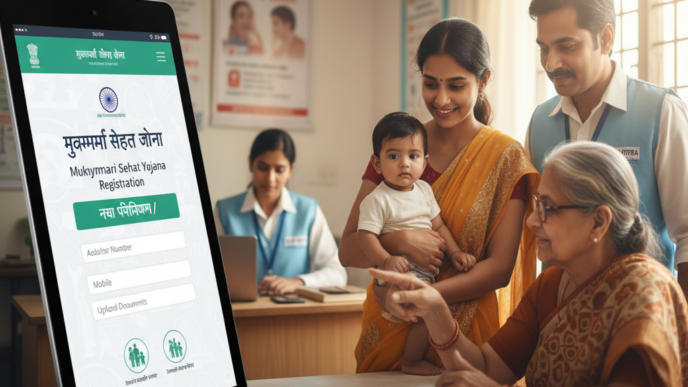
Applications are filed online via the Department of Women and Child Development portal, where each applicant receives a unique reference number. A verification panel comprising officials from education, health, and finance then scrutinises the documentation before approving the case for inclusion in the scheme’s corpus.
Financial Architecture and Corpus Management
The Financial Architecture of the Lakhpati Bitiya Yojana rests on a dedicated state‑funded corpus, supplemented by strategic contributions from the State Bank of India and selected private philanthropies. The corpus is invested in low‑risk instruments such as government securities and high‑grade corporate bonds. Periodic interest accruals are reinvested, ensuring that the eventual payout surpasses the nominal Rs 5 lakh figure through compounding. This financial design is intended to provide a meaningful sum that can cover tuition fees, living expenses, or seed capital for a nascent micro‑enterprise, thereby transforming a modest grant into a catalyst for substantial socio‑economic uplift.
Disbursement Mechanism and Conditionality
Disbursement is automatic once the beneficiary reaches the age of eighteen, contingent upon the fulfilment of all stipulated conditions. The amount is transferred directly to the beneficiary’s bank account, bypassing intermediaries and minimising leakage. In instances where the girl fails to meet the educational or health prerequisites, the allocated funds remain within the state’s welfare pool and may be re‑allocated to complementary empowerment projects. This conditional model distinguishes the Lakhpati Bitiya Yojana from many cash‑transfer schemes that operate without verification, reinforcing the Delhi Government’s commitment to outcome‑based financing.
Monitoring, Evaluation, and Transparency Measures
Robust Monitoring, Evaluation, and Transparency frameworks are integral to the scheme’s credibility. An independent oversight committee conducts quarterly audits and publishes detailed performance reports on the program’s website, tracking metrics such as beneficiary count, graduation rates, health‑compliance percentages, and socio‑economic uplift indicators. Real‑time data integration with Delhi’s e‑governance platform enables instantaneous validation of academic transcripts and health certificates. Such transparency not only fosters public trust but also equips policymakers with actionable insights to refine the scheme’s parameters.
Comparative Perspective with National Schemes
When juxtaposed with central initiatives like the Sukanya Samriddhi Yojana, the Lakhpati Bitiya Yojana stands out for its lump‑sum cash disbursement tied explicitly to educational attainment and health compliance. While Sukanya Samriddhi offers tax‑advantaged savings, it does not embed conditional milestones that encourage sustained schooling or preventive healthcare. Moreover, unlike many state‑level unconditional cash‑transfer programmes, Delhi’s scheme deliberately couples financial incentives with measurable developmental outcomes, thereby aligning monetary support with long‑term human capital formation.
Stakeholder Engagement and Capacity Building
The success of the Lakhpati Bitiya Yojana hinges on strategic stakeholder engagement. Non‑governmental organisations, community groups, and academic institutions are roped into awareness campaigns targeting underserved neighborhoods. Capacity‑building workshops empower teachers and health workers to accurately document and verify applicant credentials. Additionally, a dedicated helpline assists prospective beneficiaries with query resolution and guides them through the online application process, ensuring that no girl is excluded due to procedural ambiguities.
Challenges, Mitigation Strategies, and Future Roadmap
Implementation challenges include ensuring the authenticity of academic and health records, reaching girls from marginalised communities, and managing administrative workload. To address document verification, the Delhi administration is integrating the scheme with its existing e‑governance platform, enabling real‑time validation of transcripts and health certificates. Mobile registration units and community volunteers are deployed to bridge accessibility gaps, while automated processing tools streamline claim verification to prevent bureaucratic bottlenecks. Looking ahead, the scheme is slated for enhancements such as mentorship programmes pairing beneficiaries with female entrepreneurs, scholarship tie‑ups for overseas studies, and vocational training modules aligned with emerging industry demands. These extensions aim to transform the Lakhpati Bitiya Yojana from a financial corpus into a comprehensive empowerment ecosystem.
Stay updated with the latest Yojana schemes and government initiatives for better awareness and eligibility. For personalized guidance on accessing these benefits, reach out to us.