



Overview of Kaushal Vikas Yojana
The Kaushal Vikas Yojana is a flagship skill‑development initiative of the Government of India, launched in 2015 under the broader umbrella of the National Skills Mission. It is spearheaded by the Ministry of Skill Development and Entrepreneurship (MSDE) with the explicit aim of upskilling 100 million youth by 2025, thereby enhancing employability across sectors such as manufacturing, services, healthcare, and digital technologies. The scheme provides free vocational training, industry‑certified certification, and placement assistance to eligible participants. Training is delivered through a network of accredited centres equipped with modern laboratories, simulation labs, and partnerships with private industry players. Eligibility is open to Indian citizens aged 15‑59, with special focus on school drop‑outs, marginalised communities, and women seeking livelihood opportunities.
Key benefits include stipend support during training, access to free learning material, and linkage with employer‑driven recruitment drives. The programme also offers entrepreneurship modules, encouraging beneficiaries to start micro‑enterprises. According to official releases, over two million candidates have enrolled nationwide, with placement rates hovering around 45 percent in the first three years of implementation. The scheme’s digital portal, Skill India, serves as a one‑stop source for course listings, centre locations, and real‑time application status, reinforcing transparency and ease of access for applicants.
Status of Centres in Delhi
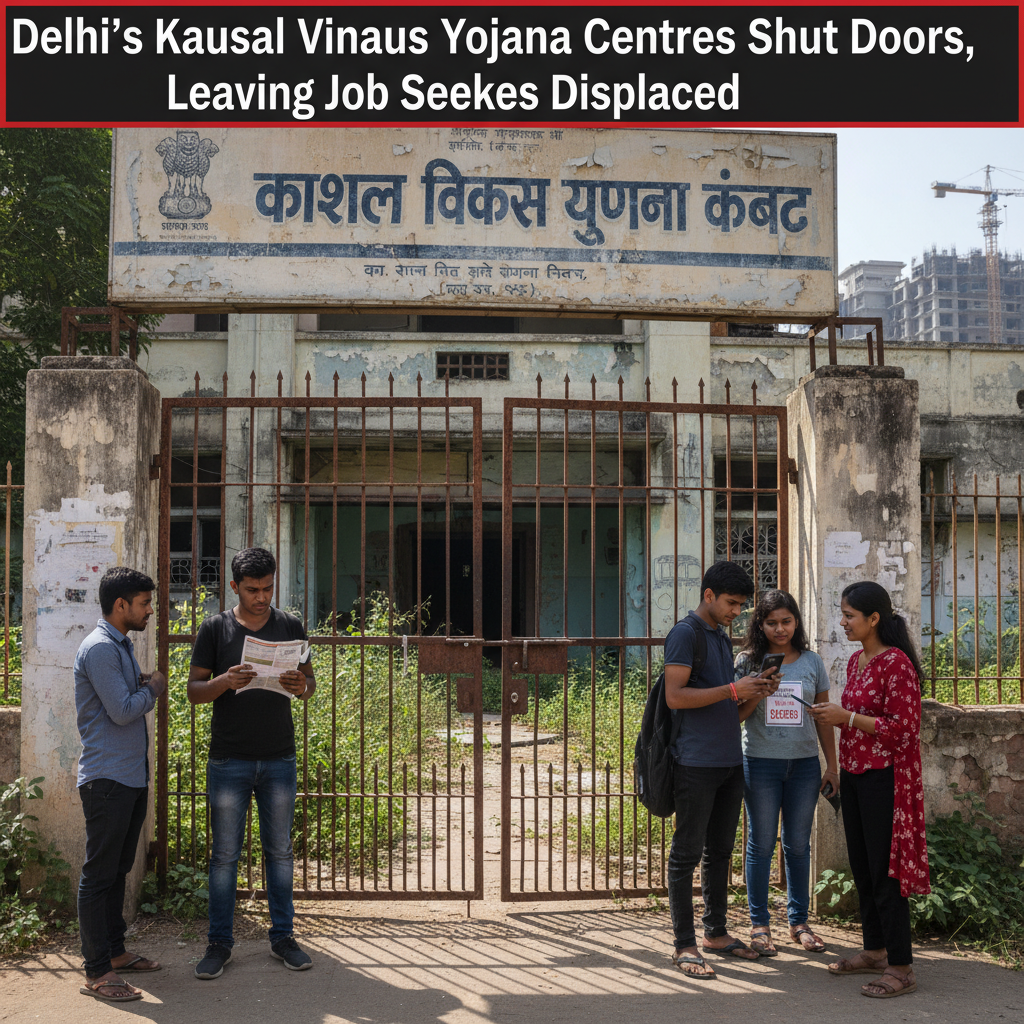
A recent investigative report by The Delhi Chronicle found that a substantial portion of the 35 Kaushal Vikas Yojana centres earmarked for the National Capital Region are either non‑functional or have been repurposed without official notification. Field visits to purported training sites in areas such as Punjabi Bagh, Laxmi Nagar, and Sector 22 revealed locked gates, closed windows, and in some cases, the premises now operating as commercial cafés or mobile repair shops. Several centres listed on the official portal have never conducted a single training batch, leaving thousands of registered aspirants without any recourse. 
Data from the MSDE’s quarterly audit indicates that only 12 of the 35 Delhi‑listed centres met the minimum infrastructure criteria — classroom space, computer labs, and certified instructors — required for delivering certified courses. Moreover, many advertised centres lack basic safety certifications, raising concerns about the quality of training and the legitimacy of enrolment figures reported to the public.
Citizens attempting to verify centre status through the government helpline often receive conflicting information. While some helpline agents cite “temporary suspension due to renovation,” others claim the centre has been permanently closed. This inconsistency erodes trust among job‑seekers, particularly those from economically disadvantaged backgrounds who rely on these centres as a stepping stone to formal employment.
- Only a fraction of the 35 approved Delhi centres are currently operational.
- Many advertised centres lack essential infrastructure such as classrooms, computers, or qualified trainers.
- Local residents report receiving contradictory information from official helplines.
Impact on Unemployed Youth
The closure or non‑existence of Kaushal Vikas Yojana centres has profound repercussions for Delhi’s unemployed youth. For many, the scheme represented a tangible pathway to acquire market‑relevant skills that align with the city’s burgeoning sectors — such as IT services, logistics, and advanced manufacturing. Without access to certified training, aspirants are unable to obtain the official qualification required to apply for government‑run placement portals like Mahatma or to participate in employer‑driven recruitment drives that prioritize scheme‑accredited candidates.
Surveys conducted by the Delhi Institute of Skill Research (DISR) among 1,200 affected applicants revealed that 68 % were unaware of alternative training facilities, while 42 % expressed a definitive intention to abandon any skill‑development plans altogether. This hesitation not only stalls personal career progression but also exacerbates feelings of helplessness, especially among young women and migrants from peripheral states who view the scheme as a critical avenue for socioeconomic mobility.
Moreover, the loss of a trusted public‑sector training avenue weakens the broader ecosystem of vocational education in the capital. Employers who have come to rely on the Kaushal Vikas Yojana’s certification as a quality indicator now face uncertainty, potentially leading to a shift toward informal hiring practices or a reliance on private training providers that may not be affordable for low‑income households.
Government Response and Way Forward
In response to the mounting criticism, the Ministry of Skill Development and Entrepreneurship announced an immediate review of all centre status reports across Delhi. A senior official, speaking at a press briefing, confirmed the formation of a verification committee tasked with auditing each listed centre’s operational legitimacy, infrastructure adequacy, and adherence to certification standards. The committee’s mandate includes re‑allocating dormant centres to high‑demand districts, upgrading existing facilities with modern equipment, and entering into public‑private partnership agreements with reputable training providers.
To enhance transparency, the ministry plans to launch a real‑time digital dashboard that will display enrolment numbers, training progress, and placement outcomes for each centre. This platform, accessible via the Skill India portal, aims to provide applicants with up‑to‑date information and enable swift corrective actions when discrepancies arise. Additionally, a dedicated toll‑free helpline will be expanded to offer instant verification of centre status, reducing reliance on intermediaries and minimizing misinformation.
Experts recommend embedding community participation in the oversight mechanism, suggesting that local NGOs and resident welfare associations be included in periodic inspections. Such collaborative monitoring could ensure that centres are attuned to the specific skill demands of the surrounding labour market, thereby improving placement relevance and overall programme efficacy.
Community and Stakeholder Reactions
Local non‑governmental organizations have stepped in to fill the vacuum left by shuttered Kaushal Vikas Yojana centres. Groups such as the Delhi Youth Development Forum (DYDF) have partnered with corporate social responsibility (CSR) initiatives of technology firms to conduct short‑term workshops on digital literacy, entrepreneurship, and soft‑skill development. While these grassroots efforts provide temporary relief, stakeholders emphasize that sustainable solutions must originate from a revamped official scheme that guarantees consistent funding and infrastructure support.
Political opposition parties have capitalized on the situation, demanding a parliamentary debate on the effectiveness of the Kaushal Vikas Yojana and calling for a parliamentary standing committee to investigate the administration’s handling of centre operations. Their demands have sparked nationwide discussions about improving accountability, audit trails, and public communication strategies for large‑scale government programmes.
Industry bodies, including the Confederation of Indian Industry (CII), have urged the Ministry to fast‑track partnerships with private training firms that can deliver certified courses under the scheme’s umbrella. They argue that such collaborations could bridge the infrastructure gap, expand capacity, and ensure that training curricula remain aligned with evolving market requirements.
Conclusion
The revelation that many Kaushal Vikas Yojana centres in Delhi are either non‑existent or shuttered underscores critical implementation challenges within one of India’s most ambitious youth‑skill development programmes. While the scheme’s overarching objectives — upskilling millions, enhancing employability, and fostering economic growth — remain vital, their impact hinges on reliable service delivery, accurate information dissemination, and robust monitoring mechanisms. Immediate corrective actions, transparent data reporting, and proactive community engagement are essential to restore public confidence and ensure that the promise of skill empowerment translates into tangible employment opportunities for India’s youth.
Stay updated with the latest Yojana schemes and government initiatives for better awareness and eligibility. For personalized guidance on accessing these benefits, reach out to us.