


Delhi Achieves Landmark Milestone as Over One Crore Digital Health IDs Issued Under Ayushman Bharat
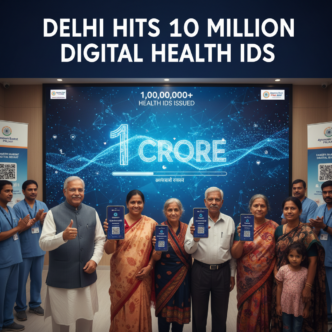
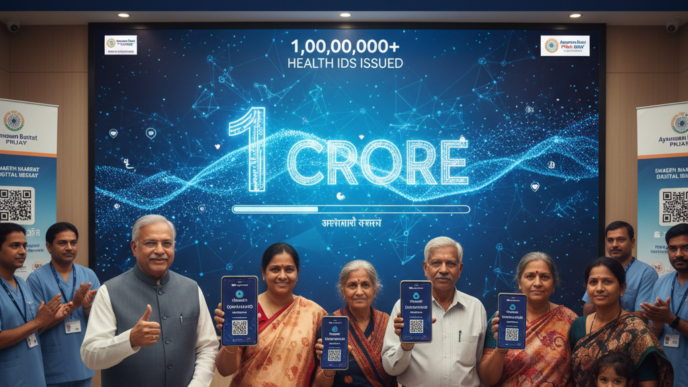
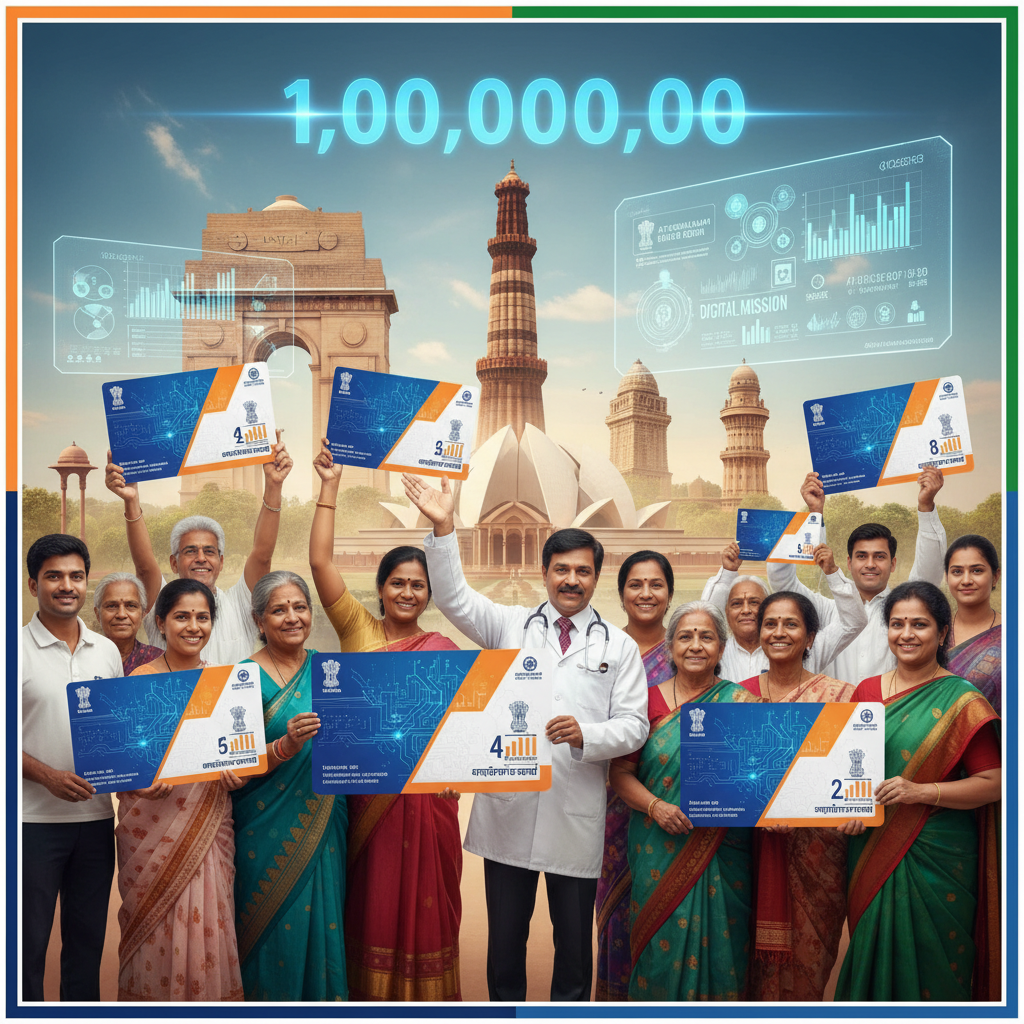
The National Capital Territory of Delhi has crossed the 10‑million mark in digital health identity registrations under the Ayushman Bharat Pradhan Mantri Jan Arogya Yojana (PM‑JAY). According to the latest bulletin from the Delhi Health Department, more than 1.02 crore unique health IDs have been generated since the state‑wide enrolment drive launched in January 2024. This milestone places Delhi among the few Indian states that have successfully issued a crore‑plus digital health IDs, reflecting rapid adoption of the nation’s flagship health‑digitalisation initiative. The achievement underscores how technology can accelerate universal health coverage, streamline insurance claims, and improve disease surveillance across a densely populated urban landscape.
Prime Minister Narendra Modi’s vision of a “Digital India” finds a tangible expression in Delhi’s health ecosystem, where a unique 14‑digit identifier links every beneficiary to an electronic health record accessible by participating public and private providers. The digital ID not only facilitates seamless claim settlement under Ayushman Bharat but also enables clinicians to view a patient’s complete medical history—including past illnesses, medication lists, immunisation status, and diagnostic reports—with a single click. For millions of low‑income families who rely on the scheme for secondary and tertiary care, this shift translates into reduced paperwork, faster treatment authorisations, and fewer interruptions in care.
What the Digital Health ID Means for Citizens
A digital health ID functions as a lifelong, secure identifier that consolidates a citizen’s health data across the Ayushman Bharat ecosystem and partner health IT platforms. Once generated, the ID can be accessed by any empanelled hospital, clinic, or pathology lab that is registered with the National Health Authority (NHA). This interoperability eliminates the need for patients to repeatedly present physical documents such as ration cards, Aadhaar, or previous medical certificates. 
For the everyday Delhi resident, the implications are concrete. A diabetic patient can now upload glucose readings to the cloud via a mobile app linked to their health ID, and a physician at a government hospital can instantly view those trends during an outpatient visit. Similarly, a senior citizen travelling to a different state for specialist care can present their ID at an empanelled centre in, say, Mumbai, and receive cashless treatment without the bureaucratic delays that traditionally accompanied inter‑state referrals.
Eligibility for a digital health ID extends to all Ayushman Bharat beneficiaries—approximately 500 million families nationwide—who hold a valid Jan Arogya Yojana card. The registration process is free and can be completed through multiple channels: mobile registration vans that travel to neighbourhoods, kiosks set up in primary health centres, and an online portal that accepts Aadhaar‑linked verification. In Delhi, the government has also introduced a multilingual mobile application that guides users through the steps in Hindi, Urdu, Punjabi, and English, thereby improving accessibility for non‑Hindi‑speaking communities.
Integration with Ayushman Bharat Insurance Framework
The digital health ID sits at the core of Ayushman Bharat’s insurance architecture. When a beneficiary is admitted to an empanelled hospital, the provider’s electronic health record system queries the NHA’s backend to verify the patient’s eligibility in real time. This integration eliminates the need for manual claim verification, reducing the typical claim‑settlement cycle from 30 days to under 48 hours in many Delhi hospitals, according to an internal audit released by the Delhi Health Department in August 2024.
Moreover, the linkage enables a “one‑nation‑one‑health‑record” model. If a migrant worker from Uttar Pradesh, registered as a beneficiary in Delhi, seeks treatment in a hospital in Bengaluru, the Bengaluru facility can instantly retrieve the patient’s ID, confirm coverage, and initiate cashless billing. This portability is particularly valuable for the city’s large transient workforce, estimated at over 2 million individuals, who often move between states for employment.
From an administrative perspective, the integration has yielded measurable cost savings. By eliminating duplicate diagnostic tests—such as repeated blood work or imaging—hospitals in Delhi have reported a 12 percent reduction in per‑patient examination costs. These savings are being reinvested into expanding outpatient services and upgrading digital infrastructure across municipal hospitals.
Impact on Public Health Outcomes
Early performance metrics suggest that the rollout of digital health IDs is already influencing key public health indicators in Delhi. The city’s vaccination coverage among registered IDs has risen by 8 percentage points compared with the pre‑ID period, thanks to automated reminder alerts that notify beneficiaries of upcoming immunisation dates. In addition, the traceability of patient histories has helped health officials monitor chronic disease management more effectively; readmission rates for hypertension and type‑2 diabetes have fallen by 4 percent over the past six months.
Community health workers have also leveraged the ID system to conduct targeted outreach in hard‑to‑reach areas such as the Unaided Colonies of East Delhi. By scanning a resident’s QR‑coded ID during door‑to‑door campaigns, workers can instantly update health records, enrol new beneficiaries into Ayushman Bharat, and flag individuals with high‑risk conditions for priority follow‑up. This data‑driven approach has contributed to a modest but steady increase in early detection of tuberculosis cases, a critical win in the fight against a disease that still afflicts a significant portion of the urban poor.
Challenges and Governance Measures
Despite the encouraging progress, experts caution that scaling the digital health ID model nationwide will require robust governance frameworks to address data privacy, cybersecurity, and standardisation across states. The Delhi Health Department has responded by implementing a multi‑layered security architecture that incorporates end‑to‑end encryption, multi‑factor authentication, and quarterly penetration testing conducted by accredited cybersecurity firms. All health data transmitted through the ID platform is stored on government‑owned cloud servers located within India, complying with the Personal Data Protection Bill’s localisation provisions.
Digital literacy remains a pivotal hurdle, particularly in rural peripheries and informal settlements where smartphone penetration is lower. To bridge this gap, the Delhi government has launched a series of community‑based enrolment drives staffed by trained volunteers, coupled with multilingual tutorials displayed on public transport and in market complexes. Moreover, the state is piloting a voice‑enabled registration system that allows users to complete the process using simple Hindi or Punjabi commands, thereby expanding access for low‑literacy populations.
Another governance consideration is data ownership. While the digital ID empowers patients with a single source of truth for their health records, it also raises questions about consent and data sharing among private providers. The NHA has issued revised consent protocols that require explicit patient approval before any third‑party provider can view or update health information, reinforcing transparency and building public trust.
Future Roadmap for the Digital Health Mission
Looking ahead, Delhi’s health authorities have outlined an ambitious phased roadmap to deepen the integration of digital health IDs with a broader spectrum of services. By the end of 2025, the city plans to roll out tele‑medicine consultations that are directly linked to each beneficiary’s ID, enabling virtual doctor‑patient interactions without the need for a separate appointment booking system. Medication adherence alerts—delivered via SMS or push notifications—will remind patients to refill prescriptions and take doses on schedule, a feature expected to improve chronic disease outcomes.
In another forward‑looking initiative, Delhi intends to synergise its air‑quality monitoring network with the health ID platform. When particulate matter (PM2.5) levels spike in a neighbourhood, the system will automatically trigger targeted health advisories to registered users, encouraging them to seek preventive care or adjust medication as needed. Such context‑aware alerts could be particularly beneficial for asthma patients, who represent a sizable proportion of the city’s paediatric population.
At the national level, the Ministry of Health and Family Welfare aims to achieve 100 percent digital ID coverage for all Ayushman Bharat beneficiaries by 2027. Early adopters such as Delhi, Maharashtra, and Karnataka together account for nearly 40 percent of the country’s current ID registrations, setting a precedent for the rest of India. The lesson from Delhi’s rollout—emphasising multi‑channel enrolment, robust cybersecurity, and community engagement—will likely inform policy directives as the government scales the Digital Health Mission across states.
- Digital health IDs enable instant, secure access to personal health records across public and private providers.
- Integration with Ayushman Bharat insurance allows real‑time eligibility checks and cashless claim settlement.
- Early outcomes show reduced duplicate tests, higher vaccination rates, and improved chronic disease management.
- Future plans focus on tele‑medicine, preventive health alerts, and enhanced data‑privacy safeguards.
Expert Commentary
Health economists view Delhi’s milestone as a proof‑of‑concept for larger‑scale digital welfare programmes. “When you combine a unique health identifier with insurance benefits, you can dramatically cut administrative friction and reduce fraudulent claims,” says Dr. Anjali Mehta, a senior research fellow at the Indian Institute of Public Health. “However, the sustainability of such gains hinges on transparent data governance and strict enforcement of confidentiality standards,” she adds.
Public health specialists also stress the equity dimension. Dr. Ramesh Joshi, director of the Centre for Urban Health, notes, “The digital ID can help bridge gaps in healthcare access for underserved populations, but only if it is paired with targeted outreach, affordable internet connectivity, and infrastructure investments in peripheral communities.” Their observations underline the need for continued focus on inclusivity to ensure that the benefits of digital health do not bypass the most vulnerable.
Conclusion
Delhi’s achievement of issuing over a crore digital health IDs under the Ayushman Bharat scheme exemplifies how technology can amplify the reach and efficiency of government welfare programmes. By intertwining a unique health identifier with insurance benefits, the city has set a benchmark for seamless, citizen‑centric health service delivery. As India moves toward a fully digitised health ecosystem, the lessons learned from Delhi’s rollout will inform policy decisions and implementation strategies aimed at ensuring inclusive, high‑quality healthcare for all citizens.
Stay updated with the latest Yojana schemes and government initiatives for better awareness and eligibility. For personalized guidance on accessing these benefits, reach out to us.