


Overview of the Review
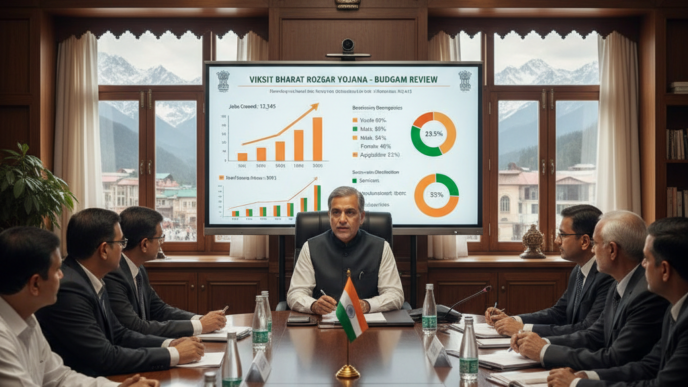
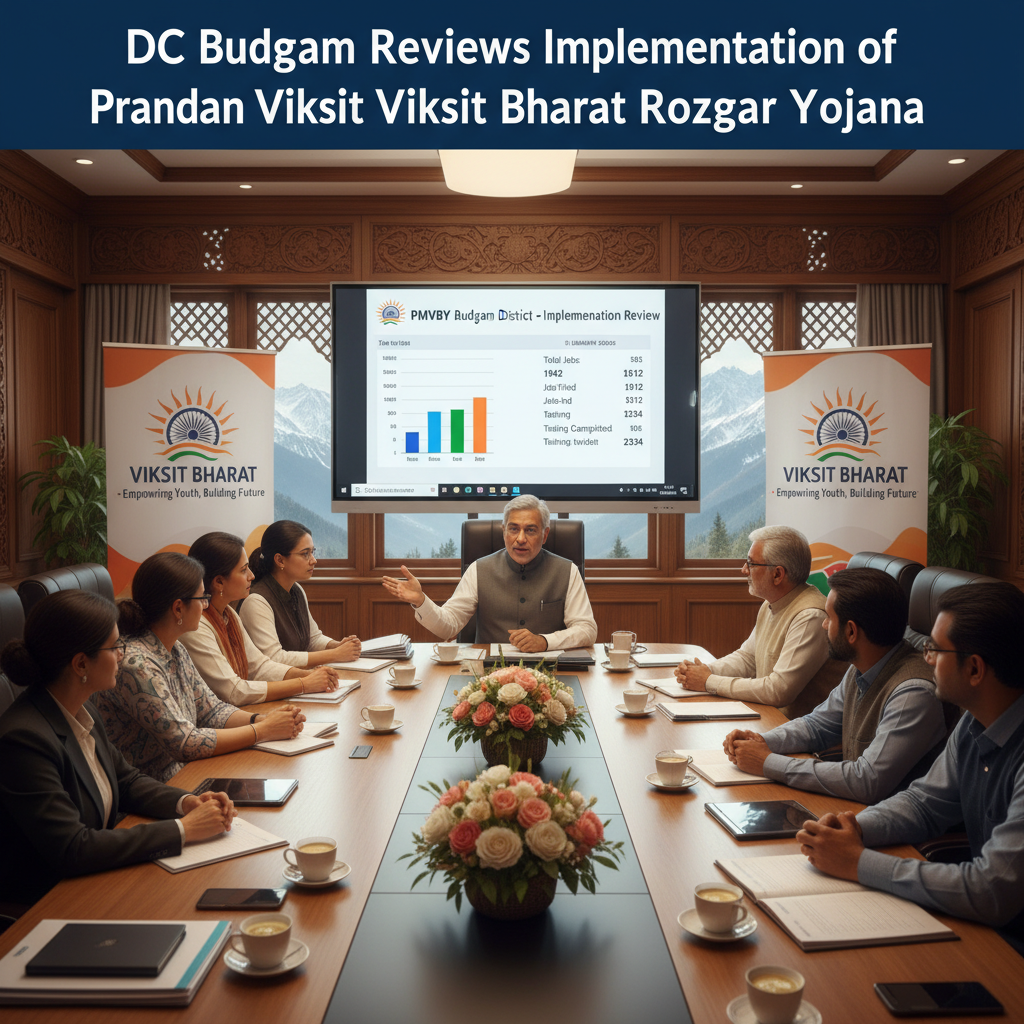
On 31 January 2026, the Deputy Commissioner of Budgam convened a multi‑stakeholder meeting to conduct a comprehensive appraisal of the Pradhan Mantri Viksit Bharat Rozgar Yojana (PMVBY) within the district. The gathering brought together senior officials from the District Employment Exchange, the Jammu & Kashmir Skill Development Mission, representatives of the local Chamber of Commerce, and a cohort of private‑sector employers who have signed memoranda of understanding (MoUs) under the scheme. The meeting’s primary purpose was to assess progress against the national target of creating ten million new jobs, identify logistical bottlenecks, and chart a course for scaling up implementation. By situating the review within Budgam’s broader economic strategy, officials hope to align local outcomes with the national vision of a “Viksit Bharat” by 2047, as outlined in the Government of India’s recent “National Perspective Plan for Skill Development 2024‑2030” (PIB Release).
Objectives and Key Metrics
The review was structured around three core objectives: first, to verify the enrollment of eligible youth; second, to evaluate the number of newly created positions that meet the scheme’s wage and tenure standards; and third, to assess employer satisfaction with the incentive mechanisms. To operationalise these objectives, the district adopted a set of performance indicators, including total job placements, training completion rates, and the volume of incentive disbursements. As of the latest reporting cycle, Budgam recorded 1,842 sanctioned positions, of which 1,512 have been filled, reflecting an 82 percent fill‑rate. Training programmes delivered in partnership with local polytechnics have benefited 2,534 participants, achieving a 78 percent completion rate. Incentive payments have been processed for 1,210 employers, underscoring the scheme’s growing fiscal footprint.
- Total sanctioned jobs: 1,842
- Jobs filled: 1,512
- Training participants: 2,534
- Completion rate: 78 percent
- Incentive payments processed: 1,210 employers
Implementation Status
Sector‑wise placement data reveal that manufacturing accounts for 38 percent of all sanctioned positions, followed by services at 32 percent, renewable energy at 15 percent, and the remaining 15 percent distributed across tourism and information technology (IT). The renewable energy segment experienced a notable surge in employer interest after the state unveiled a targeted incentive package for solar‑powered enterprises, while the IT sector displayed modest uptake, largely attributed to perceived administrative complexity and a shortage of locally‑available skilled developers. Training outcomes have been encouraging: more than 2,500 candidates completed skill‑enhancement modules covering digital literacy, entrepreneurship, and technical trades. The curriculum, co‑designed with the University of Jammu’s Department of Computer Science, emphasizes hands‑on projects and industry‑aligned certifications, aiming to boost employability scores. Demographic analysis, however, indicates that participants from rural blocks constitute only 22 percent of the total cohort, highlighting a geographic disparity that warrants remedial focus. 
Challenges Identified
Stakeholders pinpointed several systemic challenges that temper the scheme’s momentum:
- Awareness Deficits: Many eligible youth in remote villages lack knowledge of the scheme’s benefits, resulting in low registration rates.
- Digital Enrollment Barriers: The online portal for employer registration experiences intermittent connectivity in Budgam’s mountainous terrain, discouraging smaller enterprises from applying.
- Financial Delays: Disbursement of incentive funds to employers often experiences delays of up to six weeks, affecting cash flow for participating firms.
- Employer Engagement: Sectors such as technology and high‑skill services express concerns about bureaucratic paperwork and the perceived administrative burden of compliance.
These issues collectively limit the scheme’s reach and underscore the need for targeted interventions that address both supply‑side (youth) and demand‑side (employer) constraints.
Government Counter‑Measures and Community Impact
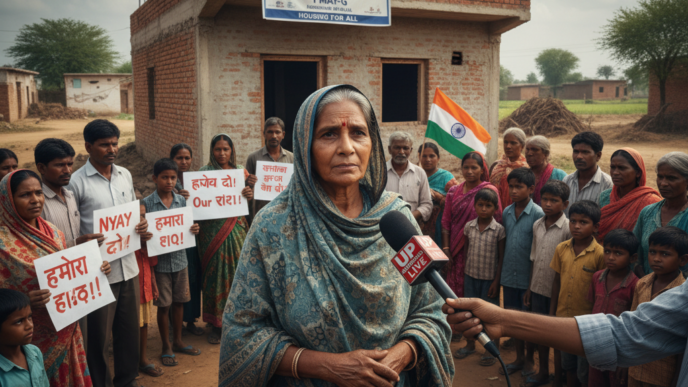
In response to the identified gaps, the state administration announced a suite of remedial actions designed to accelerate participation and streamline implementation. Mobile enrollment units, equipped with satellite internet and staffed by trained officials, will be deployed to the most inaccessible blocks, providing on‑site assistance for both youth and employers. An integration pilot with regional banks aims to cut the average processing time for incentive releases from six weeks to ten days, thereby improving cash‑flow stability for small and medium enterprises. A simplified documentation kit—featuring pre‑filled forms, checklist guides, and a concise eligibility checklist—will be distributed to reduce paperwork friction. Moreover, a statewide awareness campaign, leveraging local radio, social media influencers, and community leaders, is scheduled to launch in March 2026, targeting an additional 30,000 prospective beneficiaries. Early feedback from participants underscores the scheme’s tangible impact: a young entrepreneur from Beerwannah reported that completing the digital marketing module enabled him to secure a position with a local e‑commerce firm, resulting in a 25 percent salary increase; another participant from a remote hamlet described how the training bolstered his confidence, leading to self‑employment in handicraft production that now supports his extended family. However, some beneficiaries noted post‑placement attrition, with youths leaving the district after six‑month contracts due to limited career progression, prompting calls for mentorship programmes and career‑pathway planning to improve long‑term employment outcomes.
Looking ahead, the district will institute a quarterly reporting framework that tracks six‑month job retention, wage growth, and employer satisfaction scores. An independent audit committee, comprising academic experts and civil‑society representatives, will review the data and publish findings on a public dashboard hosted by the Ministry of Labour and Employment (Ministry of Labour and Employment). This transparent monitoring mechanism is intended to transform PMVBY from a short‑term employment boost into a sustainable engine for youth empowerment, aligning with the national ambition of a “Viksit Bharat” by 2047 (Wikipedia Overview).
Stay updated with the latest Yojana schemes and government initiatives for better awareness and eligibility. For personalized guidance on accessing these benefits, reach out to us.