




Launch of Gaudham Yojana
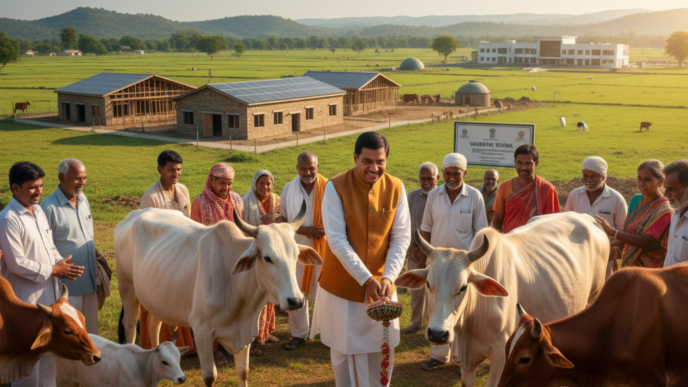
In a high‑profile ceremony held on March 14, 2026, Chief Minister Sai of the state unveiled the Gaudham Yojana, a comprehensive programme aimed at revitalising cattle conservation and accelerating dairy growth across the region. The launch, attended by senior officials from the Animal Husbandry Department, agricultural economists, and farmer cooperatives, underscored the government’s resolve to transform livestock rearing into a sustainable economic engine for millions of rural households. By integrating financial incentives, technological tools, and community‑driven initiatives, the scheme seeks to create a virtuous cycle of productivity, environmental stewardship, and socio‑economic upliftment.
The inaugural event featured a live demonstration of a mobile veterinary clinic, a showcase of high‑yielding Holstein‑Friesian cows, and a digital dashboard illustrating real‑time data collection plans. Chief Minister Sai emphasized that the Yojana is not merely a subsidy program but a holistic ecosystem designed to empower small and marginal farmers, reduce livestock mortality, and position the state as a leading dairy producer in the nation.
Background and Challenges Facing Indian Livestock
India’s livestock sector boasts an estimated 300 million cattle, forming a critical pillar of rural livelihoods. However, the industry grapples with low productivity, inadequate nutrition, fragmented veterinary services, and fragmented access to quality genetics. Traditional breeding practices have struggled to keep pace with the surging domestic demand for milk, which grew by over 50 % in the last two decades. Climate variability and shrinking grazing lands further exacerbate these challenges, threatening the long‑term viability of dairy farms, especially among smallholder producers. 
These constraints have prompted policymakers to seek an integrated solution that addresses productivity gaps, reinforces sustainable land use, and strengthens animal health infrastructure. The Gaudham Yojana is positioned as a response to these multifaceted challenges, aiming to leverage government resources, private sector expertise, and community participation to reshape the dairy landscape.
Financial Incentives and Eligibility Criteria
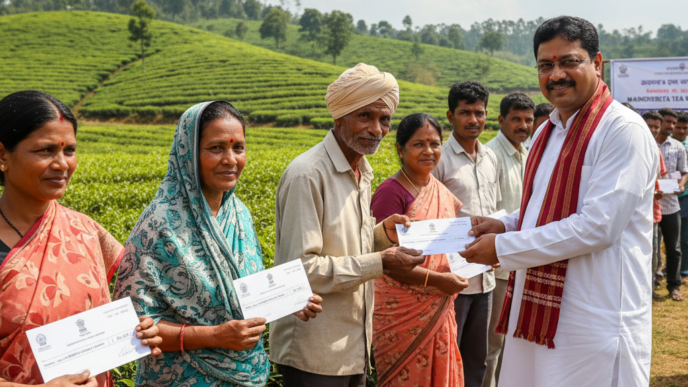
Under the financial arm of the Yojana, eligible households can claim a subsidy of up to ₹2 lakh per family for the acquisition of approved dairy cattle, with the exact amount varying by breed and region. Additionally, the scheme offers a 30 % reimbursement on expenditures related to high‑quality feed, fodder, and modern milking equipment such as automatic milking units and cooling tanks. Low‑interest loan facilities, facilitated through partnered banks, ensure that capital constraints do not impede participation, particularly for marginal farmers.
Eligibility is restricted to:
- Farmers owning up to 5 ha of cultivable land.
- Members of registered farmer cooperatives or self‑help groups.
- Households with a verified milk‑producing herd of at least two lactating cows.
- Women‑led agricultural enterprises, which receive an additional 10 % premium on subsidies.
These criteria are designed to target resources effectively while promoting gender equity and cooperative models.
Breed Improvement and Genetic Strategy
Breed improvement lies at the heart of the Yojana’s productivity agenda. The programme prioritises the introduction of high‑producing cross‑bred varieties such as Holstein‑Friesian and Jersey, recognised for their superior milk yield and feed‑conversion efficiency. Simultaneously, it commits to conserving indigenous breeds known for disease resistance, heat tolerance, and adaptability to local ecosystems. A dedicated Artificial Insemination (AI) network, coordinated with leading research institutes, will provide farmers with access to elite genetic material at subsidised rates.
Key components of the genetic strategy include:
- Establishment of state‑level breeding centres to produce high‑quality semen.
- Scheduled AI camps in remote blocks, targeting 1,000 farms per month.
- Monitoring of progeny performance through a digital registry.
By balancing productivity gains with the preservation of genetic diversity, the Yojana aims to create a resilient livestock base capable of meeting both market demands and environmental stresses.
Grazing Land Development and Sustainable Feed Solutions
To alleviate pressure on forest resources and ensure year‑round feed availability, the Yojana earmarks substantial funds for the development of community pastures, water troughs, and shade structures in identified hotspot regions. These interventions are complemented by subsidies for cultivating high‑nutrient fodder crops such as Lucerne (alfalfa) and Napier grass, which can be grown on marginal lands and harvested multiple times per year.
Specific initiatives include:
- Creation of 250 community grazing paddocks, each equipped with solar‑powered water pumps.
- Distribution of 10 kg of certified fodder seeds per hectare to beneficiary households.
- Establishment of a state‑wide “Fodder Bank” system to stabilise feed prices during seasonal shortages.
These measures are expected to improve animal health, reduce mortality rates by up to 15 %, and enhance overall milk yield per animal.
Veterinary Services and Animal Health Infrastructure
Robust veterinary support forms a cornerstone of the Yojana. The government will deploy a fleet of mobile clinics that conduct quarterly health camps in underserved villages, offering free vaccination drives, parasite control, and routine health check‑ups. A dedicated 24‑hour helpline, staffed by qualified veterinarians, will provide real‑time advisory services to farmers.
Key health interventions comprise:
- Annual foot‑and‑mouth disease (FMD) vaccination campaigns targeting 5 million cattle.
- Distribution of deworming kits to 2 million households.
- Provision of essential medicines and diagnostic kits through a state‑run pharmaceutical hub.
These efforts aim to curb disease outbreaks, lower mortality, and ensure a healthier dairy herd, thereby safeguarding farmer incomes.
Capacity Building and Farmer Empowerment
Capacity building is addressed through a series of hands‑on workshops, field demonstrations, and farmer‑to‑farmer exchange programmes. Topics covered include modern milking techniques, scientifically formulated feed rations, herd management best practices, and entrepreneurship skills such as value‑addition, branding, and market linkage. Partnerships with agricultural extension services, NGOs, and private agri‑tech firms will facilitate the dissemination of these best practices.
Participants will have access to:
- Certification courses in “Scientific Dairy Farming” recognised by the National Council of Agricultural Extension.
- Micro‑learning modules via a mobile app, offering bite‑size training on herd health, finance, and marketing.
- Opportunities to join state‑approved dairy cooperatives, granting collective market access.
These initiatives are designed to enhance technical know‑how, improve business acumen, and foster a culture of continuous learning among rural farmers.
Digital Monitoring Platform and Data‑Driven Management
A dedicated digital platform will serve as the backbone of monitoring and data collection throughout the Yojana. Farmers can log daily milk production, animal health metrics, and feed usage via a user‑friendly mobile application, which aggregates data for analysis by government analysts and agricultural researchers.
The platform features:
- Real‑time dashboards visualising herd performance, enabling timely interventions.
- Automated alerts for abnormal health indicators, prompting rapid veterinary response.
- Market intelligence feeds providing price trends for milk and related commodities.
- Geotagged mapping of grazing lands and feed‑crop areas to optimise resource allocation.
By harnessing technology, the Yojana creates a data‑driven ecosystem that enhances accountability, improves policy implementation, and empowers farmers with actionable insights.
Stakeholder Reactions and Industry Outlook
Stakeholder responses have been largely positive. Agricultural economists have lauded the initiative as a “holistic intervention that aligns financial incentives with productivity goals,” noting its potential to increase per‑cow milk yield by 20‑25 % within three years. Farmer cooperatives have expressed optimism, citing the financial relief and market linkages as catalysts for expanding herd sizes and improving livelihoods.
Environmental NGOs, however, have called for stringent oversight to prevent over‑grazing and ensure ecological safeguards are embedded within implementation plans. They recommend adopting sustainable land‑use zoning and regular audits to protect forest habitats and wildlife corridors. Such balanced perspectives highlight the need for integrating sustainability with economic objectives.
Implementation Challenges and Mitigation Strategies
Policymakers acknowledge potential hurdles, including inadequate infrastructure in remote districts, limited extension staff, and the need for continuous training. To mitigate these, the government will collaborate closely with local panchayats, self‑help groups, and private sector partners, leveraging their grassroots networks for efficient outreach. A specialised monitoring cell will be instituted to field grievances, coordinate remedial actions, and ensure that the scheme remains responsive to evolving community needs.
Additional safeguards include:
- Regular performance reviews every six months by an independent audit panel.
- Allocation of dedicated funds for capacity‑building of frontline officers.
- Use of satellite imagery to track land‑use changes and prevent illegal forest encroachment.
These measures aim to assure transparency, effectiveness, and adaptability throughout the programme’s lifecycle.
Future Outlook and Expansion Prospects
Looking ahead, the Gaudham Yojana is poised to become a benchmark model for other states seeking to revitalise their livestock sectors. The programme’s governance framework may be extended to incorporate renewable energy solutions, such as biogas plants that convert animal waste into electricity, thereby reinforcing sustainability objectives. Pilot projects in selected districts will explore the integration of solar‑powered milking facilities and water‑purification units.
Long‑term visions include:
- Scaling the digital monitoring platform nationwide, creating a unified national dairy database.
- Introducing incentive schemes for dairy entrepreneurship, encouraging value‑addition and export‑oriented production.
- Establishing research consortia to develop indigenous high‑yielding breeds adapted to local climates.
Continuous feedback loops, periodic policy reviews, and adaptive adjustments will enable the Yojana to evolve in step with technological advancements and emerging agricultural trends, fostering a resilient, prosperous dairy economy that benefits farmers, consumers, and the environment alike.
Stay updated with the latest Yojana schemes and government initiatives for better awareness and eligibility. For personalized guidance on accessing these benefits, reach out to us.