


Overview
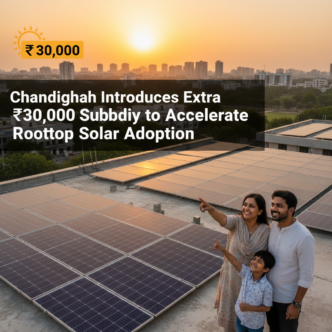
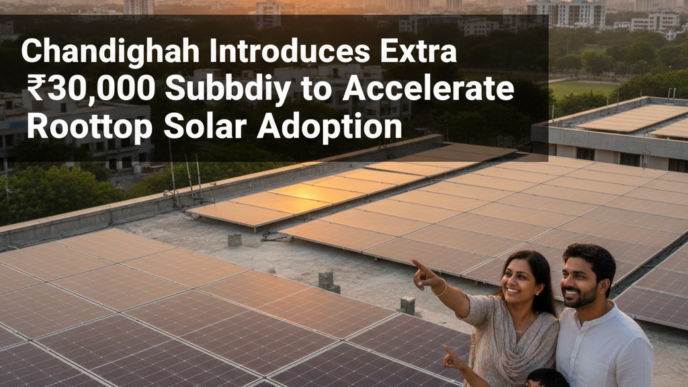
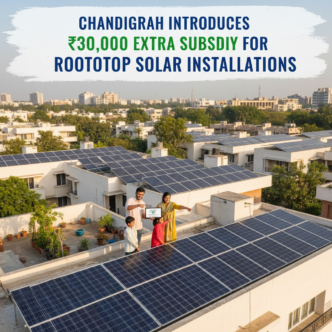
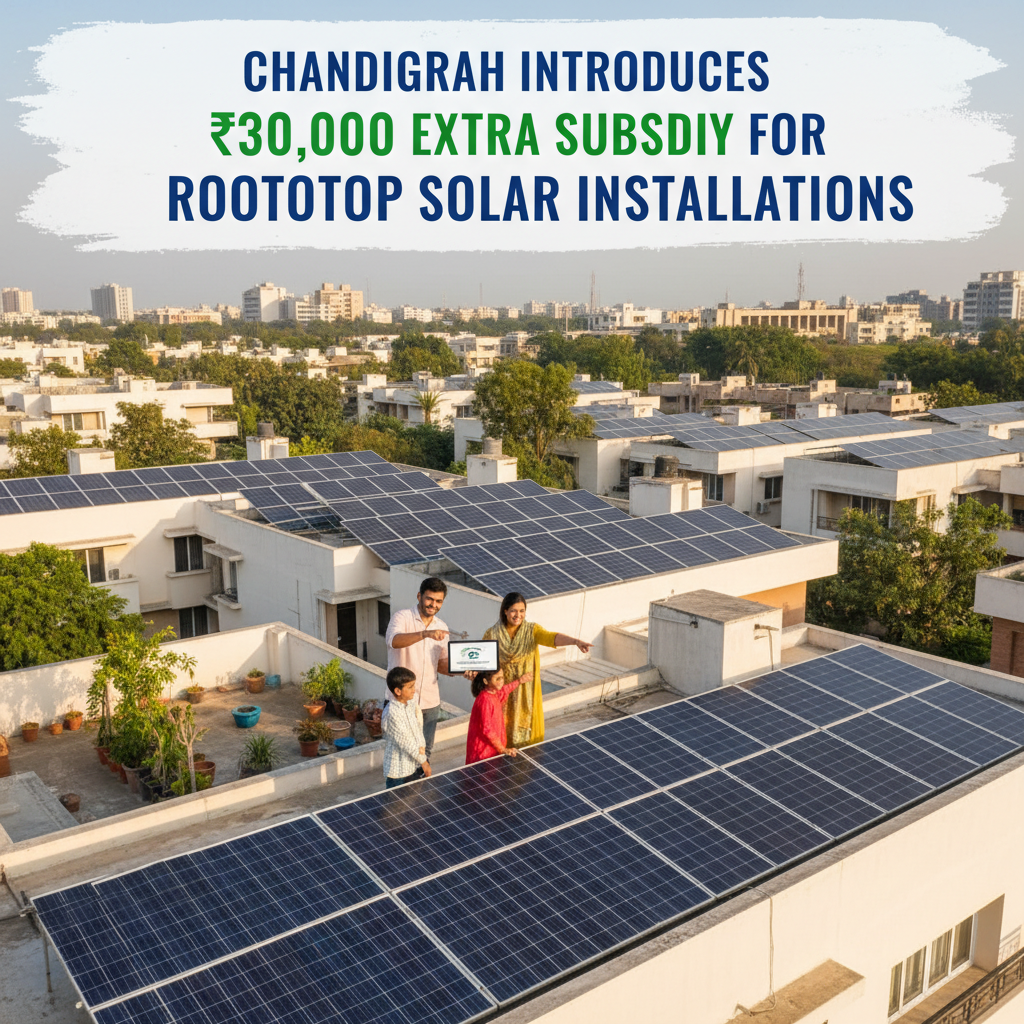
The Chandigarh administration has announced an additional incentive of ₹30,000 for households that install rooftop solar panels under the Chandigarh rooftop solar subsidy scheme. This financial boost is designed to accelerate the adoption of clean energy across the Union Territory, aligning with national renewable energy targets and the city’s own climate action objectives. By adding a concrete monetary advantage on top of existing subsidies, the government aims to make solar investments more attractive to middle‑income families and to reduce dependence on conventional fossil‑fuel‑based power generation.
Key Features
Under the new provision, eligible residential consumers can receive a flat subsidy of up to ₹30,000 for installations with a capacity of not more than 5 kilowatts (kW). The scheme operates on a first‑come‑first‑served basis and caps the number of sanctioned projects at 5,000 per fiscal year.
- Subsidy amount: ₹30,000 per installed capacity up to 5 kW.
- Eligibility: Residential consumers holding a valid electricity connection and fulfilling basic documentation requirements.
- Application process: Online submission through the Chandigarh Renewable Energy Development Agency (CREDA) portal.
- Required documents: Identity proof, address proof, latest electricity bill, and a site plan of the proposed installation.
- Verification: CREDA officials will conduct a site inspection to confirm suitability before releasing the subsidy.
Applicants can also combine this incentive with the existing Central Financial Assistance (CFA) under the Ministry of New and Renewable Energy (MNRE) framework, potentially reducing the net out‑of‑pocket cost by more than 30 % of the total project value. 
Benefits
The additional financial incentive shortens the payback period for solar investments, making the technology viable for a broader segment of society. Faster adoption translates into measurable environmental benefits: reduced greenhouse gas emissions, lower air‑pollution levels, and a tangible contribution to Chandigarh’s target of achieving 30 % renewable energy usage by 2030. Economically, the scheme stimulates local job creation in the solar installation sector and encourages domestic manufacturing of photovoltaic (PV) components.
For individual households, the subsidy not only lowers electricity bills but also provides a degree of energy security against future tariff hikes. Moreover, the initiative supports the broader Solar Power in India mission, which aims to install 100 GW of solar capacity by 2027. By aligning local incentives with national goals, Chandigarh positions itself as a model for other Union Territories seeking to accelerate clean energy transitions.
Implementation Timeline
The scheme became effective from 1 March 2026 and is slated to run across two consecutive fiscal years. Applications are accepted throughout the year, but the government reserves a quarterly window for priority processing of proposals submitted before the end of each quarter.
- Application window: Open throughout the fiscal year, with quarterly priority slots.
- Processing time: Approximately 30 days from document verification to subsidy disbursement.
- Cap: Maximum of 5,000 installations per year to manage administrative load.
- Funding source: State budget allocation supplemented by the Union Territory’s Renewable Energy Fund.
Prospective applicants are advised to monitor the official CREDA portal for announcements regarding the opening of the application window and to prepare their documentation well in advance to avoid delays.
Impact Assessment
Pilot projects conducted in the residential sectors of Sector 23 and Sector 45 demonstrated a 35 % increase in rooftop solar installations within six months of the subsidy introduction. Early beneficiaries reported a reduction of up to 40 % in monthly electricity expenditures, confirming the financial viability of solar adoption.
Based on these encouraging results, the administration projects an addition of approximately 150 MW of solar capacity by the end of 2027, representing a significant step toward meeting the city’s renewable energy aspirations. The subsidy is also expected to spur ancillary economic activities, such as financing services, equipment procurement, and maintenance contracts, thereby generating a multiplier effect across the local economy.
Conclusion
Chandigarh’s proactive approach illustrates how targeted state‑level incentives can complement national renewable energy initiatives and accelerate the transition to clean power. Citizens interested in participating should regularly check the official CREDA portal for application announcements and ensure that all required documents are prepared beforehand. Early registration not only maximizes the chance of securing the subsidy but also positions applicants to benefit from the anticipated 150 MW capacity boost by 2027.
For further guidance on the application process and to explore additional MNRE schemes, prospective installers can consult official resources or seek assistance from certified solar installers.
Stay updated with the latest Yojana schemes and government initiatives for better awareness and eligibility. For personalized guidance on accessing these benefits, reach out to us.