


Overview of the Centre’s Decision
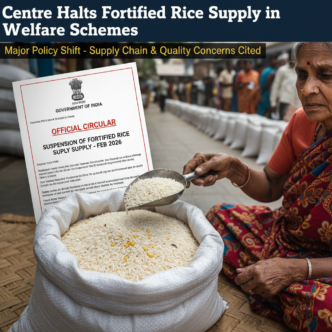
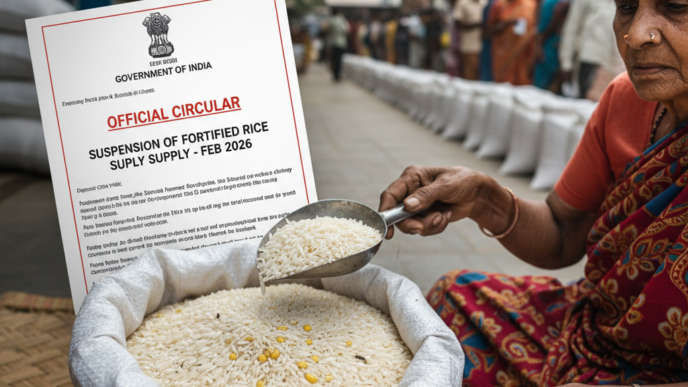
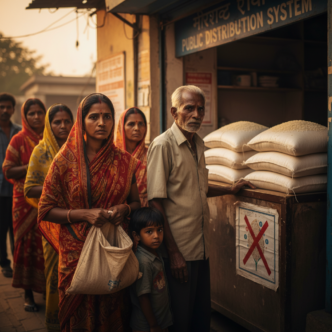
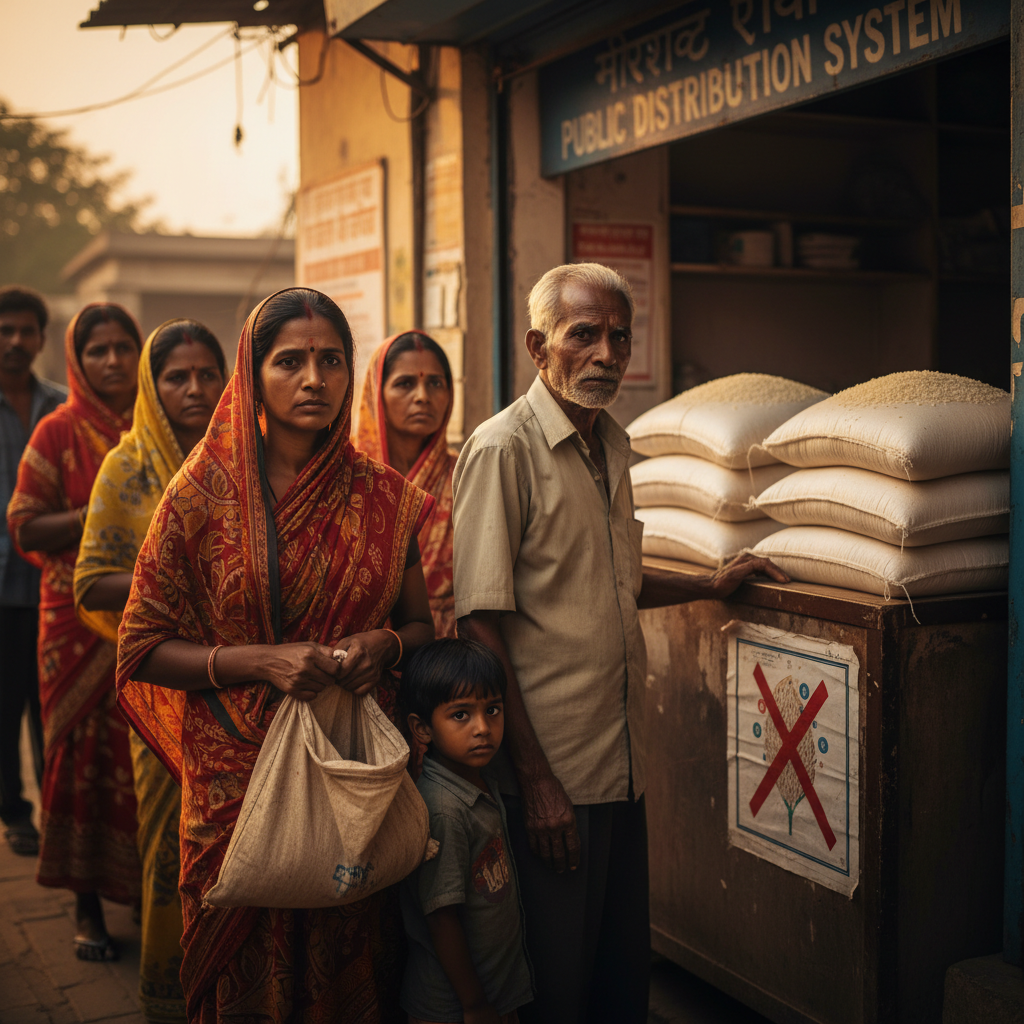
The central government has announced a temporary suspension of fortified rice distribution under several flagship welfare programmes, including the Integrated Child Development Services (ICDS) and the Public Distribution System (PDS).Public Distribution System officials said the pause is intended to allow a rigorous evaluation of the nutritional impact and logistical efficiency of the fortified grain supply chain. Key points announced by the Ministry of Consumer Affairs include an immediate halt to new supplies, a review of quality control data from manufacturing sites, and the establishment of a task force to examine alternative models of micronutrient delivery. The decision follows a series of audit reports that flagged inconsistencies in fortification levels at several partnered factories.
According to official sources, the suspension will remain in place until the government can verify that every batch of fortified rice meets the prescribed standards for iron, zinc, vitamin A, and other essential micronutrients.Press Information Bureau release emphasised that no permanent policy change will be made without a transparent assessment of both health outcomes and cost effectiveness. Minister of Consumer Affairs highlighted that the move is part of a broader effort to modernise welfare food security and ensure that subsidies translate into measurable improvements in public health.
Background of Fortified Rice in Welfare Programs
Fortified rice—regular rice grains enriched with a blend of iron, zinc, vitamin A, and other micronutrients—was first introduced under the National Iron+Wheat Fortification Initiative in the early 2010s.Food fortification The programme sought to combat widespread micronutrient deficiencies, particularly anemia among women of reproductive age and children under five. Recognising that rice constitutes a staple for over 65% of the Indian population, policymakers expanded the concept to include fortified rice in states with high prevalence of nutritional deficits, such as Bihar, Jharkhand, and Odisha. 
Implementation strategies involved partnerships with private manufacturers who meet Bureau of Indian Standards (BIS) specifications, distribution through Fair Price Shops (FPS), and integration into community kitchens operating under the Pradhan Mantri Garib Kalyan Yojana. PIB report on community kitchens The fortified grain is typically blended at a ratio of 1:100 with regular rice, ensuring that each serving delivers approximately 3 mg of iron and 1.5 mg of zinc, nutrients identified as critical for preventing anemia and boosting immunity.
Eligibility for fortified rice under welfare schemes is linked to the household’s inclusion in the Below Poverty Line (BPL) category, or to beneficiaries of the Antyodaya Anna Yojana (AAY). Approximately 100 million individuals across the country were slated to receive fortified rice under the PDS and ICDS programmes in the fiscal year 2023‑24.Planning Commission annual report The initiative was hailed as a cost‑effective intervention, with an incremental cost of merely ₹0.30 per kilogram of fortified rice, making it financially viable for large‑scale rollout.
Implications for Beneficiaries
The suspension directly impacts millions of low‑income households that rely on subsidised fortified rice as a primary source of essential micronutrients. For many families, especially those in rural and under‑served urban areas, fortified rice serves as a critical supplement that helps meet daily iron and zinc requirements, thereby reducing the risk of anemia, weakened immunity, and developmental delays in children.World Health Organization fact sheet on anemia
- Children aged 6‑59 months receive fortified rice through ICDS mid‑day meals, contributing up to 30% of their daily micronutrient intake.
- Pregnant and lactating women enrolled in the Janani Suraksha Yojana receive fortified grains through Anganwadi centres, supporting maternal health and fetal development.
- Elderly recipients of the National Social Assistance Programme (NSAP) benefit from fortified rice distributed via the Old Age Pension scheme, helping to maintain bone health and muscle function.
Health experts warn that an abrupt removal without a robust replacement could exacerbate existing nutritional gaps. Dr. Anita Sabharwal, a nutritionist at the Indian Institute of Public Health, warned that the sudden halt may push vulnerable groups toward poorer dietary diversity, especially where alternative fortified foods are unavailable.NIH study on food fortification Advocacy groups such as the Right to Food Campaign have called for transparent communication and an interim supply of fortified rice alternatives, such as iron‑fortified wheat flour or targeted iron supplementation capsules.
In the meantime, state governments have expressed concerns about the timing of the suspension. The Government of Bihar, which had planned to scale up fortified rice coverage to 12 million households by 2025, issued a statement urging the Centre to expedite its audit process and provide a clear roadmap for reinstating the supply chain.Official Bihar government website
Government’s Rationale and Future Steps
Ministry officials cited two primary reasons for the pause: supply‑chain reliability and quality‑control compliance. Recent inspections uncovered that some fortification units failed to maintain consistent micronutrient premix concentrations, leading to batches that either under‑fortified or over‑fortified the target nutrients. Such variability can compromise the intended health benefits and erode public trust in government‑run nutrition programmes.
To address these concerns, the Centre has mandated a comprehensive audit of all manufacturing facilities involved in fortified rice production. The audit will be overseen by the Food Safety and Standards Authority of India (FSSAI) in collaboration with the Ministry of Health and Family Welfare. A new certification framework is expected to be rolled out by the end of the fiscal year, ensuring that only approved units can supply fortified grains to welfare channels.FSSAI licensing portal
In parallel, the government announced plans to explore alternative models of nutrient delivery. These include targeted iron supplementation for adolescent girls, biofortified rice varieties developed through the Indian Council of Agricultural Research (ICAR), and the use of micronutrient powders (MNPs) that can be added to home‑cooked meals. Each of these alternatives is being evaluated for cost, scalability, and impact on public health outcomes.ICAR official site The task force will also examine the feasibility of integrating fortification into the Mid‑Day Meal Scheme at the state level, leveraging existing kitchen infrastructures to reduce distribution bottlenecks.
Financially, the suspension is projected to free up approximately ₹2,500 crore in the current fiscal budget, which can be redirected toward strengthening monitoring mechanisms and expanding biofortification research. The Ministry of Finance has indicated that these savings will be accounted for in the next five‑year plan for food security, underscoring a shift toward evidence‑based policy design.
Stakeholder Reactions and the Road Ahead
State governments have responded with a mixed bag of support, criticism, and calls for clarification. While some states, such as Kerala and Punjab, have praised the Centre’s emphasis on quality control, others have expressed frustration over the lack of a concrete timeline for resuming supply. Kerala’s Health Minister released a statement demanding that the Centre provide a detailed schedule for reinstating fortified rice distribution, arguing that prolonged delays could jeopardise health targets under the National Health Mission.Kerala government portal
Civil society organisations have organised protests in New Delhi and several state capitals, demanding an immediate restoration of the welfare scheme. Demonstrators carried banners highlighting the importance of fortified rice for maternal and child health, and they called on the Centre to adopt a “no‑cut” approach until a reliable replacement is in place. Advocacy groups have also petitioned the Supreme Court to intervene, seeking a directive that the government ensure continuous access to fortified foods for vulnerable populations.Right to Food Campaign
Nutrition experts and academic institutions have offered technical support to the government’s task force. Professors from the Indian Institute of Public Health and the London School of Hygiene & Tropical Medicine are collaborating on a research project that will assess the long‑term health outcomes of fortified rice versus alternative fortification strategies. Their preliminary findings suggest that while fortified rice remains a cost‑effective option, its efficacy is highly dependent on consistent quality and proper administration.ISLGB research publications
Media commentary has underscored the need for a balanced approach that safeguards fiscal responsibility while protecting public health. Editorials in leading dailies argue that the suspension presents an opportunity to revamp the fortification ecosystem through stronger regulatory oversight, greater transparency, and the incorporation of digital monitoring tools such as blockchain‑based supply‑chain tracking. Such innovations could enhance traceability, reduce wastage, and ensure that every beneficiary receives a batch that meets the prescribed nutritional standards.
Looking ahead, the Centre has pledged to conduct a series of stakeholder consultations over the next two months. These sessions will bring together state representatives, industry players, public health professionals, and community organisations to shape a revamped framework for fortified grain distribution. Policy documents expected to emerge from these consultations include provisions for real‑time quality verification, a tiered certification system for manufacturers, and a monitoring dashboard that aggregates data from Fair Price Shops and Anganwadi centres across the country.
In the interim, the government has announced a pilot programme to distribute iron‑fortified wheat flour in selected districts of Uttar Pradesh and Madhya Pradesh, aiming to test an alternative conduit for micronutrient delivery while the fortified rice review is underway. This pilot, funded jointly by the Ministry of Rural Development and the World Bank, will be evaluated for impact on hemoglobin levels among women of reproductive age after a 12‑month period.
Ultimately, the episode highlights the intricate interplay between agricultural policy, food technology, and public health. It underscores the necessity for a coordinated, evidence‑driven approach that can adapt to evolving nutritional science while ensuring that the most vulnerable citizens do not suffer from gaps in essential micronutrient intake.
Stay updated with the latest Yojana schemes and government initiatives for better awareness and eligibility. For personalized guidance on accessing these benefits, reach out to us.