


Overview of the Central Free Coaching Scheme
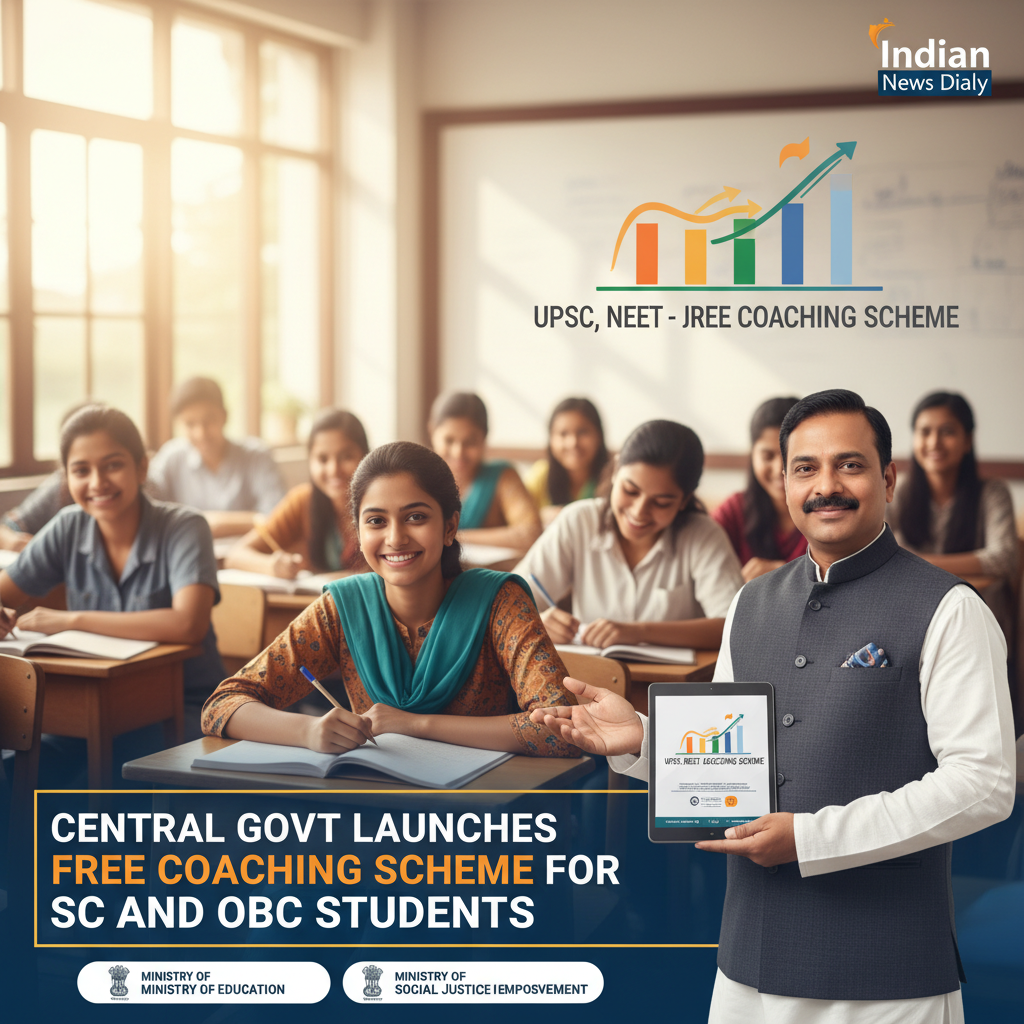
The Ministry of Education, in partnership with the Ministry of Social Justice and Empowerment, has unveiled a nationwide free coaching scheme for SC and OBC students preparing for high‑stakes competitive examinations. Officially branded as the “National Competitive Examination Coaching Initiative,” the programme is designed to bridge the opportunity gap that has historically limited access to quality preparation for students belonging to historically marginalized communities. By leveraging existing coaching infrastructure and introducing a centrally funded support model, the scheme seeks to ensure that financial constraints no longer dictate academic trajectories in engineering, medicine, civil services, and allied fields. The rollout, announced in the Union Budget 2026‑27, aligns with the government’s broader vision of “inclusive education” and complements other welfare measures such as the Post‑Matric Scholarship for SC/ST students and the National Scheme for Inclusive Education.
Objectives and Expected Impact
The primary aim of the scheme is twofold: to enhance the representation of SC and OBC candidates in premier professional courses and government posts, and to foster a culture of merit‑based competition that is genuinely accessible to all. According to official statements, the initiative anticipates a measurable uplift in qualification rates among eligible candidates, echoing successful pilot programmes in states like Bihar and Jharkhand where targeted coaching lifted pass percentages by 15‑20 percent. Beyond statistics, policymakers expect long‑term socioeconomic benefits, including a more diverse public‑sector workforce and heightened social mobility for disadvantaged youth. Education analysts link this move to the United Nations Sustainable Development Goal 4 (Quality Education) and Goal 10 (Reduced Inequalities), underscoring India’s commitment to equitable skill development.
Eligibility Criteria
To qualify for the free coaching slots, applicants must satisfy a clear set of criteria: 
- Community Membership: The candidate must possess a valid caste certificate confirming SC or OBC status, as recognized by the state’s revenue department.
- Academic Qualifications: Minimum educational requirement is a 12th‑standard pass with aggregate marks of at least 55 percent (or equivalent as stipulated by the specific examination body).
- Age Limit: The scheme adheres to the age ceiling defined by the relevant examination authority; no additional relaxation is granted beyond statutory provisions.
- Documentation: Submission of authentic caste certificates, mark sheets, identity proof (Aadhaar or Voter ID), and domicile certificates is mandatory.
- Preliminary Eligibility Test: A short aptitude and commitment‑based assessment is conducted to shortlist candidates who demonstrate both academic readiness and genuine intent to pursue competitive exams.
These eligibility benchmarks are intended to ensure that the programme reaches genuine aspirants while maintaining transparency and accountability.
Application Process
Prospective candidates can submit their applications entirely online through the dedicated portal www.coachindia.gov.in. The procedural steps are as follows:
- Account Creation: Register using a valid mobile number and email address; verification is completed via OTP.
- Document Upload: Scan and upload caste certificates, academic transcripts, and identity proof in PDF format not exceeding 2 MB per file.
- Centre and Exam Selection: Choose a preferred coaching centre from the empanelled list and indicate the target examination category (e.g., JEE, NEET, UPSC).
- Form Submission: After reviewing entries, submit the application and retain the generated acknowledgment number for future reference.
Following the submission deadline, a merit list is published on the portal. Shortlisted candidates are then invited to a virtual counseling session where they receive guidance on centre allocation, study material distribution, and enrollment formalities. The entire process is designed to be user‑friendly, minimizing paperwork and ensuring accessibility for applicants from remote regions.
Support Structure and Resources
The scheme offers a comprehensive ecosystem aimed at holistic preparation:
- Curated Study Material: Free printed and digital packages covering syllabus outlines, previous years’ papers, and mock tests are provided to every enrolled student.
- Qualified Faculty: Eminent instructors from partnered coaching institutes conduct classroom sessions, doubt‑clearing workshops, and strategy seminars.
- Mentorship Program: Each aspirant is assigned a mentor—often an alumni of premier institutes—who offers personalized guidance on time management, exam tactics, and mental well‑being.
- Scholarship Facility: Top‑performing students in the coaching cohort may receive additional scholarships to cover ancillary expenses such as textbooks, travel, or residential fees.
These resources collectively aim to replicate the support traditionally available only to those who can afford private coaching, thereby leveling the competitive playing field.
Monitoring and Evaluation Mechanism
A robust monitoring framework has been instituted to gauge the scheme’s efficacy on an ongoing basis. Quarterly performance reviews compile data on enrollment figures, course completion rates, and examination outcomes, enabling policymakers to assess impact in real time. Independent audits, conducted by the Comptroller and Auditor General (CAG), scrutinize fund utilization to ensure fiscal discipline and prevent leakages. Moreover, a dedicated grievance redressal portal allows beneficiaries to report implementation challenges, suggesting timely corrective actions. Feedback loops involving student surveys and stakeholder consultations are integrated into an iterative improvement cycle, reflecting the government’s commitment to evidence‑based policymaking.
Expert Opinions and Stakeholder Reactions
Educationists and civil society leaders have lauded the initiative as a “transformative stride toward equitable academic empowerment.” Dr. Anjali Mehta, a renowned scholar in education policy, remarked, “This scheme not only democratizes access to high‑quality preparation resources but also reinforces the nation’s dedication to inclusive development.” State Education Ministers, including those from Uttar Pradesh and Maharashtra, have publicly endorsed the programme, urging eligible students to seize the opportunity. Private sector players have also expressed interest; several corporate CSR foundations pledged monetary contributions to expand the scheme’s reach into underserved districts.
Historical Context and Policy Continuity
India’s post‑independence period has been marked by a series of welfare initiatives aimed at integrating marginalized communities into the mainstream. From the early scholarship schemes introduced under the Scheduled Castes and Scheduled Tribes (Prevention of Atrocities) Act to the more recent Samajik Adhikar Sabha programs, successive governments have pursued a trajectory of social inclusion. The current free coaching scheme builds upon this legacy by converging financial assistance with direct instructional support—a departure from earlier fragmented approaches such as the National Scholarships Programme, which primarily focused on monetary aid without guaranteeing academic mentorship. This continuity underscores a strategic shift toward holistic capacity‑building.
Funding Allocation and Fiscal Implications
The Union Budget 2026‑27 earmarks an initial allocation of ₹2,500 crore for the scheme, sourced primarily from the Ministry of Education’s discretionary fund. Additional financing is expected from corporate social responsibility (CSR) initiatives, especially those focused on education and skill development, as well as from state‑level budgetary contributions. Financial analysts project that, assuming an enrollment target of 500,000 students annually, the average per‑student cost will hover around ₹5,000, a figure that administration officials argue is fiscally prudent when weighed against the long‑term socioeconomic returns of a more educated workforce. This investment is anticipated to catalyze increased tax contributions, higher private‑sector productivity, and reduced reliance on welfare programs over the ensuing decades.
Comparison with Earlier Schemes
Previous governmental interventions such as the “National Scholarships Programme” and the “Skill Development Mission” offered financial aid or vocational training but seldom combined free coaching with direct instructional support. The novelty of the present scheme lies in its integrative design: it bundles monetary assistance, curriculum guidance, mentorship, and performance monitoring within a single platform, thereby simplifying the beneficiary experience and reducing administrative overhead. This comprehensive approach distinguishes it from past piecemeal efforts and positions it as a model for future inclusive education initiatives.
Future Roadmap and Scaling Up
Looking ahead, the Ministry plans to expand the programme’s footprint to all Union Territories and remote regions by 2028. Key components of the expansion strategy include:
- Strategic Partnerships: Collaborations with premier coaching entities such as FIITJEE, Aakash, and Career Launcher to leverage their pedagogical expertise.
- Digital Outreach: Development of a mobile application that delivers virtual classes, video lectures, and practice tests to students lacking physical access to coaching centres.
- Integration with Existing Platforms: Alignment with the National Digital Education Architecture (NDEAR) to provide supplementary learning modules and real‑time assessment tools.
By harnessing technology and fostering public‑private synergy, the scheme aspires to create a scalable blueprint that can be replicated for other competitive examinations and demographic segments, reinforcing India’s ambition to become a knowledge‑driven economy.
Conclusion
The central free coaching scheme represents a landmark policy intervention designed to narrow educational disparities and empower SC and OBC youth across the nation. With a transparent application process, robust support mechanisms, and a rigorous monitoring framework, the programme is poised to generate tangible gains in examination success rates and broader socioeconomic mobility. Stakeholders—including students, educators, NGOs, and corporate partners—are encouraged to amplify awareness and assist eligible aspirants in navigating the enrollment journey, thereby ensuring that the promise of equitable opportunity becomes a lived reality for millions.
Stay updated with the latest Yojana schemes and government initiatives for better awareness and eligibility. For personalized guidance on accessing these benefits, reach out to us.