


Central Bureau of Communication Launches Integrated Communication and Outreach Programme in Chennai
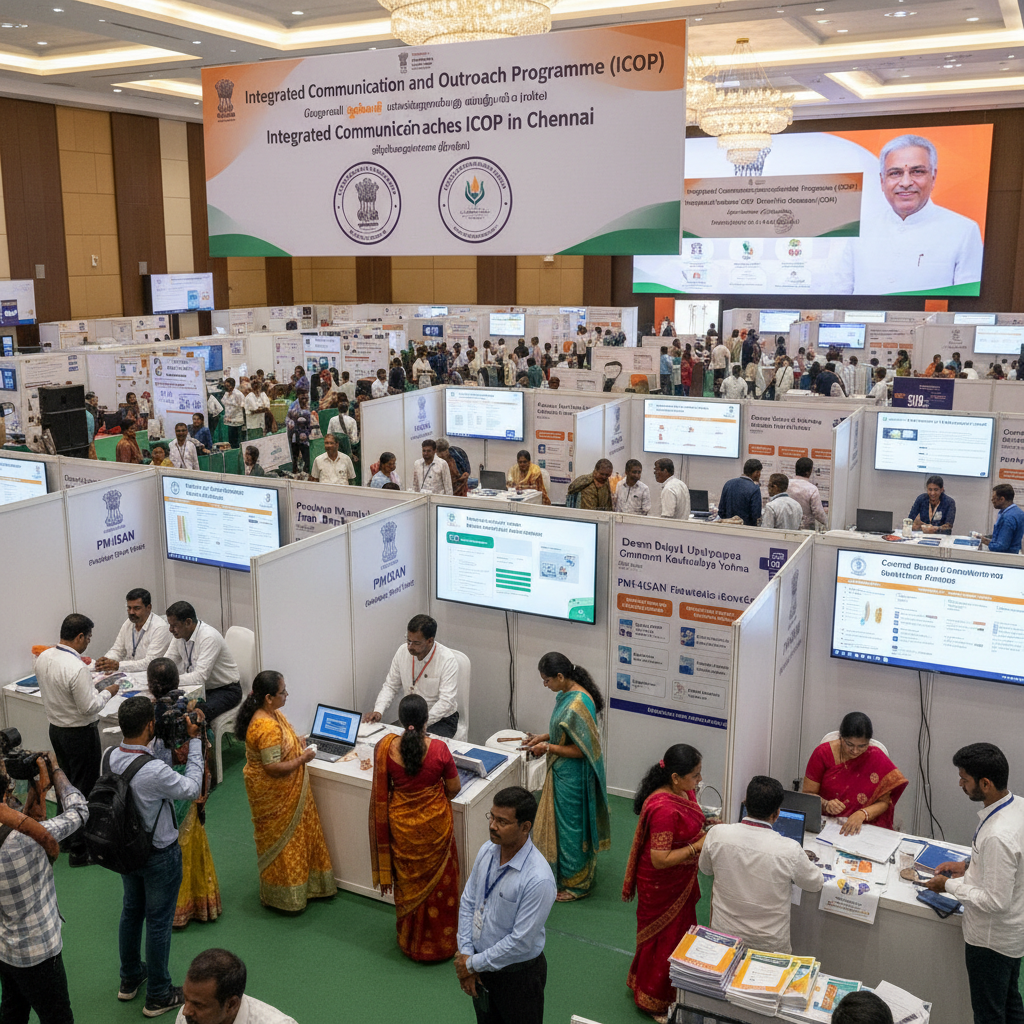
The Central Bureau of Communication (CBC), in partnership with the Government of India, has rolled out the Integrated Communication and Outreach Programme (ICOP) across several high‑burden districts, with a marquee saturation camp conducted in Chennai on 5 March 2026. The three‑day camp, inaugurated by the Minister of State for Communications, brought together officials from the Finance, Health, Education and Rural Development ministries under one roof to deliver on‑spot assistance for flagship welfare schemes. By adopting a multi‑modal communication strategy, the ICOP aims to close the information gap that has traditionally left millions of eligible citizens unaware of or unable to navigate complex application processes.
Objectives of ICOP
ICOP is built around three strategic pillars:
- Awareness generation – deploying multilingual pamphlets, visual infographics and street‑level street‑plays to reach underserved populations.
- Streamlined registration – offering real‑time, on‑site help to complete forms and upload documents, thereby reducing the time‑lag between eligibility and enrollment.
- Feedback‑driven improvement – capturing beneficiary responses through digital surveys to fine‑tune policy implementation.
These objectives align with the broader vision of Sabka Saath, Sabka Vikas (collective participation, inclusive development), ensuring that no citizen is left behind due to lack of information or procedural barriers. 
Government Saturation Camp – Key Features
The Chennai saturation camp blended service delivery with education, offering a suite of activities designed to maximise outreach:
- Interactive booths showcasing each flagship scheme, complete with visual aids and multilingual pamphlets in Tamil, English and Hindi.
- Live demonstrations of online portals such as the UMANG app, the PM‑KISAN portal and the Ayushman Bharat Health ID platform.
- Workshops on financial literacy, digital literacy and health awareness, targeting women, senior citizens and small‑holder farmers.
- Direct assistance stations where officials helped applicants fill out forms, upload documents and receive immediate acknowledgment receipts.
Over 4,500 residents participated, with more than 1,200 completing applications on the spot. Distributed kits – over 3,000 in total – covered topics ranging from cashless transactions to skill‑development programmes, reinforcing the programme’s Integrated Communication and Outreach Programme ethos of holistic empowerment.
Key Schemes Covered in the Camp
Each flagship initiative was represented by dedicated volunteers who walked participants through eligibility criteria, required documentation and the tangible benefits of enrollment:
- Pradhan Mantri Jan Dhan Yojana – promoting financial inclusion and providing an overdraft facility.
- Pradhan Mantri Awas Yojana – delivering housing for All under the “Housing for All” mission.
- Pradhan Mantri Ujjwala Yojana – supplying LPG connections to Below Poverty Line households.
- Ayushman Bharat – offering health insurance coverage of up to ₹5 lakh per family.
- Deen Dayal Upadhyaya Grameen Kaushalya Yojana – delivering skill‑training for rural youth.
- Pradhan Mantri Kisan Samman Nidhi (PM‑KISAN) – providing direct income support to small farmers.
- Swachh Bharat Mission – encouraging sanitation and open‑defecation‑free villages.
These schemes collectively address the spectrum of citizen needs – from housing and finance to health and sanitation, reinforcing the integrated nature of ICOP’s outreach.
Alignment with National Welfare Schemes
The camp underscored how each scheme dovetails with the larger national agenda. For instance, the Pradhan Mantri Ujjwala Yojana was paired with a step‑by‑step guide on applying through the nearest Common Service Centre, while the Swachh Bharat Mission highlighted the link between household latrine construction and participation in the Mahatma Gandhi National Rural Employment Guarantee Act.
Moreover, the programme emphasized digital payment synergies – encouraging beneficiaries of the Pradhan Mantri Garib Kalyan Yojana cash transfers to adopt digital receipts, thereby strengthening the nation’s digital inclusion drive. By weaving these connections, ICOP not only informs but also empowers citizens to navigate the ecosystem of welfare benefits efficiently.
Community Response and Testimonials
Local residents voiced strong appreciation for the convenience of a one‑stop service hub. “I have been trying to apply for the Pradhan Mantri Awas Yojana for months, but the process felt overwhelming. The officials at the camp walked me through each step, and I received my acknowledgment within an hour,” said Ramesh Kumar, a daily‑wage labourer from Tiruvallur.
Women’s self‑help groups highlighted the tangible impact of skill‑training modules. “The digital literacy session enabled our members to market their handicrafts on e‑commerce platforms, resulting in a 30% increase in sales,” reported S. Lakshmi, coordinator of a women’s cooperative in Chennai.
College volunteers served as interpreters and digital assistants, bridging language gaps for senior citizens and non‑native speakers. “Their support helped us overcome linguistic barriers and ensured that even the elderly felt comfortable navigating the online portals,” noted one volunteer.
Role of PIB in Amplifying Reach
The Press Information Bureau (PIB) amplified the camp’s outcomes through radio bulletins, social‑media teasers and newspaper columns. By publishing real‑time updates and success stories, PIB extended the programme’s message beyond the physically present audience to remote villages that could not attend in person. This multi‑channel dissemination strategy aligns perfectly with the ICOP’s mission to reach every citizen, regardless of geography or language.
Data Collection and Monitoring
To quantify the programme’s impact, the CBC instituted a real‑time data‑collection framework using mobile tablets to capture applicant demographics, scheme preferences and satisfaction scores. Aggregated data feeds into a central dashboard accessible to policymakers, enabling evidence‑based adjustments to outreach tactics. Early analytics reveal a 22% increase in application submissions for the PM‑KISAN scheme among participants compared to the previous quarter, demonstrating that on‑site assistance markedly lowers entry barriers.
Capacity Building for Frontline Officers
Recognizing that successful implementation hinges on the competence of frontline staff, the CBC conducted a series of capacity‑building workshops before the camp. Topics covered included customer‑service etiquette, dispute resolution and the use of assistive technologies for persons with disabilities. Participants reported heightened confidence in handling complex queries and a deeper appreciation for the ethical dimensions of public service, reinforcing the programme’s commitment to quality governance.
Future Outlook and Scaling Strategy
Building on the Chennai success, the CBC plans to replicate the saturation‑camp model in high‑burden districts such as Visakhapatnam, Bhubaneswar and Bengaluru. The rollout will incorporate lessons learned – notably the need for localized language support, increased staffing during peak enrollment periods and stronger partnerships with NGOs to extend outreach beyond urban centres. A centralized dashboard will continuously monitor key performance indicators, including the number of applications processed, beneficiary satisfaction scores and scheme penetration rates. The ultimate ambition is to achieve a 15% annual growth in scheme enrollment across target states by 2028, cementing ICOP’s role as a catalyst for inclusive development.
Conclusion
The Integrated Communication and Outreach Programme, exemplified by the Chennai saturation camp, marks a decisive step toward transparent, citizen‑centric delivery of government welfare initiatives. By marrying direct service provision with robust communication strategies, the government is fostering greater trust, participation and empowerment among the populace. As the programme scales, it promises to accelerate uptake of essential schemes, reduce administrative bottlenecks and contribute substantively to India’s broader inclusive growth agenda.
Stay updated with the latest Yojana schemes and government initiatives for better awareness and eligibility. For personalized guidance on accessing these benefits, reach out to us.