




Cabinet Approves Extension of Atal Pension Yojana till 2030-31
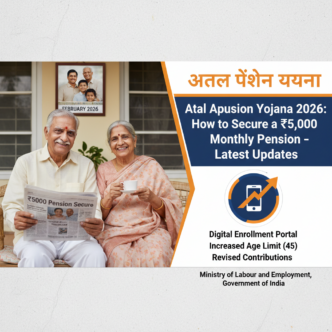
The Union Cabinet on 25 January 2026 gave its seal to the continuation of the Atal Pension Yojana (APY) through the financial year 2030‑31, a move that guarantees uninterrupted pension benefits for millions of informal‑sector workers across India. The decision underscores the government’s resolve to protect the retirement income of low‑earning citizens who are not covered by any statutory social security scheme. By extending the horizon by a full decade, the administration ensures that contributors who have already enrolled will continue to receive a fixed monthly pension from the age of 60 without any lapse, while also providing a clear pathway for new entrants to join the programme.
Prime Minister Narendra Modi, in a brief address after the cabinet meeting, described the extension as “a testament to India’s commitment to social security for the unorganized workforce.” The extension aligns with the broader National Social Security Fund (NSSF) roadmap and complements other welfare initiatives such as the Pradhan Mantri Jan Dhan Yojana and the Shram Shakti scheme. Officials anticipate that the prolonged coverage will help curb elder poverty, promote financial inclusion and stimulate a culture of systematic savings among workers in sectors ranging from street vending to construction.
Background and Vision of Atal Pension Yojana
Launched in June 2015 under the Ministry of Finance, Atal Pension Yojana was conceived as a guaranteed, low‑cost pension product tailored for the unorganized sector. Prior to APY, many informal workers—such as rag pickers, domestic helpers and small‑scale traders—had no formal avenue to secure a steady income after retirement. The scheme was named after former Prime Minister Atal Bihari Vajpayee to honour his vision of inclusive development. 
Under the original design, participants between the ages of 18 and 40 could opt for one of five pension slabs—Rs 5,000, Rs 6,000, Rs 7,000, Rs 8,000 or Rs 9,000 per month—by making monthly contributions that varied according to age and chosen slab. Upon reaching the age of 60, the subscriber would receive a lifelong pension amount, with the government matching 50 % of the contribution, subject to a ceiling of Rs 1,000 per month. Over the past decade, more than 3.5 crore beneficiaries have enrolled, reflecting a growing appetite for structured retirement savings among low‑income households.
The policy dovetails with India’s broader financial inclusion agenda. By leveraging the Aadhaar‑linked platform, APY simplifies the verification process and reduces transaction costs. Moreover, the scheme’s emphasis on modest contributions makes it accessible to workers who lack formal banking channels, thereby bridging a critical gap in the nation’s social security architecture. For deeper insight into the scheme’s design, refer to the official APY portal (atalpha pension.gov.in) and the Wikipedia overview (Atal Pension Yojana – Wikipedia).
Key Features and Eligibility Criteria
The extension introduces several refinements aimed at enhancing reach and usability:
- Universal Eligibility: All Indian citizens aged 18 to 40 years are eligible, provided they are not enrolled in any other statutory social security scheme such as the Employees’ Provident Fund (EPF) or the Employees’ State Insurance (ESI).
- Flexible Contribution Plans: Subscribers can choose from five pension slabs ranging from Rs 1,000 to Rs 5,000 per month, corresponding to contribution levels that match their financial capacity.
- Government Co‑Contribution: The Ministry of Finance will continue to subsidise 50 % of the subscriber’s contribution, up to a maximum of Rs 1,000 per month, thereby lowering the out‑of‑pocket cost for low‑income participants.
- Seamless Enrollment Process: The extension retains the current digital enrollment pathway via the APY portal, which utilises Aadhaar‑based verification. Offline registration remains available at designated banking outlets, post offices and cooperative credit societies.
- Enhanced Awareness Drives: The Ministry of Rural Development has been tasked with launching a nationwide awareness campaign that focuses on rural and semi‑urban pockets where APY penetration remains below the national average.
According to a recent press note from the Ministry of Finance (press.gov.in), the co‑contribution will be indexed to inflation, ensuring that the subsidy retains its real‑term value over the extended period.
Financial Outlook and Fiscal Implications
Finance Minister Nirmala Sitharaman disclosed that extending APY through 2030‑31 is projected to entail an additional fiscal outlay of approximately Rs 2,500 crore over the next five years. This estimate incorporates current enrollment trajectories—averaging 650,000 new subscribers per month—and the anticipated average contribution of Rs 500 per subscriber.
While the incremental cost may appear significant, the cabinet argues that the socio‑economic dividends outweigh the expenditure. By delivering a guaranteed pension, the scheme is expected to lift an estimated 12 million senior citizens above the poverty line, reduce dependency on private pension products, and channel additional formal savings into the financial system. Moreover, the scheme’s structure aligns with the broader objectives of the National Social Security Fund, which seeks to consolidate various welfare programmes under a unified fiscal umbrella.
In the longer term, the government anticipates that increased financial discipline among informal workers will generate a virtuous cycle of investment, as subscribers channel regular contributions into the formal banking sector. This, in turn, could enhance fiscal resilience by broadening the tax base and reducing reliance on ad‑hoc subsidies for elder care.
Impact on Existing Beneficiaries and Enrollment Process
Current APY subscribers need not undertake any additional steps to retain coverage; the cabinet’s approval automatically extends their enrollment until the fiscal year 2030‑31, provided they continue to meet their contribution obligations. For those who have not yet reached the contribution age of 60, the extension effectively expands the accrual period, potentially resulting in a marginally higher monthly pension payout once benefits commence.
The enrollment workflow remains unchanged but has been streamlined further. New applicants can register online by visiting the APY portal, entering their Aadhaar details for verification, and selecting a pension slab and contribution schedule. Offline applicants may approach any designated bank branch, post office or cooperative credit society, where staff assist with the registration and subsequent contribution deposits.
In addition, the government will explore limited provisions for early withdrawal under exceptional circumstances—such as severe medical emergencies—while preserving the core principle of lifelong pension security. These safeguards aim to prevent financial distress for subscribers facing unforeseen hardships.
State Governments’ Role and Future Innovations
State governments have been urged to coordinate closely with banks, post offices and cooperative credit societies to facilitate enrollment drives and ensure smooth contribution collection, especially in high‑density informal employment zones. Non‑governmental organisations and community groups are expected to play a pivotal role in disseminating information about the scheme’s benefits, eligibility criteria and enrollment procedures.
The Ministry of Rural Development will publish quarterly performance reports that track key metrics such as enrollment growth, contribution collection efficiency, and pension disbursement timeliness. These reports will serve as accountability tools and help identify regions where targeted outreach is required.
Looking ahead, the cabinet envisions deploying emerging technologies to bolster transparency and operational efficiency. Pilot projects will explore blockchain‑based transaction records to create immutable audit trails for contributions, thereby reducing opportunities for fraud. Artificial intelligence (AI) algorithms may be employed to assess risk profiles and automate contribution verification, further easing the administrative burden.
Such innovations are intended to scale seamlessly across states, ensuring that every eligible citizen can access APY benefits without undue delay. By marrying technology with grassroots outreach, the government aims to cement APY as a cornerstone of India’s social security landscape.
How Citizens Can Enrol and Track Their Benefits
Eligibility for APY is straightforward: any Indian citizen aged between 18 and 40 who is not already covered under another statutory social security scheme may enroll. Prospective subscribers must possess a valid Aadhaar card and a bank account linked to it. The enrollment process can be completed in three simple steps:
- Visit the official APY portal (atalpha pension.gov.in) or a nearby designated banking outlet.
- Provide Aadhaar details for identity verification and select a desired pension slab.
- Set up a monthly auto‑debit from the linked bank account to meet the contribution requirement.
Once enrolled, subscribers can monitor their contribution balance, projected pension amount and enrollment status through the portal’s dashboard. SMS alerts and email notifications keep beneficiaries informed of any policy updates or disbursement schedules.
Stay updated with the latest Yojana schemes and government initiatives for better awareness and eligibility. For personalized guidance on accessing these benefits, reach out to us.