



Cabinet Approves Extension of Atal Pension Yojana Until 2030‑31
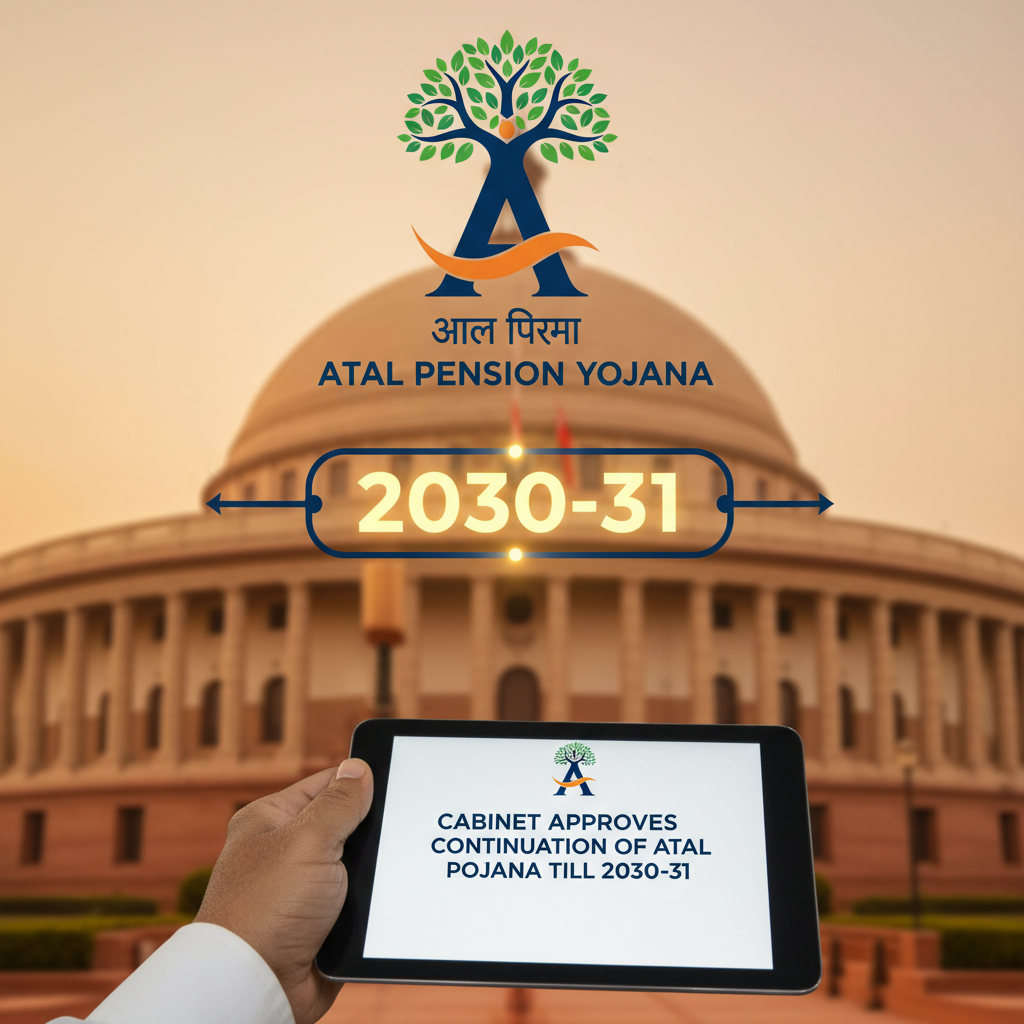
The Union Cabinet, led by Prime Minister Narendra Modi, has given its seal of approval to continue the Atal Pension Yojana for another eight financial years, extending the scheme up to the fiscal year 2030‑31. The decision was taken during the cabinet meeting on September 24, 2025, where senior ministers reviewed the performance of flagship social security initiatives and underscored the importance of guaranteeing a dignified retirement for the informal workforce. Official communiqué from the Ministry of Finance revealed that the extension will cost an estimated ₹7,500 crore over the next eight years, a figure that will be financed through the National Pension Scheme (NPS) fund and a modest surcharge on higher income brackets. The extension also includes a provision for periodic review, ensuring that the scheme remains responsive to evolving demographics and economic conditions. Stakeholders, including the Confederation of Indian Industry (CII) and various trade unions, have welcomed the move, describing it as a “critical step” toward reducing old‑age poverty among self‑employed and gig‑economy workers. For more detailed coverage, see the official press release on the Press Information Bureau or the recent Wikipedia entry on the Atal Pension Yojana.
Understanding the Atal Pension Yojana
Launched in June 2015 under the Ministry of Finance, the Atal Pension Yojana was conceived as a universal, low‑cost pension product aimed primarily at the unorganized sector, which comprises more than 90% of India’s workforce. The scheme draws its name from former Prime Minister Atal Bihari Vajpayee, whose vision of inclusive growth continues to inspire contemporary welfare policies. Unlike the contributory National Pension System (NPS), which is largely tailored for formal employees, the Atal Pension Yojana offers a simplified enrollment process, flexible contribution tiers, and a guaranteed minimum monthly pension ranging from ₹1,000 to ₹5,000, depending on the contribution amount and the age at which the subscriber begins the scheme. The scheme’s design leverages a risk‑free, government‑backed guarantee, meaning that the pension is payable irrespective of market fluctuations, thereby providing a sense of financial security to millions of low‑income households. For a comprehensive historical overview, refer to the government’s documentation or the detailed entry on Wikipedia.
Objectives and Core Features of the Scheme
The primary objective of the Atal Pension Yojana is to ensure that every Indian citizen, especially those engaged in informal employment, can attain a modest but predictable source of income after reaching the age of 60. To achieve this, the scheme incorporates several synergistic features: first, it permits voluntary, monthly contributions that can range from as low as ₹55 to as high as ₹2,000, catering to the diverse earning capacities of wage‑labourers, street vendors, and artisans. Second, contributors can select from five predefined pension tiers—₹1,000, ₹1,500, ₹2,000, ₹2,500, and ₹5,000—based on their long‑term financial aspirations. 
- ₹1,000 tier
- ₹1,500 tier
- ₹2,000 tier
- ₹2,500 tier
- ₹5,000 tier
Third, the scheme guarantees that the pension amount will be indexed to inflation, thereby preserving purchasing power over time. Fourth, in the unfortunate event of a subscriber’s death, the scheme provides a family benefit wherein the surviving spouse can continue to receive the same pension or a lump‑sum amount, thereby safeguarding the economic well‑being of dependents. These attributes collectively render the Atal Pension Yojana a compelling instrument for social protection in a country where traditional formal pension coverage remains limited.
Eligibility Criteria and Enrollment Mechanics
Eligibility for the Atal Pension Yojana is intentionally inclusive. Any Indian citizen aged between 18 and 40 years can enroll, provided they do not already possess a pension‑linked benefit from a statutory scheme such as the Employees’ Provident Fund (EPF). The enrollment process can be undertaken both online, through the National Pension Scheme portal, and offline, at designated banks, post offices, or local Aapki Yojana Kendras. Prospective subscribers must furnish basic documentation, including a valid Aadhaar card, proof of address, and a duly filled application form. Once enrolled, contributors are required to commit to regular monthly deposits for a minimum period of five years; failure to maintain contributions for that duration results in ineligibility for pension benefits. The scheme also incorporates a “auto‑enrollment” mechanism for certain categories of workers, such as registered street vendors, who can automatically join based on their enrollment in the PM SVAMITI scheme. Detailed enrollment instructions are available on the official Atal Pension Yojana website, which also hosts a step‑by‑step video guide for first‑time users.
Benefit Structure and Pension Calculation
The Atal Pension Yojana operates on a straightforward actuarial model that translates monthly contributions into a predetermined pension amount upon retirement. Contributions are pooled into a dedicated fund managed by the Pension Fund Authority, and the resulting benefit is calculated based on the aggregate corpus accumulated at the age of 60, the chosen pension tier, and the subscriber’s life expectancy. For instance, a 30‑year‑old who contributes ₹2,000 per month for 30 years at the ₹5,000 pension tier can anticipate a monthly payout of approximately ₹5,000 after turning 60, indexed annually for inflation. The scheme also provides a “joint life” option, enabling contributors to nominate a spouse who will continue receiving the same pension after the subscriber’s demise. Moreover, in cases where a subscriber has contributed for less than the recommended tenure but reaches the age of 60, a proportional pension is payable, albeit at a reduced rate. The APY calculator hosted on the National Pension Scheme platform allows prospective contributors to simulate various contribution scenarios and gauge the resultant pension, thereby facilitating informed decision‑making.
Government’s Financial Commitment and Fiscal Implications
Extending the Atal Pension Yojana until 2030‑31 signals a robust fiscal commitment from the Indian government, reflecting its intent to safeguard the socio‑economic fabric of the nation’s informal workforce. The projected expenditure of ₹7,500 crore over eight years translates to an average annual outlay of nearly ₹1,000 crore, a figure that will be absorbed primarily through the existing NPS fund and supplementary budgetary allocations earmarked for social security. Moreover, the extension includes a provision for periodic actuarial audits to ensure that the scheme’s liabilities remain fully funded, thereby mitigating the risk of fiscal imbalances. From a macro‑economic perspective, the continuation of the Atal Pension Yojana contributes to enhanced financial inclusion, as it encourages savings among low‑income households, which, in turn, can be channelled into productive investments. The policy also aligns with India’s broader agenda of achieving the United Nations Sustainable Development Goal (SDG) 1—No Poverty—by providing a safety net for elderly citizens who might otherwise fall into destitution. For an in‑depth fiscal analysis, consult the latest Finance Report 2025 released by the Ministry of Finance.
Recent Budget Allocation and Policy Context
In the Union Budget for the fiscal year 2025‑26, Finance Minister Nirmala Sitharaman allocated a dedicated sub‑heading within the “Social Security” segment specifically for the continuation of the Atal Pension Yojana. The allocation of ₹1,150 crore for the upcoming year underscores the government’s strategic emphasis on reinforcing safety nets for the informal sector, a demographic that has grown significantly following the COVID‑19 pandemic and the subsequent rise of gig‑economy employment. The budget memorandum highlights that the extension will be financed through a combination of direct budgetary support and a modest cess on high‑value transactions, ensuring that the fiscal burden does not disproportionately impact middle‑income taxpayers. Additionally, the policy dovetails with other complementary schemes, such as the Pradhan Mantri Jan Dhan Yojana (PMJDY) and the Pradhan Mantri Kisan Samman Nidhi (PMKSN), creating a synergistic ecosystem that promotes financial literacy, bank account penetration, and long‑term savings among marginalized communities. For a comparative analysis of recent fiscal outlays, refer to the Union Budget 2025‑26 Expenditure Document.
Impact on Beneficiaries and Socio‑Economic Significance
The real‑world impact of the Atal Pension Yojana can already be observed in states with high informal sector densities, such as Uttar Pradesh, Bihar, and Maharashtra, where enrollment figures have crossed the 30‑million mark as of March 2025. Beneficiaries report increased confidence in planning for retirement, reduced reliance on informal credit, and a tangible sense of dignity associated with being part of a government‑backed safety net. From a public health perspective, the assurance of a regular pension has been linked to improved health outcomes among senior citizens, as financial stress is recognized as a determinant of poorer health metrics. Moreover, the scheme’s emphasis on women’s participation—evidenced by targeted outreach campaigns and incentives for female contributors—has begun to narrow gender gaps in pension coverage, traditionally dominated by male formal employees. The ripple effects extend beyond individual households; aggregated contributions bolster the nation’s savings pool, facilitating capital formation that can be directed toward infrastructure and development projects. A recent impact assessment study by the National Institute of Public Finance and Policy (NIPFP) highlighted that every ₹1 invested in the Atal Pension Yojana yields approximately ₹0.35 in socio‑economic returns over a 20‑year horizon, underscoring its efficacy as a poverty‑alleviation instrument.
Comparative Perspective and Future Outlook
When juxtaposed with other retirement savings vehicles in India—such as the Employees’ Provident Fund (EPF), the National Pension System (NPS), and private mutual fund schemes—the Atal Pension Yojana stands out for its simplicity, low entry barrier, and guaranteed minimum pension. However, experts caution that the scheme’s capped pension ceiling may limit its adequacy for higher‑earning retirees, prompting calls for a tiered expansion that could accommodate varying contribution levels and pension expectations. The government has signaled openness to such reforms, citing ongoing pilot projects in select Union Territories that experiment with higher contribution caps and flexible pension tiers. Looking ahead, digital innovation—particularly the integration of blockchain‑based transaction records—may further streamline enrollment, reduce administrative costs, and enhance transparency. Additionally, the scheme’s extension until 2030‑31 dovetails with the nation’s ambition to achieve universal social protection by 2030, a target echoed in the National Institution for Transforming India (NITI Aayog)’s roadmap for inclusive growth. Stakeholders are encouraged to monitor upcoming policy papers and consultation documents, which will shape the next phase of the Atal Pension Yojana and potentially broaden its horizon to encompass a wider segment of the workforce.
Stay updated with the latest Yojana schemes and government initiatives for better awareness and eligibility. For personalized guidance on accessing these benefits, reach out to us.