


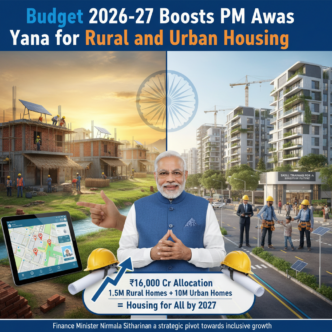
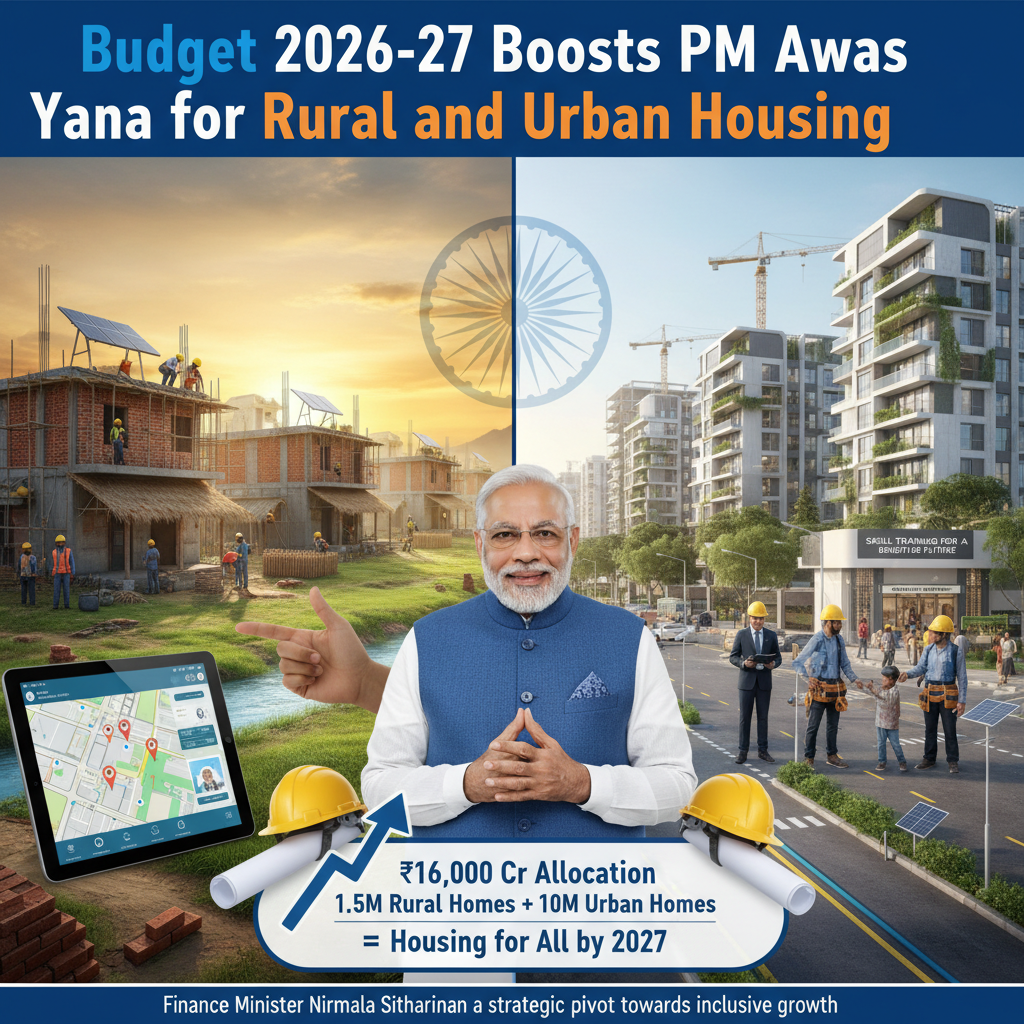
The Union Budget 2026‑27, presented by Finance Minister Nirmala Sitharaman, underscores a decisive pivot toward inclusive growth with a historic boost for the Pradhan Mantri Awas Yojana (PMAY). With a total outlay of ₹15,900 crore earmarked for housing—an increase of over 30 % compared to the previous fiscal— the scheme aims to deliver “Housing for All” by 2027. This funding reflects the government’s response to rising urbanisation pressures, a modest GDP trajectory, and the need to meet the Sustainable Development Goal 11 on adequate housing. By channelising resources into both rural and urban segments, the budget seeks to bridge the housing gap, stimulate ancillary industries such as cement and steel, and create livelihood opportunities for millions of low‑income families across India.
Key allocations and objectives
The budget allocates an additional ₹8,500 crore for the rural component of PMAY, targeting the construction of 1.5 million pucca houses in underserved villages. For the urban wing, a separate allocation of ₹6,200 crore will support the development of 1 million low‑cost apartments in Tier‑2 and Tier‑3 cities. A contingency fund of ₹1,200 crore has also been created to absorb cost overruns and expedite pending projects. The overarching objective is to achieve the “Housing for All” target by 2027, aligning with national development goals while fostering growth in supporting sectors. The scheme also emphasizes sustainability, encouraging the use of eco‑friendly building materials and energy‑efficient designs to lower long‑term operating costs for beneficiaries.
Rural housing push
Under the expanded rural arm, the government will leverage the MGNREGS to generate employment alongside housing construction, ensuring that beneficiaries receive not only homes but also skill‑building opportunities. Financial assistance of up to ₹1.5 lakh per dwelling will be provided, complemented by subsidies on essential materials such as cement, bricks, and timber. A digital enrollment platform will streamline applications, allowing households to register online and track status in real time. State governments will identify eligible families through a digitised census, enhancing transparency and reducing leakages. The scheme also promotes green construction techniques, encouraging the adoption of compressed stabilised earth blocks and solar‑powered lighting, which lower utility bills and environmental impact for residents. 
Urban housing initiatives
The urban segment introduces a novel “Smart Housing” module that integrates green building standards, energy‑efficient designs, and smart‑city technologies. Private developers will be attracted through tax incentives and fast‑track clearance procedures, while public‑private partnerships will focus on redeveloping vacant government land and under‑utilised commercial spaces. A dedicated ₹500 crore fund will finance infrastructure upgrades—such as roads, water supply, and sanitation—in project‑affected neighborhoods, improving overall living standards. Additionally, a rental assistance program will support migrant workers with subsidised accommodation for up to three years, coupled with skill‑training modules that link tenants to vocational courses in construction, hospitality, and digital services. This integrated approach seeks to provide stable housing while enhancing economic participation and social inclusion.
Implementation mechanisms
To ensure coordinated execution, a joint steering committee comprising officials from the Ministry of Housing and Urban Affairs, state housing departments, and technical experts will be constituted. The committee will manage a digital dashboard that tracks project milestones, fund utilisation, and beneficiary feedback in real time. Features include geo‑tagged maps of project sites, quarterly financial reports, and automated alerts for delayed deliverables. States will submit quarterly progress reports, subject to audits by an independent third‑party agency, ensuring compliance with financial and technical norms. Capacity‑building workshops will be conducted for local officials to strengthen their proficiency in monitoring tools and best practices in project management, thereby enhancing accountability and efficiency.
Benefits for citizens
Eligible households stand to gain a multitude of tangible benefits. Access to pucca homes reduces reliance on informal settlements, improves living standards, and provides formal property titles that enhance financial security. The scheme also embeds livelihood support by linking beneficiaries with skill‑development programs that improve employability in sectors such as construction, renewable energy, and digital services. Moreover, the rental assistance component offers migrant workers stability, fostering social integration and economic participation. Key impacts include:
- Reduced monthly rental expenditures by up to 40 %.
- Improved access to basic amenities such as electricity and clean water.
- Enhanced educational opportunities for children in newly built colonies.
- Increased financial security through formal ownership of property.
These outcomes contribute to better health, higher school attendance, and stronger community cohesion, reinforcing the broader socio‑economic development agenda.
Challenges and monitoring
Despite the ambitious targets, several challenges persist, including land acquisition, infrastructure readiness, and financing continuity. To address land‑related bottlenecks, the government will prioritise the acquisition of under‑utilised public land and explore innovative models such as land‑pooling and lease‑back arrangements. Robust monitoring mechanisms will be essential to prevent delays and corruption; therefore, a public grievance redressal portal will enable citizens to report issues directly to authorities. Stakeholder consultations will be held bi‑annually to gather ground‑level insights, while a mid‑term review after the first fiscal year will assess progress against key performance indicators, allowing for timely corrective measures. Continuous capacity building and transparent reporting are expected to safeguard the scheme’s implementation integrity.
Conclusion and future outlook
Budget 2026‑27 marks a transformative step toward integrated housing development, with the PM Awas Yojana at its core. By coupling substantial fiscal resources with technology‑driven oversight, the Centre aims to deliver lasting solutions to housing scarcity and to embed sustainability into the construction ecosystem. Analysts predict that, provided implementation stays on track, the scheme could lift millions out of inadequate shelter, reinforcing inclusive growth and setting a benchmark for future welfare initiatives. The continued focus on private sector participation, citizen‑centric monitoring, and environmentally friendly building practices positions the program as a cornerstone of India’s development agenda for the next decade, paving the way for a future where every citizen enjoys safe, dignified, and affordable housing.
Stay updated with the latest Yojana schemes and government initiatives for better awareness and eligibility. For personalized guidance on accessing these benefits, reach out to us.