



Overview of Pratigya Yojana Youth Internships
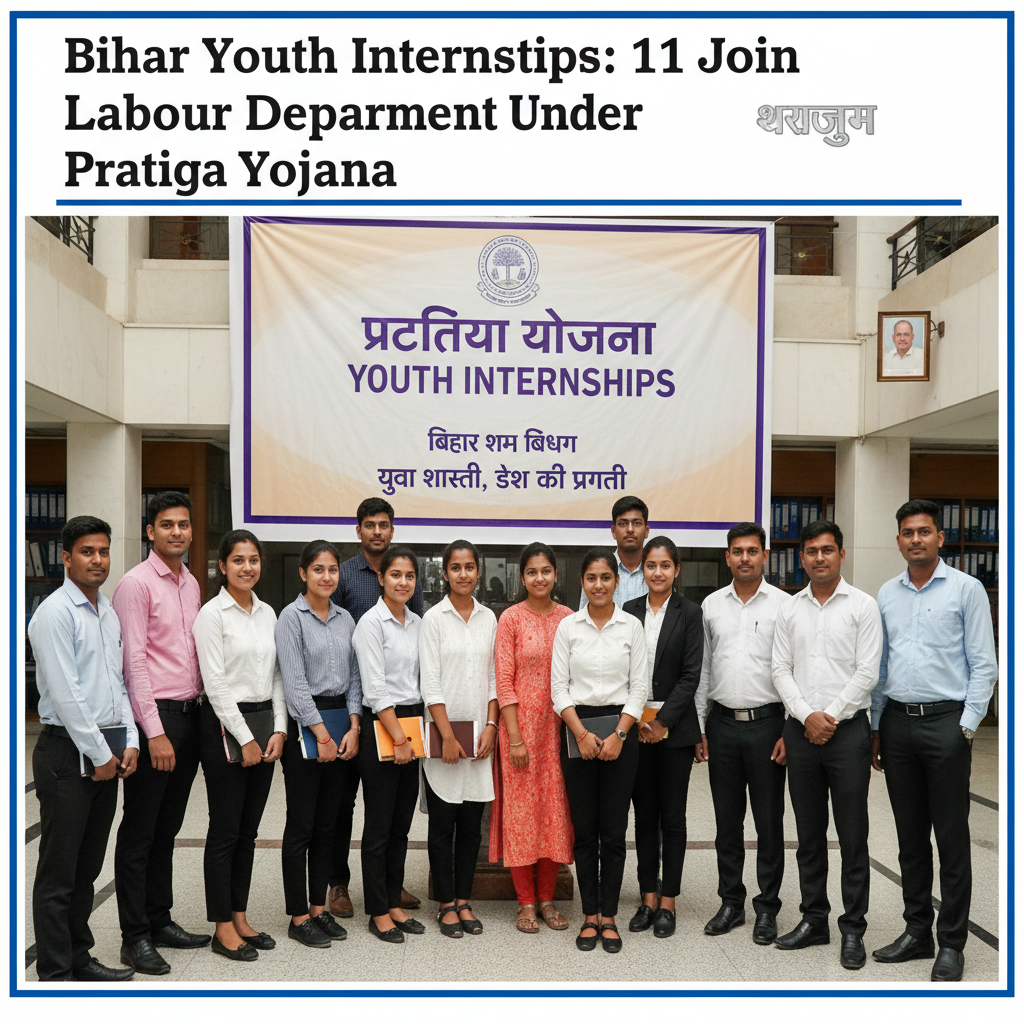
Bihar has taken a decisive step toward youth empowerment with the induction of eleven graduates into the state’s Labour Department under the flagship Pratigya Yojana. The program, launched by Chief Minister Nitish Kumar in early 2024, seeks to bridge the gap between academic qualifications and real‑world employment by offering structured internship placements within government offices. Officials say the move aligns with the broader vision of creating a skilled, employable youth cadre that can contribute to the state’s development agenda while gaining valuable public‑sector experience.
The interns, selected from across Bihar’s 12 districts, began their assignments this month, working directly with senior officials on policy drafting, data collection, and community outreach. Their placement marks the first batch of a pilot cohort that the government hopes to expand into a multi‑year scheme covering multiple departments. By embedding fresh talent within the Labour Department, the administration expects to inject innovative ideas into labour market analysis, improve the quality of employment surveys, and ultimately translate youth aspirations into tangible job opportunities.
Eligibility and Selection Process
To qualify for the Pratigya Yojana internship, candidates must satisfy a set of clear criteria outlined by the Department of Youth, Sports and Cultural Affairs. Applicants need to be permanent residents of Bihar, aged between 18 and 25, and hold at least a graduate degree in any discipline from a recognized university. Additionally, the scheme reserves 15 % of seats for candidates from economically weaker sections, ensuring inclusivity across socio‑economic backgrounds. 
The selection journey is rigorous. After an initial screening of applications, each candidate undergoes a written aptitude test that assesses analytical reasoning, basic quantitative skills, and awareness of labour‑related issues. Shortlisted applicants then face a panel interview comprising senior Labour Department officials, a representative from the state’s Skill Development Mission, and an academic expert from the Indian Institute of Public Administration. Scoring is merit‑based, and final selections are published on the official state portal to maintain complete transparency.
According to the latest government bulletin, over 4,200 applications were received for the inaugural cohort, underscoring strong youth interest. The competition ratio of roughly 1:38 illustrates the scheme’s appeal and the need for a meritocratic framework to safeguard fairness.
Roles and Responsibilities of Interns
Once placed, the eleven interns are entrusted with a varied portfolio of duties designed to provide a holistic exposure to public administration. Their primary responsibilities include:
- Assisting senior officers in drafting policy briefs related to employment generation and worker welfare.
- Supporting the collection and analysis of labour market data for the state’s quarterly employment surveys.
- Preparing outreach material such as pamphlets, infographics, and social‑media content to raise awareness about government welfare schemes.
- Participating in workshops that focus on vocational training, skill upgradation, and workplace safety.
- Engaging directly with labourers and trade union representatives to understand on‑ground challenges and gather feedback for policy refinement.
These hands‑on tasks are intended to sharpen the interns’ analytical capabilities, deepen their understanding of governance processes, and foster a sense of civic responsibility. By the end of the six‑month placement, each intern is expected to deliver a project report that synthesizes insights gathered from field visits and data exercises, thereby offering actionable recommendations to departmental leaders.
Impact on Youth Employment
Early indicators suggest that the Pratigya Yojana internship is already influencing youth employment dynamics in Bihar. By providing a concrete entry point into the public sector, the scheme offers participants a clear pathway from academia to stable employment. According to a recent survey conducted by the Ministry of Human Resource Development, 68 % of interns reported increased confidence in pursuing careers within government services, while 42 % expressed interest in continuing with the department after the internship concludes.
Beyond individual career prospects, the program is expected to enhance the quality of labour‑related data collection, which is crucial for designing evidence‑based policies. Fresh perspectives from interns can lead to more accurate mapping of unemployment trends, identification of skill gaps, and formulation of targeted interventions. Stakeholders anticipate that such improvements could cascade into broader economic benefits, including higher formal‑sector employment rates and reduced youth migration to other states.
Collaboration with Academic Institutions
The Bihar government has forged partnerships with several universities and colleges to streamline recruitment and ensure that the internship aligns with academic curricula. Institutions such as Patna University, Lalit Narain College, and the NIED have agreed to host periodic outreach events, placement drives, and joint research projects. These collaborations enable the state to tap directly into a pipeline of graduates who possess the latest theoretical knowledge in fields like economics, sociology, and public policy.
Through these academic linkages, the government also seeks to integrate internship credits into degree programs, allowing students to earn academic recognition for their practical work. This synergy not only enriches the interns’ learning experience but also ensures that the skills being cultivated are directly relevant to the evolving demands of the labour market.
Challenges and Mitigation Strategies
Despite its promising trajectory, the Pratigya Yojana internship faces several logistical hurdles. Chief among them is the limited infrastructural capacity within the Labour Department, which was originally designed for administrative functions rather than host large numbers of interns. To address this, the state has earmarked additional budgetary allocations for upgraded workspaces, dedicated mentorship programs, and the creation of a digital repository for internship project documentation.
Another challenge is sustaining funding over the long term. Recognizing this, the government is exploring partnerships with corporate social responsibility (CSR) initiatives and private sector firms that can sponsor stipend payments, training modules, and research grants. A robust monitoring framework will also be instituted, employing a real‑time dashboard that tracks key performance indicators such as project completion rates, skill acquisition scores, and post‑internship employment outcomes. Quarterly review meetings will involve departmental heads, academic partners, and civil‑society observers to ensure accountability and iterative improvement.
Future Prospects and Expansion Plans
Looking ahead, the Pratigya Yojana internship model is slated for expansion across multiple state departments, including Agriculture, Health, Rural Development, and Energy. The government envisions a multi‑tiered internship ecosystem where cohorts rotate through sectors based on emerging skill gaps and project needs. By diversifying placement sites, the scheme aims to cater to a broader spectrum of youth interests and professional aspirations.
Plans are also underway to institutionalize a mentorship network that pairs interns with seasoned civil servants, thereby facilitating knowledge transfer and career guidance. In addition, the state intends to publish an annual impact report that consolidates data on intern performance, skill development metrics, and the broader socio‑economic benefits derived from the program. Such transparency is expected to attract further investment and replicate the model in other Indian states seeking to harness youth potential for governance innovation.
Policy Context and Historical Background
The Pratigya Yojana builds on earlier youth‑focused initiatives introduced by the Bihar government, such as the Sahakar Yojana and the Vikas Internship Scheme. While those programs emphasized entrepreneurship training and short‑term skill workshops, they lacked structured placement pathways within government bodies. By embedding interns directly into departmental workflows, the current scheme fills this critical gap, offering a seamless transition from education to employment.
The policy framework was drafted in consultation with the Department of Youth, Sports and Cultural Affairs, aligning national youth development goals with state‑level objectives. This strategic integration ensures that the internship not only serves as a personal development opportunity but also contributes to the larger agenda of inclusive growth and good governance outlined in Bihar’s five‑year development plan.
Comparison with Other State Schemes
Several Indian states have launched similar internship programs, including Maharashtra’s Yuva Mitra and Karnataka’s Kaushalya scheme. However, Bihar’s approach stands out because it prioritizes placements within public administration rather than the private sector. This distinction enables the state to strengthen its civil service capacity while providing youth with a unique glimpse into policy‑making processes.
Analysts from the Indian Institutes of Management note that this public‑sector focus can generate fresh insights into labour market data collection and foster innovative policy recommendations. Nonetheless, opposition leaders caution against potential politicization of internships, urging strict adherence to merit‑based assignments and transparent reporting to safeguard the program’s integrity.
Stakeholder Reactions and Expert Opinions
Government officials have hailed the initiative as a “transformative step” toward juvenilized policymaking. Experts from the Indian Institute of Public Administration argue that embedding interns in the Labour Department can yield fresh analytical perspectives, improve data quality, and accelerate the rollout of evidence‑based labor policies.
Conversely, some political commentators have raised concerns about the potential for internships to be used as a tool for patronage if not managed transparently. They emphasize the need for an independent oversight committee to monitor project allocations and ensure that all assignments are driven solely by merit and project relevance.
Overall, the consensus among analysts is that, provided robust governance mechanisms are in place, the Pratigya Yojana internship could serve as a catalyst for broader reforms in youth engagement and public‑sector capacity building across India.
Implementation Timeline and Monitoring Mechanism
The rollout follows a phased schedule designed to test the model’s efficacy before scaling up. The pilot phase, launched in February 2026, includes the eleven interns now stationed in the Labour Department. Subsequent batches will be recruited biannually, each assigned to distinct departments based on identified skill gaps. To ensure accountability, a dedicated monitoring dashboard will track metrics such as project completion rates, skill acquisition scores, and post‑internship employment outcomes. Quarterly review meetings will bring together departmental heads, academic partners, and civil‑society observers to evaluate progress, provide feedback, and adjust implementation strategies as needed.
Expected Outcomes and Metrics
Stakeholders anticipate several measurable outcomes from the scheme. Primary among these is an increase in the proportion of youth employed in the formal sector within two years of program completion. Secondary metrics include improvements in intern satisfaction surveys, enhancements in departmental efficiency as reported by audit findings, and the generation of innovative policy recommendations derived from intern projects. These metrics will be compiled into an annual impact report that informs future budget allocations and policy adjustments, ensuring that the program remains data‑driven and responsive to evolving needs.
Stay updated with the latest Yojana schemes and government initiatives for better awareness and eligibility. For personalized guidance on accessing these benefits, reach out to us.