


Overview of PM Surya Ghar solar rooftop Scheme
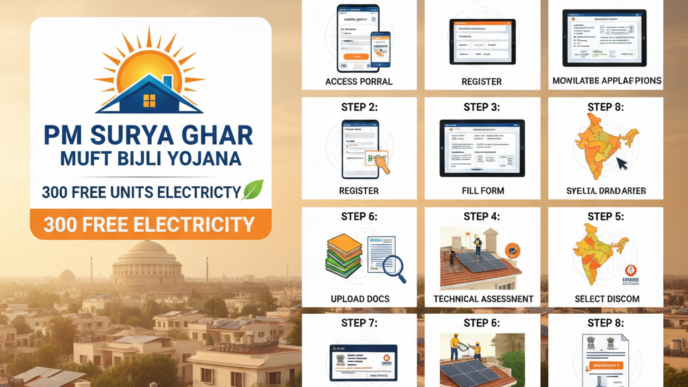
The Prime Minister’s PM Surya Ghar solar rooftop initiative is a flagship programme under the broader “Solar India” mission, designed to accelerate clean‑energy penetration in households that currently rely on diesel generators or erratic grid supply. Launched in 2023, the scheme offers a central subsidy covering up to 70 % of equipment costs, soft‑interest loans and a fast‑track approval pathway. The government has set an ambitious target of installing 10 million rooftop solar systems by 2030, aiming to slash electricity bills for low‑income families while contributing to India’s climate goals under the Paris Agreement.
Eligibility is broadly defined: any residential consumer with a connected load of up to 10 kW can apply, provided the installation is on a roof that receives ample sunlight. Applicants can receive a loan‑interest subsidy of 1 % per annum and are required to register on the MNRE portal, where they can track subsidy disbursement and locate empaneled vendors. The scheme also integrates with existing welfare programmes such as Saubhagya and Ujjwala, creating a convergent approach to universal electrification.
Historical Context of Solar Adoption in Bastar
Bastar, a mineral‑rich but economically disadvantaged district in Chhattisgarh, has long grappled with chronic power shortages, especially in remote blocks affected by left‑wing extremism. Historically, the region depended on diesel‑powered generators for emergency lighting and had limited grid connectivity, with only 30 % of households electrified as of 2020. Over the past decade, the state government introduced solar lanterns and mini‑grids in pilot projects, but adoption stalled due to lack of financing, low awareness and logistical bottlenecks in difficult terrain. 
Recent efforts by the Chhattisgarh Renewable Energy Development Agency (CREDA) have begun to reverse this trend. According to a 2023 report from the Ministry of New and Renewable Energy (MNRE), only 12 % of households in Maoist‑hit blocks had access to reliable solar power, underscoring the need for targeted interventions. The Kondagaon installation marks the first fully‑fledged rooftop system under the PM Surya Ghar scheme in this high‑risk area, symbolising a pivotal shift toward renewable energy in conflict‑prone regions.
Details of the Kondagaon Installation
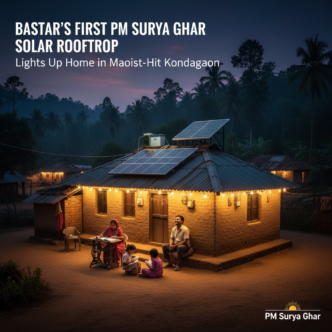
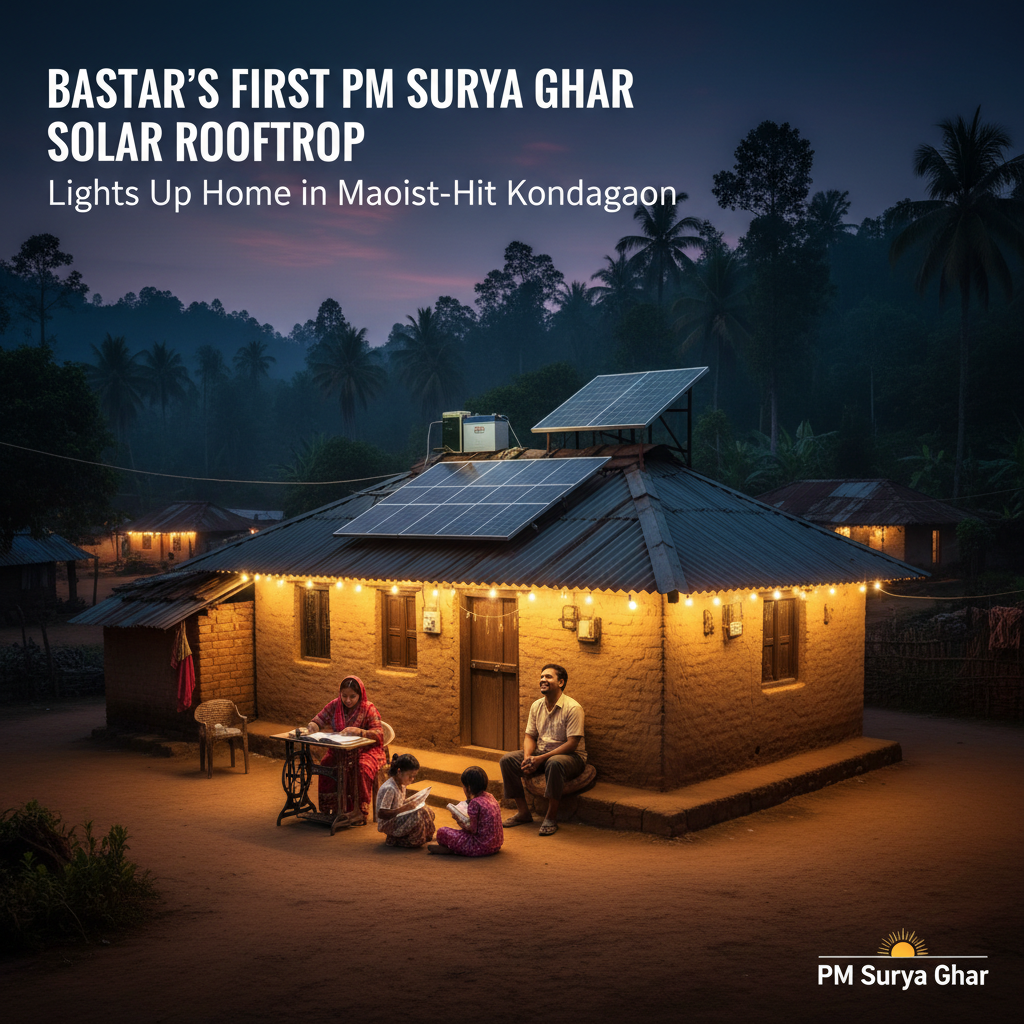
The inaugural rooftop solar system is situated in a modest family home in Kondagaon, a block notorious for periodic clashes between security forces and Maoist groups. The installation comprises a 3 kW photovoltaic array, a 5 kWh battery storage unit, and a modern inverter that seamlessly feeds power into the household circuit. The project was executed by a local solar integrator under the state‑run “Rural Solar Outreach” pilot, with the central government shouldering 70 % of the equipment cost through a direct subsidy. The remaining 30 % was financed via a low‑interest loan, which the homeowner repays over five years.
Since commissioning, the household enjoys uninterrupted electricity for lighting, fans and phone charging, cutting monthly energy expenses by an estimated 40 %. The system also enables the family to operate a small refrigerator and charge additional devices, improving overall quality of life. Technical specifications and performance data are publicly available on the MNRE website, providing a transparent model for replication.
Community Impact and Reactions
News of the Kendriya PM Surya Ghar solar rooftop lighting the Kondagaon home has sparked optimism across the surrounding village. Residents view the lights as a tangible sign of development and a step toward improving security‑related infrastructure. Women’s self‑help groups highlighted the ability to run small enterprises such as tailoring workshops after dark, generating supplemental income. Schoolchildren can now study without the pressure of torchlight, leading to better academic outcomes.
Local leaders, including the block panchayat head, praised the central and state governments for prioritising energy access in high‑risk areas, arguing that reliable power can deter insurgent recruitment by improving living standards. A recent survey conducted by the Chhattisgarh Institute of Social Research found that 85 % of respondents believe the solar initiative will enhance safety and economic opportunities, reflecting strong community endorsement.
Technical Advantages and Government’s Rural Electrification Roadmap
Rooftop solar installations offer distinct benefits in conflict‑prone zones. They require minimal land, reducing the need for large‑scale ground‑mounted projects that might attract unwanted attention. The modular nature of the systems allows for quick deployment and easy maintenance, even when logistics are constrained. Moreover, solar power operates silently, eliminating the noise associated with diesel generators that can draw the attention of hostile elements. From an energy security standpoint, decentralised generation reduces dependence on fragile transmission lines vulnerable to sabotage.
The scheme aligns with the national “Saubhagya” and “Ujjwala” initiatives, which together aim for 100 % household electrification by 2027. By integrating with these programmes, PM Surya Ghar promises a convergent strategy to address energy poverty, improve health outcomes and support climate commitments. State‑level implementations, such as the one in Bastar, serve as replicable models for other remote districts. The Chhattisgarh government plans to roll out 200 additional rooftop units across five high‑need blocks by the end of 2026, prioritising women‑headed, Scheduled Caste and tribal households. A parallel training‑cum‑deployment programme, announced by MNRE, will certify 5,000 rural technicians by 2025 to ensure long‑term system reliability.
For further reading on solar energy integration in India, see the Solar energy Wikipedia entry and the official Ministry of New and Renewable Energy site.
Stay updated with the latest Yojana schemes and government initiatives for better awareness and eligibility. For personalized guidance on accessing these benefits, reach out to us.