


Overview of the Loan Disbursement
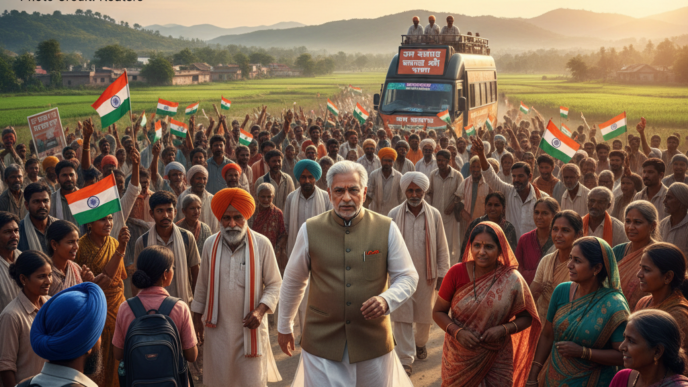
India’s banking sector has just recorded a historic financial infusion as public and private lenders together have approved and disbursed loans exceeding 12 lakh 30,000 crore rupees to Self‑Help Groups (SHGs) across the nation. This unprecedented volume reflects the government’s strategic push to uplift rural economies, stimulate micro‑enterprise activity, and reduce poverty through financial inclusion. The move aligns with multiple welfare schemes that target marginalised communities, especially in states with high agrarian distress, aiming to create a ripple effect of entrepreneurship and income generation.
The infusion is not limited to a handful of districts; it spreads across high‑need states such as Uttar Pradesh, Bihar, Madhya Pradesh, Odisha, and Jharkhand, where SHG membership has surged in recent years. Financial institutions are leveraging their extensive rural networks to reach remote villages, while digital platforms accelerate the sanction process. This coordinated effort signals a decisive shift from fragmented micro‑finance models toward a unified, bank‑driven approach that promises broader impact and tighter oversight.
Financial Scale and Policy Integration
The disbursement breakdown reveals that the majority of funds are earmarked for working capital, equipment procurement, and raw‑material purchases, enabling SHG members to scale up production of handicrafts, agri‑processing units, and renewable‑energy projects. According to the latest data released by the Ministry of Finance, about 45 percent of the total allocation goes to women‑led SHGs, while 30 percent supports agriculture‑linked enterprises. The remaining portion is distributed among youth collectives and tribal cooperatives, underscoring a multi‑dimensional approach to inclusive growth. 
Government policy linkage is evident as the loan scheme dovetails with flagship programmes such as the Pradhan Mantri Mudra Yojana, the Deendayal Antyodaya Yojana – National Rural Livelihoods Mission, and the Sustainable Development Goal 1 – No Poverty. By integrating loan access with existing welfare incentives, the administration aims to create synergies that amplify impact. Moreover, a digital dashboard tracks disbursement status, repayment metrics, and beneficiary outcomes, ensuring transparency and enabling real‑time course corrections.
Eligibility, Application Process and Interest Incentives
Eligibility criteria have been streamlined to accelerate approval timelines. SHGs must be registered under the appropriate legal framework, maintain a collective savings record of at least six months, and demonstrate a viable business plan. Applications are now routinely submitted through online portals linked to core banking solutions, allowing banks to verify credentials and assess creditworthiness within 48 hours. In many states, field officers conduct on‑site verification visits to confirm the existence of the group and its operational activities, thereby reducing fraud risks and ensuring that funds reach genuine beneficiaries.
Interest rate subsidies constitute a central component of the package. While the benchmark lending rate for SHG loans typically hovers around 9‑10 percent, participating banks are offering concessional rates as low as 6 percent for women members and 6.5 percent for SC/ST collectives. Additionally, the scheme provides a one‑year grace period on principal repayment, followed by a flexible amortisation schedule spread over five to seven years. Such terms are designed to ease cash‑flow pressures during the early growth phase of micro‑enterprises. Microfinance experts note that these incentives have been pivotal in expanding outreach.
Impact on Rural Entrepreneurship and Emerging Challenges
The impact on rural entrepreneurship is already showing promising signs. Early field reports indicate a 22 percent increase in new micro‑enterprise registrations in districts with high loan uptake, particularly in sectors such as dairy processing, bamboo crafts, and solar lantern manufacturing. Beneficiaries attribute their newfound confidence to the financial backing and the reduced stigma associated with borrowing from informal money lenders. Moreover, the increased liquidity has spurred ancillary demand for raw materials, transport services, and market linkages, thereby generating multiplier effects across rural economies. These developments illustrate how targeted credit can unlock entrepreneurial potential at the grassroots level.
Despite the optimism, several challenges persist. Chief among them is the risk of loan defaults if market conditions deteriorate or if enterprises fail to achieve projected revenues. To mitigate this, the government has introduced a partial credit guarantee scheme that covers up to 30 percent of defaulted amounts for the first three years. Additionally, capacity‑building workshops are being rolled out to enhance financial‑management skills among SHG leaders, ensuring that they can effectively plan, budget, and monitor their ventures.
- Enhanced risk‑sharing mechanisms.
- Targeted training programmes.
- Robust repayment monitoring.
Monitoring, Evaluation and Future Outlook
A comprehensive monitoring and evaluation framework is essential for assessing the long‑term sustainability of the loan ecosystem. The Ministry of Rural Development has mandated quarterly reporting of key performance indicators, including loan repayment rates, average enterprise income growth, and gender‑wise beneficiary ratios. Independent impact assessments are being commissioned to evaluate whether the scheme meets its social objectives, such as women’s economic empowerment and youth employment generation, and to identify areas for policy refinement. Data are published on the official monitoring dashboard, allowing stakeholders to track progress in real time.
Looking ahead, stakeholders emphasize the importance of scaling up the model while preserving its core principles of financial accessibility and social inclusion. Policy recommendations include expanding the scheme’s coverage to climate‑resilient agriculture, enhancing cross‑sectoral linkages with health and education programmes, and fostering public‑private partnerships that can inject additional capital. If executed judiciously, the current loan disbursement could serve as a catalyst for a transformative wave of rural entrepreneurship, ultimately contributing to India’s broader development agenda. Self‑Help Groups continue to be the backbone of this initiative, and their evolution will shape the next phase of inclusive growth.
Stay updated with the latest Yojana schemes and government initiatives for better awareness and eligibility. For personalized guidance on accessing these benefits, reach out to us.