


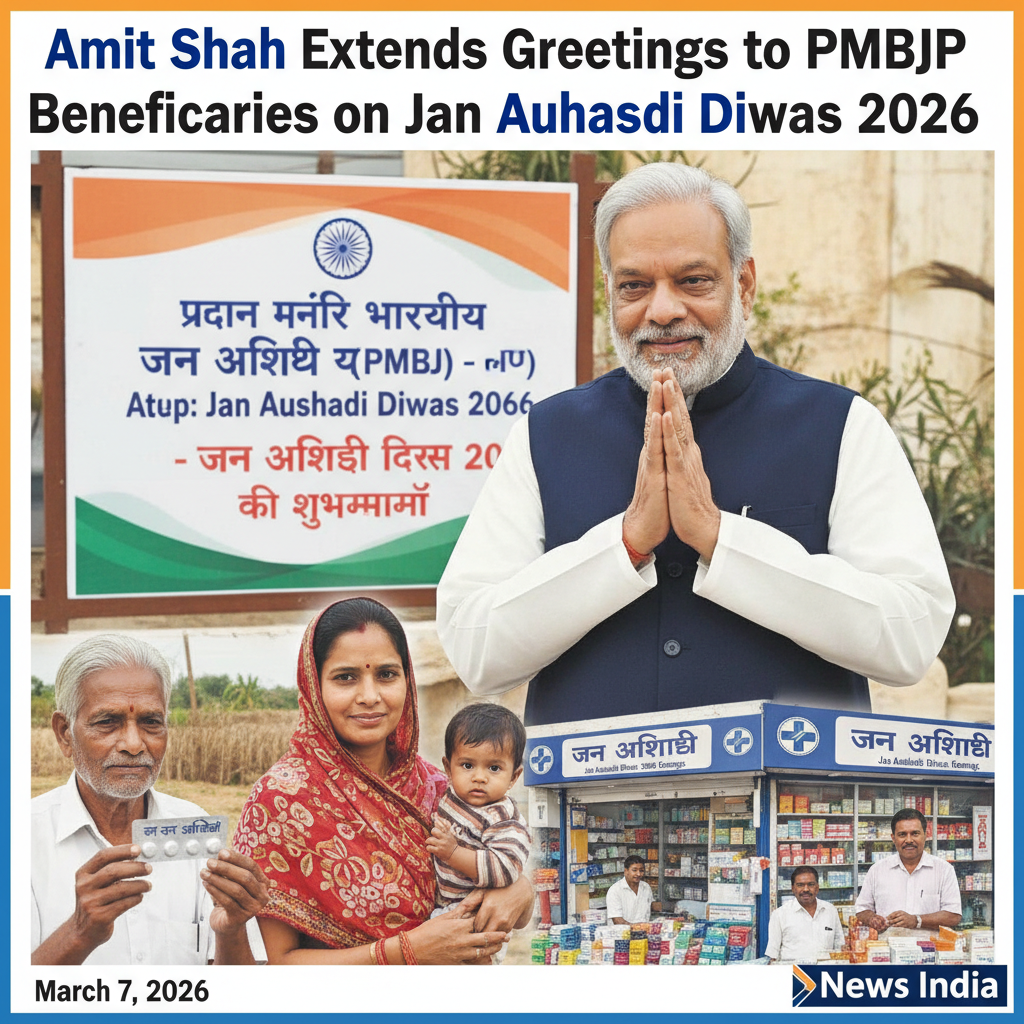
Amit Shah Extends Greetings to PMBJP Beneficiaries on Jan Aushadhi Diwas 2026
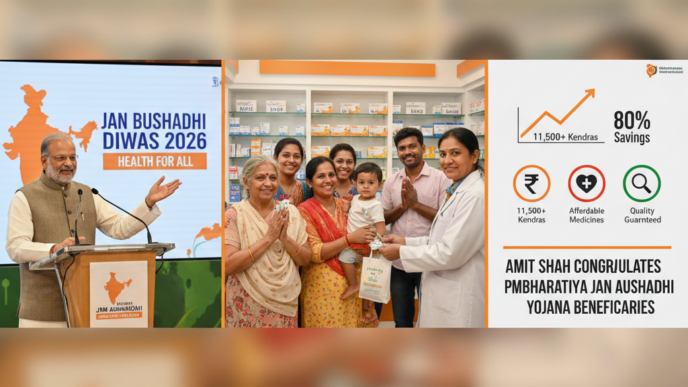
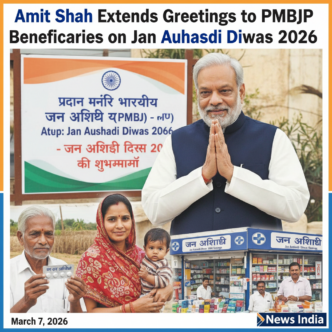
Amit Shah, Union Home Minister and Minister of Cooperation, marked Jan Aushadhi Diwas 2026 by sending sincere greetings to every beneficiary of the Pradhan Mantri Bharatiya Jan Aushadhi Yojana (PMBJP), reaffirming the government’s commitment to making essential medicines affordable for all Indians. In a statement released through official channels, the minister highlighted that the scheme has become a lifeline for millions, especially for low‑income families, senior citizens, and patients managing chronic conditions. He praised the dedicated staff operating Jan Aushadhi Kendras nationwide and urged citizens to spread awareness about the free‑of‑cost access to generic drugs available at these centres. The greeting resonated across social media platforms, where officials and health advocates shared messages of gratitude and success stories, reinforcing the scheme’s status as a cornerstone of India’s public‑health strategy.
Historical Background of PMBJP
The Pradhan Mantri Bharatiya Jan Aushadhi Yojana was launched in 2008 under the Ministry of Chemicals and Fertilizers with a clear objective: to provide generic medicines at prices up to 90 % lower than their branded equivalents. The initiative was conceived to curb the soaring cost of healthcare and to ensure that economically vulnerable populations could obtain quality treatment without financial distress. Over the years, the programme has undergone several phases of expansion—Phase I (2008‑2015) focused on establishing a pilot network of kendras, Phase II (2016‑2020) introduced a broader catalogue of medicines, and Phase III (2021‑2024) emphasized digital integration and supply‑chain strengthening. By the end of 2026, the scheme celebrated a milestone of over 9,500 operational kendras spread across urban, semi‑urban, and remote rural areas, covering nearly every district in the country.
For a detailed overview of the programme’s evolution, see the Wikipedia entry and the official portal at piba.gov.in. 
Significance of Jan Aushadhi Diwas
Jan Aushadhi Diwas is observed annually on March 7 to commemorate the contributions of the PMBJP in reshaping public‑health delivery in India. The day serves as a platform for showcasing success stories, sharing best practices, and mobilising additional support for the network of Jan Aushadhi Kendras that dot the length and breadth of the nation. In his address on this occasion, Amit Shah underscored the administration’s unwavering commitment to public health and to the welfare of citizens, particularly those belonging to marginalized sections of society. He described the scheme as a concrete manifestation of the government’s vision to turn affordable healthcare from a privilege into a right for every Indian.
Shah’s Message and Its Implications
In his Jan Aushadhi Diwas 2026 message, the minister conveyed sincere appreciation to the countless individuals who benefit from the scheme and to the dedicated staff who operate the kendras. He remarked that the government’s vision is to make affordable healthcare a right rather than a privilege, and that the PMBJP exemplifies this vision in practice. The speech was disseminated through official press releases, parliamentary channels, and widely shared on platforms such as Twitter and Facebook, where it generated a wave of supportive commentary from civil‑society organisations, health experts, and beneficiaries alike. The endorsement has reinforced the scheme’s status as a flagship programme within the broader National Health Policy, influencing budgetary allocations and policy discussions for the ensuing fiscal year.
Key Statistics Highlighting Impact
The reach of the PMBJP is substantial. As of 2026, more than 9,500 Jan Aushadhi Kendras are operational across urban and rural landscapes, serving virtually every district. These outlets collectively dispense over 250 million units of generic medicines each year, translating into cumulative savings of billions of rupees for households. In addition, the scheme has generated employment for over 12,000 entrepreneurs who manage the kendras, contributing to local economies and fostering micro‑enterprise growth. According to the Ministry of Health and Family Welfare’s 2025‑26 report, the average cost of a month’s supply of a chronic‑illness medication has dropped by 70 % in regions where kendras are most densely populated, underscoring the scheme’s tangible economic relief for patients.
Recent Expansions and New Initiatives
Phase IV of the PMBJP, launched in early 2025, introduced an expanded catalog that now includes treatments for diabetes, hypertension, cardiovascular diseases, and a range of antimicrobial agents. To streamline operations, the government rolled out a digital platform that integrates order placement, inventory management, and logistics for all kendras, ensuring timely availability of essential drugs. Strategic partnerships with major pharmaceutical manufacturers have also been strengthened, guaranteeing a steady supply of high‑quality generic medicines at regulated prices. Moreover, the scheme now offers a limited range of over‑the‑counter health products, basic diagnostic kits, and wellness accessories, broadening its utility beyond prescription drugs.
For real‑time updates on the digital platform, refer to the PMBJP Dashboard.
Testimonials from Beneficiaries
First‑hand accounts illustrate the scheme’s profound impact. A mother from a village in Uttar Pradesh recounted that her child’s asthma inhaler, which previously cost several hundred rupees per month, now costs less than 50 rupees thanks to the nearby Jan Aushadhi Kendra. A senior citizen in Kerala highlighted how the reduced price of antihypertensive tablets enabled him to adhere to his treatment regimen without resorting to partial dosing, thereby reducing his risk of stroke. In a rural district of Odisha, a farmer shared that affordable antibiotics allowed him to treat a severe infection without missing work, preserving his family’s livelihood. These narratives, amplified on regional news platforms, have become powerful testimonies that reinforce the scheme’s life‑saving potential.
Economic and Public Health Impact
Health economists have praised the PMBJP for its positive externalities on national finances. By reducing out‑of‑pocket health expenditures, the scheme lowers the financial burden on families, freeing disposable income for education, nutrition, and other essential needs. Improved medication adherence has contributed to lower hospitalization rates and decreased overall healthcare costs for the government, aligning closely with India’s broader goal of universal health coverage (UHC). A 2025 study published in the Indian Journal of Public Health estimated that the scheme has averted approximately ₹3,500 crore in annual healthcare spending, a figure that underscores its fiscal significance.
Expert Opinions and Academic Insight
Public‑health specialists affirm that affordable access to medicines is a critical determinant of health outcomes. In a recent interview, Dr Neha Sharma, an epidemiologist at the Indian Institute of Public Health (IIPH), noted that the PMBJP has demonstrably improved disease management in low‑income communities. “When patients can afford their medications, treatment success rates rise significantly, leading to better population health,” she explained. Dr Sharma also highlighted that the scheme’s focus on generic drugs has spurred competition among manufacturers, driving down prices further and encouraging innovation in formulation techniques.
Future Roadmap and Government Commitments
Looking ahead, the Ministry of Health and Family Welfare has outlined an ambitious plan to expand the network of Jan Aushadhi Kendras, targeting remote and tribal regions that currently lack pharmaceutical access. The upcoming national budget earmarks additional funds for establishing mobile health units equipped with essential medicines, aiming to bring services directly to the doorsteps of isolated communities. The government also intends to introduce a broader range of over‑the‑counter health products and diagnostic kits through the kendras, enhancing preventive care capabilities. These initiatives are part of a five‑year roadmap that envisions a fully integrated, nationwide pharmaceutical safety net, ensuring that no citizen is left without affordable treatment options.
Call to Action for Citizens
Shah’s greetings concluded with a direct appeal to the public: spread awareness about the PMBJP and encourage more individuals to utilize the Jan Aushadhi Kendras. He urged communities to share information about the scheme’s benefits, thereby ensuring that every eligible citizen can take advantage of affordable medication. Local panchayats, NGOs, and community leaders have been roped in to organize informational campaigns, health camps, and door‑to‑door outreach programs. By fostering a culture of collective participation, the government envisions a reinforced mission where healthcare becomes a universal right for all citizens.
Conclusion
The celebration of Jan Aushadhi Diwas 2026, marked by Amit Shah’s heartfelt greetings, reflects the government’s continued dedication to the Pradhan Mantri Bharatiya Jan Aushadhi Yojana. As the scheme progresses, it promises to further democratize access to essential medicines, reinforcing India’s commitment to equitable healthcare for all citizens. Stay tuned for future announcements, expansion projects, and success stories that illustrate the enduring impact of this visionary programme on the nation’s health landscape.
Stay updated with the latest Yojana schemes and government initiatives for better awareness and eligibility. For personalized guidance on accessing these benefits, reach out to us.