


Overview of Namo Lakshmi–Namo Saraswati Vigyan Sadhana Yojana
The Namo Lakshmi–Namo Saraswati Vigyan Sadhana Yojana represents a flagship education welfare initiative of the Gujarat government, specifically designed to provide financial assistance to meritorious students from economically disadvantaged backgrounds who wish to pursue higher studies in science, technology, engineering, and mathematics (STEM) disciplines. Launched in 2022 with an initial allocation of ₹150 crore, the scheme now operates with an expanded budget of ₹354 crore, reflecting the state’s commitment to scaling up impact. The programme is built on the principle of Direct Benefit Transfer (DBT), ensuring that scholarship amounts are credited directly to beneficiaries’ bank accounts, thereby eliminating intermediaries and enhancing transparency. By targeting students from low‑income families, the scheme seeks to remove financial barriers that traditionally hinder access to quality higher education, especially in technical and professional courses such as engineering, pharmacy, and computer applications. The government has also partnered with academic institutions and industry bodies to align scholarship objectives with market‑driven skill requirements, positioning Gujarat as a hub for a knowledge‑driven economy. This holistic approach integrates monetary support with complementary services such as mentorship, career counseling, and access to digital learning resources, thereby creating a conducive ecosystem for academic excellence and long‑term socioeconomic upliftment.
Scholarship Distribution Details
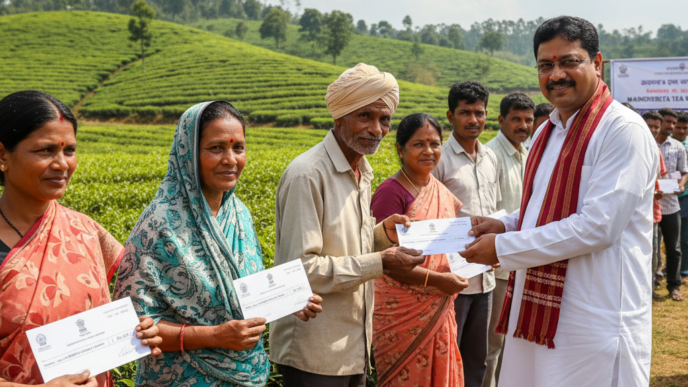
On 29 March 2026, Chief Minister Bhupesh Patel announced the disbursement of scholarships totalling ₹354 crore to 13.96 lakh eligible students across the state, marking a significant milestone in the implementation of the Namo Lakshmi–Namo Saraswati Vigyan Sadhana Yojana scholarships. Each recipient receives a scholarship amount ranging from ₹10,000 for undergraduate programmes to ₹50,000 for postgraduate and professional courses, with the exact figure determined by factors such as course type, academic performance, and family income thresholds. The selection process involves a rigorous verification mechanism that cross‑checks academic records, income certificates, and demographic data supplied by local panchayats, schools, and district offices, ensuring that only deserving candidates receive benefits. Funds are transferred directly to beneficiaries’ bank accounts via the DBT platform, a method that has been praised for reducing leakage and enhancing accountability.
The distribution model incorporates several key features that amplify its reach and effectiveness: 
- Direct transfer of funds to bank accounts, minimizing bureaucratic delays.
- Targeted support for students enrolled in technical and professional courses, aligning education with industry needs.
- Supplemental mentorship and career counseling services to guide recipients toward employable skills.
- Provision of digital learning resources, including access to online tutorials and e‑libraries, to complement financial aid.
These components collectively aim to not only alleviate tuition costs but also foster holistic development, enabling students to focus on academics without the burden of financial strain. The scheme’s transparency, bolstered by real‑time monitoring dashboards, has been highlighted in policy forums as a best practice for DBT‑based scholarship programmes, drawing comparisons with similar initiatives in Maharashtra and Tamil Nadu.
Objectives and Expected Impact
The primary aim of the Namo Lakshmi–Namo Saraswati Vigyan Sadhana Yojana is to democratize access to higher education by removing economic obstacles that disproportionately affect students from marginalized communities. By doing so, the Gujarat government anticipates a measurable rise in enrollment rates within STEM streams, improved graduation outcomes, and the creation of a skilled workforce capable of driving state and national economic growth. Early impact assessments indicate a noticeable surge in college admissions in rural districts, with scholarship recipients reporting higher retention rates and heightened academic confidence. Experts attributes this positive trend to the scheme’s multifaceted design, which couples direct cash transfers with mentorship and skill‑development workshops, thereby addressing both immediate monetary needs and long‑term career aspirations.
According to Dr. Anjali Mehta, a policy analyst at the Indian Institute of Public Administration, “The integration of financial aid with structured mentorship creates a synergistic effect that enhances not just enrollment but also completion rates. Students who receive consistent support are more likely to persist through challenging academic pathways, ultimately contributing to a more robust skilled labor pool.”
Beyond quantitative metrics, the programme fosters social inclusion by explicitly targeting beneficiaries from Scheduled Castes, Scheduled Tribes, and other economically weaker sections, thereby promoting equity in education. Moreover, the initiative aligns with national priorities such as the ‘Make in India’ campaign and the Sustainable Development Goals (SDGs), particularly Goal 4 on quality education. By investing in human capital, Gujarat is positioning itself as a model state for other regions seeking to replicate a data‑driven, outcome‑focused approach to educational welfare.
Implementation Roadmap and Future Enhancements
Looking ahead, the Gujarat government plans to refine the scheme’s eligibility framework to encompass a broader spectrum of aspirants, including students from minority communities and those pursuing interdisciplinary STEM courses. A tiered scholarship structure is slated for introduction, wherein higher academic achievers will receive progressively larger monetary incentives, thereby encouraging sustained academic excellence. In addition, the administration intends to forge strategic partnerships with private sector enterprises to generate internship opportunities and apprenticeship programmes for scholarship recipients, thereby enhancing employability and bridging the gap between education and industry demands.
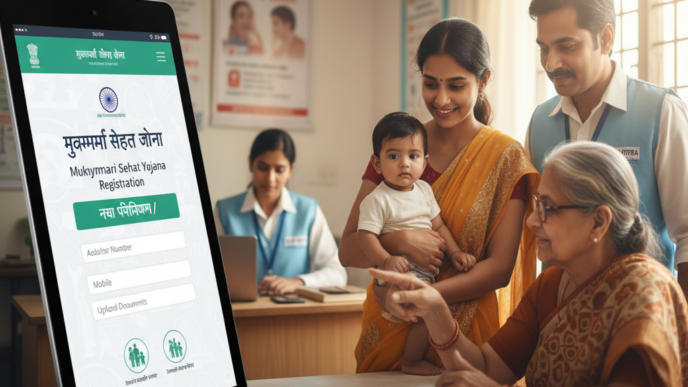
To bolster operational efficiency, a dedicated online portal will be rolled out later this year, offering real‑time tracking of scholarship disbursements, automated eligibility verification, and a grievance redressal mechanism for beneficiaries. This digital infrastructure aims to streamline administrative processes, reduce processing times, and ensure greater accountability. Continuous monitoring and feedback loops will be established, drawing on data analytics to assess the scheme’s impact, identify bottlenecks, and inform iterative improvements. Such forward‑looking strategies underscore the state’s resolve to evolve the programme into a comprehensive ecosystem that not only funds education but also cultivates talent, supports innovation, and drives socioeconomic progress.
Conclusively, the recent scholarship distribution under the Namo Lakshmi–Namo Saraswati Vigyan Sadhana Yojana epitomizes Gujarat’s proactive stance on educational welfare. By leveraging technology, targeted financial assistance, and supplementary support services, the state is laying a robust foundation for an inclusive and skilled workforce. Ongoing refinement and vigilant oversight will be essential to sustain these gains and to cement the scheme’s reputation as a replicable model for educational empowerment across India.
Stay updated with the latest Yojana schemes and government initiatives for better awareness and eligibility. For personalized guidance on accessing these benefits, reach out to us.