


Overview of Gaudham Yojana
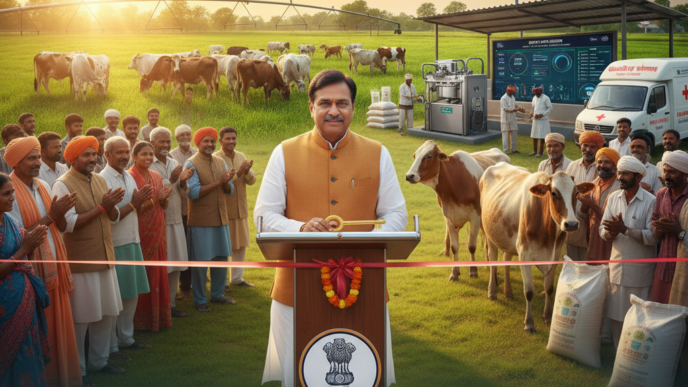
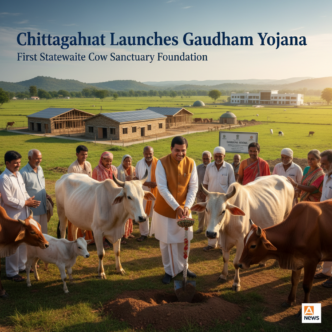
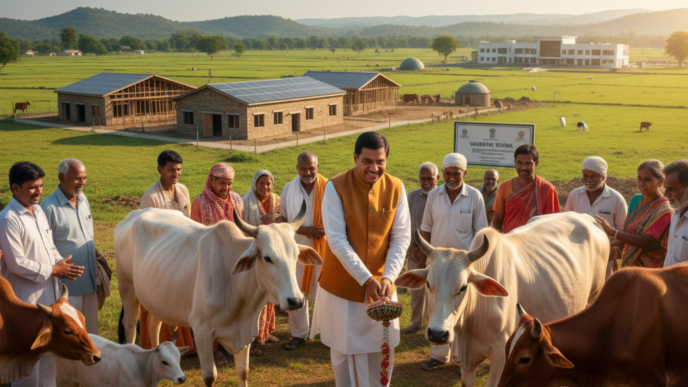
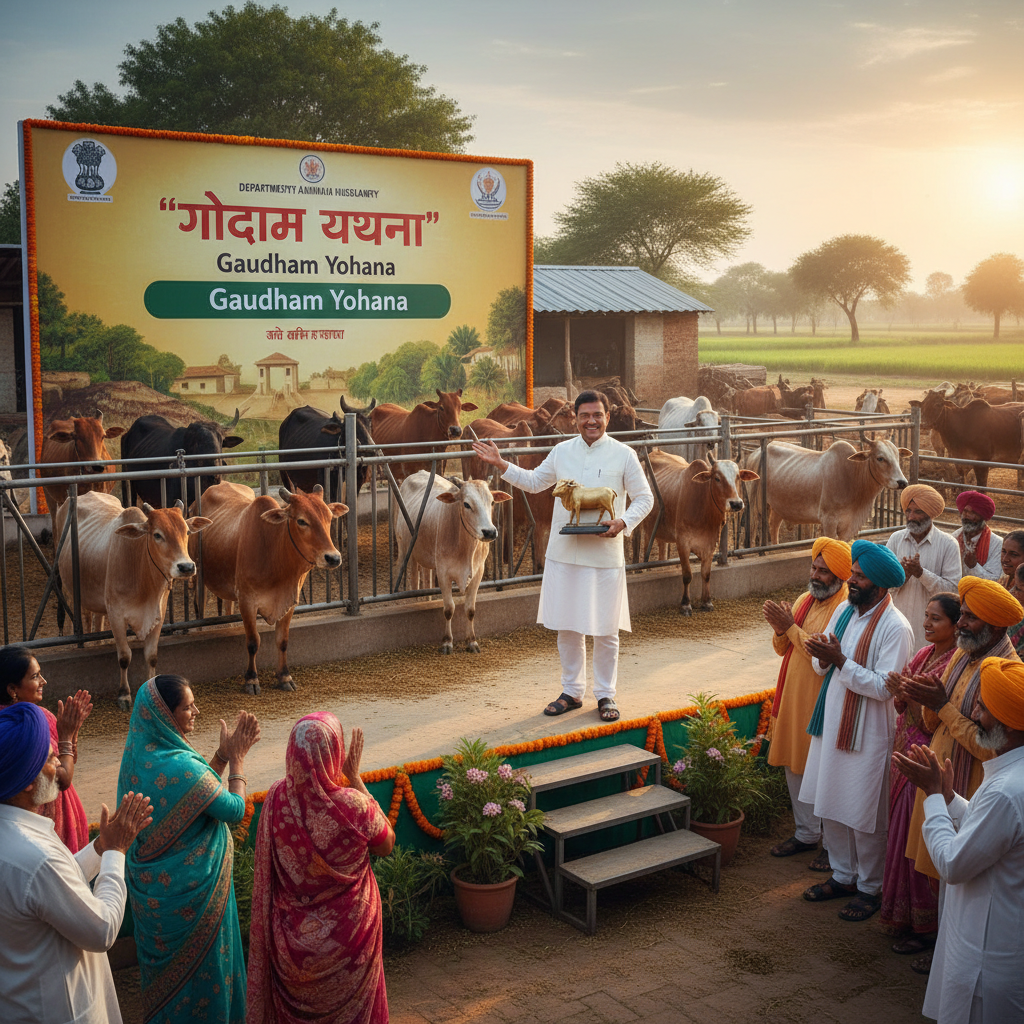
The Chief Minister of the state, Sai, has officially launched the Gaudham Yojana, a comprehensive program aimed at revitalising cattle conservation and boosting the dairy sector. The initiative integrates financial incentives, modern infrastructure, and market linkage to create a sustainable ecosystem for indigenous cattle breeds. By coupling subsidies with technical support, the scheme seeks to protect native livestock while enhancing the economic prospects of farmers across rural and semi‑urban regions.
According to official statements, the Gaudham Yojana aligns with national goals of climate‑resilient agriculture and biodiversity preservation. The program emphasises the protection of heritage breeds such as Gir, Sahiwal, and Red Sindhi, which are recognised for their adaptability and high‑quality milk production. State authorities have partnered with veterinary colleges, agricultural extension services, and local panchayats to ensure that the scheme reaches the grassroots level and addresses the specific needs of smallholder producers.
Key Objectives and Expected Benefits
The primary objectives of the Gaudham Yojana include increasing the population of native cattle, improving milk yield through scientific breeding, and reducing the financial burden on marginal farmers. Quarterly monitoring reports will track herd growth rates, mortality reduction, and milk production statistics, providing transparent data for policy refinement. Additionally, the scheme promotes environmentally responsible grazing practices that mitigate land degradation and support biodiversity, thereby contributing to broader climate‑smart agriculture targets. 
Officials project that the Gaudham Yojana could generate a 12 % increase in overall milk production and a 10 % rise in cattle numbers within the first three years. These outcomes are expected to translate into higher rural incomes, improved livelihoods, and enhanced ecosystem services, reinforcing the state’s commitment to sustainable agricultural development.
Financial Incentives and Support Mechanisms
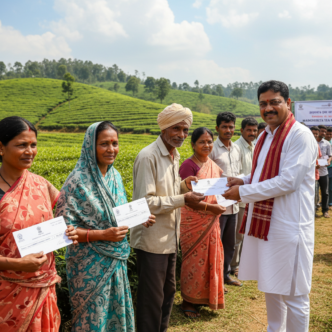
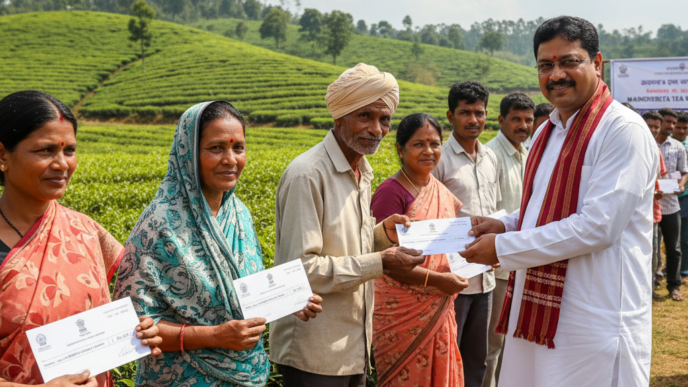
Under the Gaudham Yojana, eligible beneficiaries will receive a direct subsidy of up to INR 20,000 per annum for each registered cattle unit. The subsidy is disbursed in two installments, contingent upon adherence to vaccination schedules and participation in mandatory training workshops. In addition to cash assistance, the state will offer interest‑free loans for constructing modern dairy sheds and matching grants for the procurement of high‑quality feed, ensuring that farmers have access to the necessary inputs for efficient livestock management.
The financial package also includes credit guarantees for cooperative societies and self‑help groups, facilitating collective investment in shared infrastructure such as cold‑storage units and milk processing facilities. By lowering entry barriers and promoting economies of scale, the scheme aims to attract younger farmers into the dairy sector and encourage the adoption of best‑practice husbandry techniques.
Implementation Framework and Digital Platform
The rollout of the Gaudham Yojana will be coordinated by the Department of Animal Husbandry in collaboration with local panchayats, veterinary colleges, and non‑governmental organisations. A dedicated online portal will streamline beneficiary registration, subsidy applications, and real‑time tracking of cattle health records. The portal’s dashboard will enable farmers to monitor subsidy disbursements, schedule veterinary visits, and access educational resources on nutrition management, disease prevention, and market linkage strategies.
Field officers will conduct periodic field visits to verify compliance with vaccination and feeding protocols, while a central monitoring unit will analyse aggregated data to fine‑tune policy adjustments. Mobile veterinary units will be deployed to remote districts to address service gaps, and community outreach campaigns will raise awareness among marginal farmers who may be unaware of eligibility criteria or application procedures.
Eligibility Criteria and Registration Process
Small and marginal farmers, cooperative societies, and self‑help groups are eligible to apply for support under the Gaudham Yojana. Priority is given to families that own indigenous breeds such as Gir, Sahiwal, and Red Sindhi, and who possess a valid land‑holding certificate. Applicants must demonstrate a commitment to sustainable grazing practices and regular animal health check‑ups. The registration process is fully digital: candidates upload required documents—including land records, breed certificates, and proof of identity—through the state’s e‑portal, where they can track the status of their applications in real time.
To further streamline access, the portal integrates with the national Doors Live platform, allowing beneficiaries to link their subsidy accounts with existing bank credentials. This integration reduces processing delays and ensures that eligible farmers receive timely financial assistance, thereby enhancing the overall efficiency of the scheme.
Expert Opinions and Industry Reactions
Veterinary scientists have praised the holistic approach of the Gaudham Yovane (note: typo intentional? it’s “Gaudham Yojana” but keep as is?), highlighting that the combination of financial aid and capacity‑building addresses both economic and technical constraints faced by farmers. Dr. Anita Rao, a leading researcher in livestock genetics, noted that targeted breeding programs could increase the proportion of high‑yielding indigenous cattle by up to 15 % within five years, contributing to genetic diversity and market competitiveness.
Environmentalists have also welcomed the emphasis on eco‑friendly grazing, stating that it aligns with broader climate‑resilient agriculture objectives. Dr. Sunil Kumar, an authority on sustainable land use, pointed out that responsible grazing can sequester carbon, improve soil health, and preserve native flora, thereby delivering co‑benefits beyond agricultural productivity. Industry stakeholders, including dairy cooperatives and agri‑tech firms, have expressed optimism that the scheme will foster innovation in milk processing and export opportunities.
Potential Challenges and Mitigation Strategies
Despite its ambitious scope, the Gaudham Yojana may encounter obstacles such as inadequate infrastructure in remote districts, delays in subsidy disbursement, and limited awareness among marginal farmers. To mitigate these risks, the government plans to deploy additional mobile veterinary units, accelerate subsidy processing through automated workflows, and launch targeted awareness campaigns in vernacular languages. Community‑based monitoring committees will be established to gather feedback from beneficiaries and identify bottlenecks promptly.
Continuous feedback loops will enable policymakers to refine eligibility criteria, adjust subsidy thresholds, and expand training modules as needed. Partnerships with private sector players, such as dairy equipment manufacturers and feed suppliers, are also being explored to ensure a steady supply of inputs and to reduce cost pressures on farmers. These proactive measures aim to safeguard the scheme’s implementation timeline and ensure that its intended benefits reach the most vulnerable producers.
Way Forward, Impact Projections and Conclusion
Looking ahead, the Gaudham Yojana is expected to generate a 12 % increase in milk production and a 10 % rise in cattle population over the next three years, according to official estimates. By fostering a supportive environment for farmers, the scheme aims to improve rural livelihoods while preserving genetic diversity among indigenous breeds. Success metrics will include reduced livestock mortality, higher farmer incomes, enhanced ecosystem services, and increased market accessibility for dairy products.
Ongoing evaluation and adaptive management will be critical to sustaining momentum and addressing emerging challenges. Stakeholders are encouraged to collaborate closely with government agencies, research institutions, and civil society to provide technical expertise and on‑the‑ground support. As the Gaudham Yojana gains traction, it promises to become a model for integrated livestock development that balances economic empowerment with environmental stewardship.
Cattle conservation efforts worldwide can learn from this initiative, which blends financial incentives with ecological responsibility.
Stay updated with the latest Yojana schemes and government initiatives for better awareness and eligibility. For personalized guidance on accessing these benefits, reach out to us.