


Introduction – Why the De‑empanelling Debate Matters
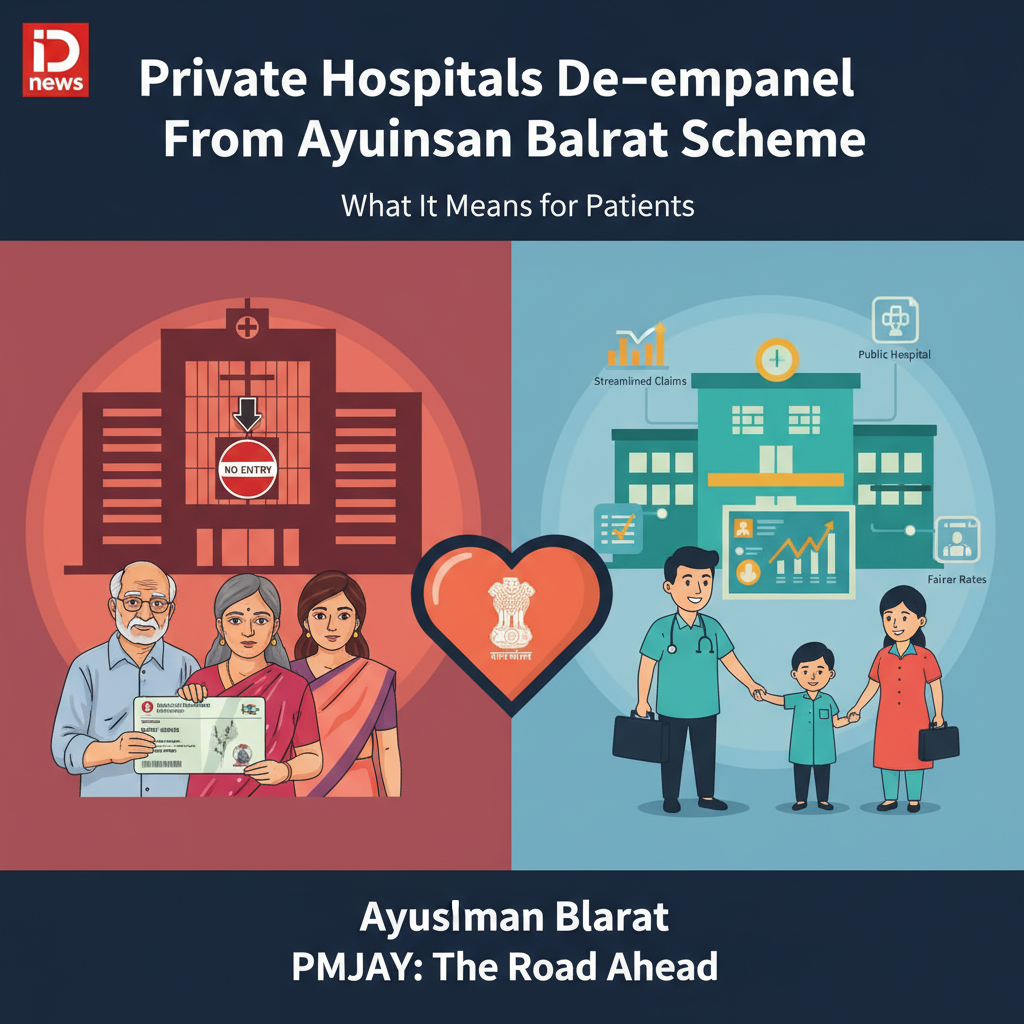
Recent headlines about Ayushman Bharat private hospitals pulling out of the flagship health insurance scheme have sparked a nationwide conversation on the future of affordable care in India. The discourse is not merely academic; it directly affects over 10 crore beneficiary families who rely on the programme for lifesaving surgeries, cancer treatments, and chronic disease management. As the government seeks to balance fiscal sustainability with universal health coverage, the possible withdrawal of private facilities threatens to shrink the network of empaneled centres just when demand is rising fastest in urban and semi‑urban areas. This article unpacks the background, the mechanics of the scheme, the pressures on private hospitals, and the ripple effects on patients, aiming to provide a clear picture for citizens, policymakers, and the media alike.
What Is Ayushman Bharat and Its Role for Private Hospitals
Launched in September 2018, Ayushman Bharat – Pradhan Mantri Jan Arogya Yojana (PMJAY) is billed as the world’s largest publicly funded health insurance programme. It guarantees a coverage of up to ₹5 lakh per family per year for secondary and tertiary care hospitalisation, targeting the bottom 40 % of the population – roughly 10 crore households. The scheme operates through a partnership model: the public sector provides funding, while a growing network of private hospitals is empaneled to deliver services.
Currently, more than 30,000 health facilities are empaneled under Ayushman Bharat, of which around 12,000 are private hospitals. This inclusion expands choice for beneficiaries, especially in cities where private institutions dominate specialty care. Private centres bring advanced equipment, multidisciplinary teams, and shorter waiting times, making them essential partners in achieving the scheme’s universal health goal. For more detailed statistics, refer to the official National Health Mission portal. 
Beneficiaries can avail cashless treatment at any empaneled facility by presenting their Ayushman Bharat e‑card. The claim is processed directly between the hospital and the National Health Authority (NHA), which reimburses the cost based on a predefined package rate. This model reduces out‑of‑pocket expenses and mitigates the financial shock of catastrophic illness.
Why Private Hospitals Are Part Of The Scheme and What Triggers De‑empanelling
Private hospitals were incorporated into Ayushman Bharat to create a robust, multi‑provider ecosystem that could meet the diverse needs of India’s heterogeneous population. Their participation is crucial because:
- They possess sophisticated infrastructure and specialist expertise that many public hospitals lack.
- They increase the geographic reach of the scheme, especially in tier‑2 and tier‑3 cities.
- They enable a public‑private partnership that spreads the fiscal burden while expanding service capacity.
Despite these advantages, several pressures have emerged that could lead to de‑empanelling. Recent reports from the Indian Hospital Association (IHA) highlight four primary stressors:
- Reimbursement delays: Hospitals often wait 45‑60 days for claim settlements, disrupting cash flow.
- Financial viability: Package rates for certain procedures are lower than the actual cost of care, squeezing margins.
- Administrative complexity: Repeated documentation, audits, and compliance checks increase operational overhead.
- Policy revisions: Annual updates to package rates and eligibility criteria can create uncertainty for long‑term planning.
For instance, a 2023 survey by the Ayushman Bharat Wikipedia page found that 28 % of private hospitals in metropolitan areas considered exiting the scheme if reimbursement lags persisted beyond three months. Such sentiments have prompted the Ministry of Health to initiate dialogue with industry bodies.
Impact on Patients and the Government’s Mitigation Plan
If private hospitals exit the Ayushman Bharat network, the immediate fallout would be felt most acutely by patients who depend on these facilities for timely, high‑quality care. Key consequences include:
- Longer waiting periods in public hospitals, potentially delaying surgeries for critical conditions.
- Higher out‑of‑pocket expenses for those who can afford private care but lose the safety net.
- Gaps in coverage for rare or complex procedures that are predominantly performed by private specialists.
To cushion this impact, the Ministry of Health and Family Welfare has announced a multi‑pronged mitigation strategy:
- Digital claim filing: A unified portal will cut processing time to under 15 days.
- Package rate revision: An expert panel is reviewing rates to align them more closely with cost structures.
- Performance‑linked incentives: Hospitals that achieve high-quality metrics may receive bonus payments.
These measures aim to retain private participation while safeguarding the scheme’s financial health. Beneficiaries are urged to verify the current empaneled status of their preferred hospitals before planning treatment.
Conclusion – Keeping the Scheme Inclusive
The prospect of Ayushman Bharat private hospitals de‑empanelling underscores the delicate balance between fiscal prudence and inclusive healthcare delivery. While challenges such as delayed reimbursements and narrow package rates threaten private sector involvement, the government’s proactive steps – from digital payment reforms to periodic rate adjustments – signal a commitment to preserving the scheme’s core promise. Continuous dialogue between the Ministry, hospital chains, and patient advocacy groups will be vital to refine the model, ensure transparency, and expand the network of empaneled facilities. As the ecosystem evolves, the ultimate objective remains unchanged: to provide every Indian, especially the most vulnerable, with access to quality, affordable health services.
Stay updated with the latest Yojana schemes and government initiatives for better awareness and eligibility. For personalized guidance on accessing these benefits, reach out to us.