


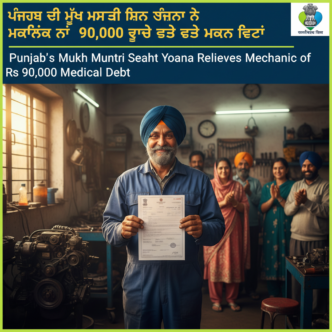
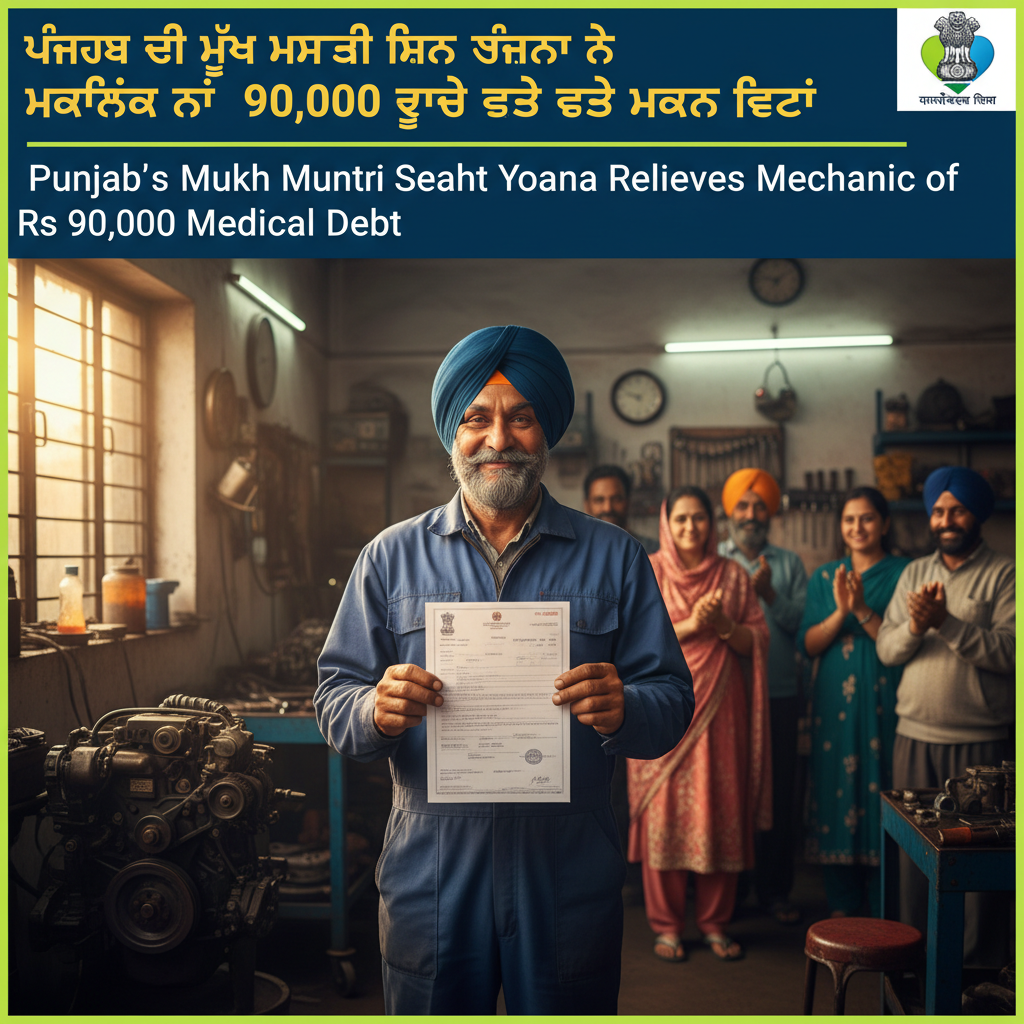
Punjab’s Mukh Mantri Sehat Yojana Saves Mechanic from Rs 90,000 Medical Debt
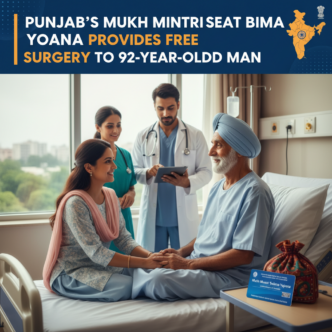
In a dramatic illustration of how the state’s health safety net can transform lives, a 38‑year‑old mechanic from Mandoli, a peri‑urban hub on Ludhiana’s eastern fringe, avoided a looming Rs 90,000 medical liability after undergoing emergency cardiac surgery. The surgery, diagnosed as acute myocardial infarction requiring coronary artery bypass grafting, was projected to cost the mechanic almost his entire annual earnings. Under the Punjab government’s flagship Mukh Mantri Sehat Yojana, the entire claim was approved and reimbursed within fifteen days of document submission, erasing the debt that would have forced him to shutter his workshop and liquidate his modest assets. This episode underscores the scheme’s rapid rollout since its launch in early 2023, a period during which the state has earmarked over Rs 1,200 crore to expand coverage and streamline claim processing. By converting a potential financial catastrophe into a manageable expense, the programme is redefining accessibility to quality healthcare for Punjab’s low‑income workers.
Eligibility Criteria and Claim Procedure Under the Scheme
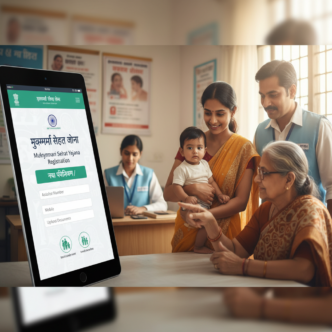
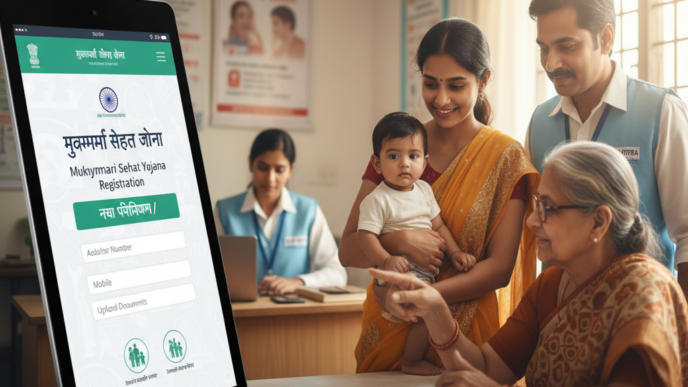
The Mukh Mantri Sehat Yojana is expressly designed to target households whose annual income does not exceed Rs 2.5 lakh, a threshold that captures the majority of daily‑wage earners, small traders, and informal sector workers. Once a family registers, they receive a unique scheme identifier that must be presented at any empaneled public or private hospital. During treatment, the hospital can directly flag the claim to the state treasury, eliminating the need for upfront cash outlays in many instances. After discharge, the treating facility or the beneficiary must upload a claim dossier comprising the final bill, discharge summary, diagnostic reports, and the scheme ID. The verification window typically spans five to ten business days, after which the reimbursement is credited directly to the claimant’s bank account.
- Eligibility limited to families with an annual income below Rs 2.5 lakh.
- Coverage includes secondary and tertiary care procedures up to Rs 5 lakh per year.
- No cap on the number of claims per family per year, provided the cumulative limit is not exceeded.
- All government hospitals are automatically empaneled; select private hospitals are also included.
Beneficiaries who prefer to settle the bill immediately can still claim full reimbursement, provided the application is filed within thirty days of treatment. This flexibility has markedly increased timely medical seeking, particularly in urban centres where cash‑flow constraints are acute. The scheme also leverages a mobile health‑unit outreach programme that visits remote villages, assisting residents with registration, document collection, and awareness generation. 
Economic and Health Outcomes for Punjab’s Workers
Since the inception of the Mukh Mantri Sehat Yojana, Punjab’s health metrics have shown measurable improvement. District‑level data released by the state health department indicate a 12 percent decline in hospitalization rates for preventable conditions in high‑participation zones, suggesting earlier interventions and reduced financial barriers to care. Moreover, screenings for chronic ailments such as diabetes and hypertension have risen by 18 percent, reflecting a growing willingness to seek preventive services without fear of economic fallout. Public health officials attribute these gains to the removal of cost constraints and a renewed emphasis on primary‑care linkages embedded within the scheme’s framework.
From an economic standpoint, the scheme is projected to generate long‑term savings for families by averting asset liquidation and debt accumulation. A recent survey conducted by the Punjab Bureau of Economics and Statistics estimated that, in the first twelve months of implementation, over Rs 350 crore in medical debt was averted across the state, stabilizing household finances for more than 70,000 low‑income households. This financial relief reverberates through local economies, as beneficiaries are now able to reinvest in livelihoods rather than allocate income to repay health‑related loans.
State Government’s Investment and Future Roadmap
The Punjab Chief Minister has repeatedly framed the Mukh Mantri Sehat Yojana as a cornerstone of his welfare agenda, and the latest state budget reflects this commitment with an additional allocation of Rs 1,200 crore aimed at expanding the network of empaneled hospitals, raising the annual coverage ceiling, and upgrading digital claim‑processing infrastructure. Upcoming milestones include the rollout of a real‑time claim‑tracker portal that will allow beneficiaries to monitor application status instantly via mobile devices. The government also plans to forge strategic partnerships with premier medical institutions to develop specialized treatment modules for complex conditions such as oncology, neurology, and organ transplantation, ensuring that even highly specialized care can be claimed under the scheme.
To enhance fiscal sustainability, the health department is instituting a quarterly audit mechanism that will scrutinize claim disbursements, detect anomalies, and recalibrate budgetary allocations accordingly. This proactive oversight seeks to balance robust coverage with prudent expenditure, safeguarding the programme against fiscal strain while preserving its social impact.
Challenges, Mitigation Strategies, and Community Response
Despite its successes, the Mukh Mantri Sehat Yojana encounters several operational hurdles. Paper‑based claim submissions have historically caused processing delays, prompting the state to accelerate the transition to fully digital submissions and electronic approvals. Rural awareness gaps have also emerged, with pockets of under‑utilization reported in remote districts. In response, the health department has launched an extensive community‑outreach campaign that employs local panchayat leaders, radio jingles in Punjabi, and village health workers to disseminate information about eligibility, registration, and claim procedures.
Experts caution that sustained efficacy will hinge on disciplined financial management and regular performance reviews. Dr. Amrita Singh, a policy analyst at the Institute for Public Health Research, noted, “The scheme’s design is solid, but its long‑term viability depends on meticulous oversight and iterative improvements based on ground‑level feedback.” Community leaders, meanwhile, have voiced optimism. As one Mandoli resident remarked, “We now have the confidence to seek treatment without the constant dread of losing our workshop.” This sentiment echoes across Punjab, where the scheme is increasingly viewed not merely as a financial safety net but as a catalyst for socioeconomic empowerment.
Stay updated with the latest Yojana schemes and government initiatives for better awareness and eligibility. For personalized guidance on accessing these benefits, reach out to us.