


Calcutta High Court Issues Notice on Delayed PM Matru Vandana Yojana Payments
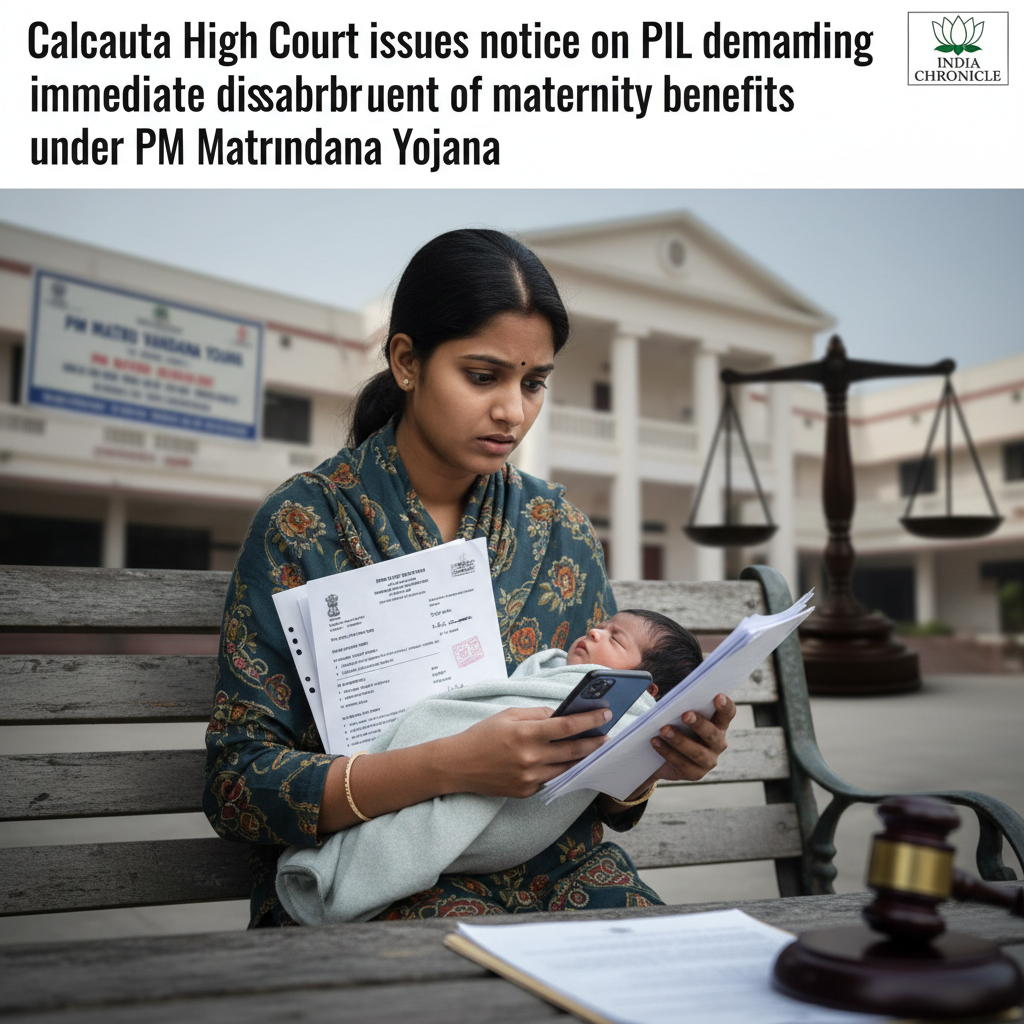
The Calcutta High Court recently issued an interim notice to the West Bengal health department demanding an explanation for the non‑disbursement of maternity benefits under the Pradhan Mantri Matru Vandana Yojana (PMMVY) to thousands of eligible pregnant women. The petition, filed by a coalition of civil society organisations, alleges that the state has failed to release the Rs 5,000 cash incentive even after institutional deliveries have been completed, violating both statutory obligations and constitutional guarantees of health and livelihood. The court has ordered the state to submit a detailed status report within ten days and warned of legal consequences if the delay persists.
What is PM Matru Vandana Yojana?
Launched in 2017, the Pradhan Mantri Matru Vandana Yojana (PMMMVY) is a centrally‑sponsored scheme that provides a cash incentive of Rs 5,000 to pregnant women aged 19 years and above for their first two childbirths. The primary objective is to partially compensate for wage loss during pregnancy and to encourage institutional delivery, thereby improving maternal and child health outcomes. Eligible beneficiaries must register at a health facility or an accredited Anganwadi centre, submit required documents such as a delivery certificate and bank details, and undergo verification by the state health department before funds are transferred directly to their bank accounts.
According to the Ministry of Women and Child Development, the scheme’s funds are released in four instalments: an initial Rs 1,000 upon registration, followed by three tranches after institutional delivery, post‑natal check‑up, and completion of immunisation milestones. This phased approach is designed to link financial assistance with health‑seeking behaviours and to ensure that mothers receive adequate prenatal and postnatal care. 
Implementation Challenges and Recent Cases of Non‑Disbursement
Field reports from several states, including Odisha, Jharkhand, and Uttar Pradesh, highlight persistent delays in the disbursement of PMMVY instalments. Common bottlenecks include incorrect bank account details, outdated beneficiary databases, and insufficient capacity at the district level to process verification documents promptly. In some tribal districts, the reliance on limited banking infrastructure leads to exclusion errors, where eligible women are inadvertently omitted from the payment list.
For instance, a recent investigative report by India Today (March 2026) revealed that over 200,000 pregnant women in West Bengal had not received any instalment despite completing institutional deliveries by the end of the fiscal year. Similar data from the Ministry’s dashboard shows that, as of December 2025, only 85 percent of registered beneficiaries had received the full Rs 5,000 benefit, leaving a sizable gap that has prompted judicial scrutiny.
Government Response and Data on Pending Payments
The Ministry of Women and Child Development responded to the court’s notice by emphasizing that budget allocations for PMMVY have been progressively increased over the past three fiscal years. However, utilisation certificates from state treasuries often lag, causing funds to remain unspent at the implementation end. Officials highlighted that the newly introduced online dashboard, which tracks real‑time disbursement trends, is intended to improve transparency and reduce delays.
Recent ministry data indicates that approximately 1.2 million women were registered under PMMVY by the end of 2025, but only 85 percent received the complete incentive due to pending state‑level clearances. The ministry also announced a capacity‑building programme for district officers and a pilot project that integrates Aadhaar‑linked bank verification to minimise errors and streamline transfers.
Legal and Public‑Health Implications
Legal experts anticipate that the Calcutta High Court’s directive could set a precedent for stricter enforcement of conditional cash transfer schemes across India. By compelling the state to account for non‑payment, the judiciary may pressure other governments to expedite fund releases and to establish robust grievance redressal mechanisms. From a public‑health perspective, delayed payments risk undermining the scheme’s core objective of promoting institutional deliveries, which are associated with lower maternal mortality and improved neonatal outcomes.
Research conducted by the Indian Institute of Public Health suggests that timely cash transfers incentivise women to seek professional care during pregnancy and childbirth, leading to better health‑seeking behaviours and reduced reliance on unqualified providers. Conversely, payment lags can erode trust in government schemes, diminish the intended health impact, and exacerbate inequalities for marginalised communities.
Way Forward and Monitoring Mechanisms
Civil society organisations have pledged to closely monitor the implementation of the court‑mandated compliance plan, filing follow‑up petitions should the state fail to meet the ten‑day deadline. Advocates also call for independent audits of similar flagship programmes, such as the Pradhan Mantri Kisan Samman Nidhi and the Mahatma Gandhi National Rural Employment Guarantee Act, where payment delays have been reported. Strengthening data integration between the Ministry of Women and Child Development, state health departments, and financial institutions is seen as a critical step toward ensuring that every eligible mother receives the promised cash incentive on schedule.
- Key Benefits of PMMVY: financial compensation for wage loss, promotion of institutional delivery, improved prenatal and postnatal care.
- Eligibility Criteria: pregnant women aged 19 years and above, first two childbirths, registration at health facility or Anganwadi centre.
- Disbursement Structure: Rs 1,000 on registration, three subsequent tranches after delivery, postnatal check‑up, and immunisation completion.
Stay updated with the latest Yojana schemes and government initiatives for better awareness and eligibility. For personalized guidance on accessing these benefits, reach out to us.