



Pradhan Mantri Ujjwala Yojana: Clean Cooking Fuel for Millions of Women
Launched in August 2016 by the Ministry of Petroleum and Natural Gas in partnership with the Ministry of Women and Child Development, the Pradhan Mantri Ujjwala Yojana (PMUY) has quickly become one of India’s most celebrated social welfare programmes. Within five years, the scheme supplied subsidised liquefied petroleum gas (LPG) connections to over 9 crore households, primarily targeting women from Below Poverty Line (BPL) families. By replacing traditional cooking fuels such as firewood, dung‑cakes and coal, PMUY not only improves indoor air quality but also frees millions of women from the time‑intensive chore of fuel collection, enabling them to pursue education, entrepreneurship and family care. Recent data from the Ministry of Petroleum and Natural Gas shows that the scheme has contributed to a 30 % reduction in reported respiratory ailments among beneficiary households, underscoring its health and environmental significance.
Objectives and Scope
The programme rests on three core objectives. First, it seeks to curb the 4.3 million premature deaths worldwide linked to indoor air pollution, as highlighted by the World Health Organization. Second, it aims to alleviate the drudgery and economic burden of fuelwood collection, thereby empowering women economically. Third, it accelerates the adoption of LPG as a clean energy alternative across rural and semi‑urban India. Eligibility is defined by the Socio‑Economic Caste Census: any household classified as BPL, or possessing a BPL card, qualifies for a subsidised LPG connection. The scheme also extends interest‑free loans of INR 1,600 to beneficiaries, repayable over three years, with additional financial incentives for Scheduled Castes, Scheduled Tribes and other marginalised groups.
- Target beneficiaries: BPL households identified through the Socio‑Economic Caste Census.
- Geographic coverage: Rural, semi‑urban and select urban pockets across all states.
- Gender focus: Exclusively women from eligible households.
Implementation Mechanisms
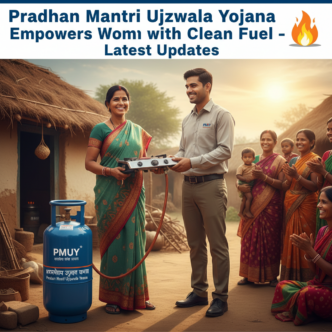
Operationalising PMUY relies on a streamlined verification process that leverages existing networks of Oil Marketing Companies (OMCs). Local administrative officers, Gram Panchayat representatives and community leaders jointly verify eligibility, after which the beneficiary receives an interest‑free loan of INR 1,600. The loan is fully subsidised for women belonging to Scheduled Castes, Scheduled Tribes and other disadvantaged groups. Moreover, a one‑time incentive of INR 1,000 is disbursed to cover the initial connection cost, substantially lowering the upfront barrier to entry. The verification and disbursement workflow is synchronised with the Pradhan Mantri Jan Dhan Yojana, allowing direct benefit transfers into beneficiaries’ bank accounts, thereby ensuring transparency and minimising leakages. 
To date, more than 1 crore connections have been sanctioned under the scheme, with a notable surge in states such as Uttar Pradesh, Bihar and Madhya Pradesh. The Ministry of Petroleum and Natural Gas publishes quarterly performance dashboards that track the number of connections sanctioned, cylinder refills, and average household expenditure on cooking fuel, providing a transparent metric of progress.
Financial Architecture
The fiscal design of PMUY reflects a shared responsibility model between the Centre and states. While the central government bears the bulk of the subsidy burden, state governments contribute a modest share for administrative expenses and local outreach activities. The scheme’s budgetary allocation has witnessed incremental growth, rising from INR 4,500 crore in FY 2017‑18 to over INR 9,000 crore in FY 2023‑24, signalling its strategic importance within the broader clean energy agenda. Integration with the Jan Dhan Yojana enables beneficiaries to receive subsidies directly into their newly opened bank accounts, fostering financial inclusion and reducing opportunities for fraud.
Financially, the scheme also dovetails with the National LPG Expansion Plan, which aims to expand the nation’s LPG infrastructure to reach remote and hard‑to‑access regions. This infrastructure development is funded through a combination of central grants and state‑level contributions, ensuring sustainable financing for long‑term operations.
Impact on Health and Environment
Early impact assessments reveal encouraging health outcomes among PMUY beneficiaries. A study conducted by the Ministry of Health and Family Welfare found a 30 % decline in self‑reported respiratory illnesses among households that switched from traditional fuels to LPG. Moreover, the transition contributes to national climate objectives by curbing emissions of black carbon, a potent short‑lived climate pollutant. The Ministry of Environment, Forest and Climate Change estimates that widespread LPG adoption under Ujjwala could abate up to 10 million tonnes of CO₂‑equivalent annually, aligning the programme with India’s commitments under the Paris Agreement.
Beyond quantitative metrics, the scheme has spurred behavioural change in cooking practices. According to a survey by the National Sample Survey Office, 68 % of beneficiary households reported using LPG for daily cooking within six months of connection, compared to just 12 % at the scheme’s inception. This rapid uptake underscores the effectiveness of subsidies combined with targeted outreach in driving clean energy transitions.
Women Empowerment Narratives
Personal stories illustrate how PMUY has reshaped everyday lives. Consider the experience of Anita Devi, a mother of three from rural Bihar, who recounts how obtaining an LPG connection allowed her to start a modest tailoring enterprise from home. Freed from the daily trek to collect firewood, Anita now earns an additional INR 2,500 per month, improving her family’s financial resilience. Similar narratives emerge from Odisha, Rajasthan and Gujarat, where women’s self‑help groups have leveraged clean cooking fuel as a catalyst for broader socioeconomic upliftment. In many cases, increased household income from women‑led micro‑enterprises has translated into higher school enrolment rates for children, thereby creating a ripple effect of inter‑generational development.
These empowerment stories are amplified by government‑sponsored training programmes that teach beneficiaries essential entrepreneurship skills, digital literacy and basic financial management. Such capacity‑building initiatives, often delivered in partnership with non‑governmental organisations, ensure that the benefits of clean cooking extend beyond health and convenience to tangible economic empowerment.
Challenges and Mitigation Strategies
Despite its achievements, PMUY encounters several implementation hurdles. First, logistical constraints in remote, hilly or island territories can delay cylinder deliveries, prompting the government to partner with private logistics firms and deploy mobile dispensing units that can service hard‑to‑reach locales. Second, awareness gaps persist in certain marginalized communities; to address this, the Ministry of Petroleum and Natural Gas has launched targeted outreach campaigns using regional radio, community theatre and digital platforms such as YouTube and WhatsApp. Third, repayment of the interest‑free loan remains a concern for some beneficiaries, leading to the introduction of flexible repayment schedules, periodic grace periods and the option to convert the loan into a grant for the most vulnerable households.
Additionally, supply chain disruptions caused by global commodity price fluctuations can affect cylinder availability, especially during peak demand periods. The Ministry has responded by maintaining strategic reserves and encouraging diversified sourcing from multiple OMCs to stabilise supply and mitigate price volatility.
Monitoring, Evaluation and Future Directions
The scheme’s monitoring architecture incorporates a robust data collection ecosystem. The Ministry of Petroleum and Natural Gas, in collaboration with NITI Aayog, conducts quarterly surveys to assess coverage, utilisation patterns and beneficiary satisfaction. Key performance indicators include the number of connections sanctioned, the proportion of households that have refilled their cylinders, and the reduction in average fuel expenditure. Real‑time dashboards publicly display these metrics, fostering accountability and enabling rapid course correction.
Looking ahead, the government plans to broaden the scheme’s ambit to encompass emerging clean cooking technologies such as biogas, solar‑powered cookers and ethanol‑based stoves. This diversification aligns with the national strategy for a resilient, low‑carbon energy mix and reflects a commitment to inclusive energy access. Pilot projects in states like Himachal Pradesh and Kerala are already testing integrated models that combine LPG with renewable energy solutions, aiming to create replicable blueprints for nationwide scaling.
Conclusion
In sum, the Pradhan Mantri Ujjwala Yojana stands as a transformative initiative that intertwines clean energy adoption with women’s empowerment and public health improvement. By delivering subsidised LPG connections to millions of underserved households, the programme has reshaped daily routines, reduced environmental footprints and opened pathways for economic participation. Continued investment in infrastructure, robust monitoring, and community engagement will be essential to sustain momentum and realise the vision of a cleaner, healthier and more equitable India.
Stay updated with the latest Yojana schemes and government initiatives for better awareness and eligibility. For personalized guidance on accessing these benefits, reach out to us.