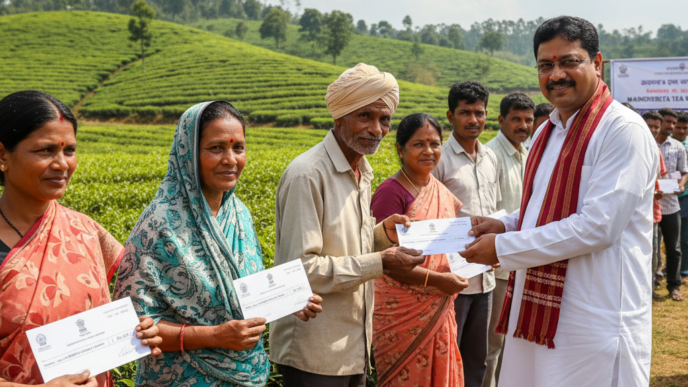





Uttarakhand Introduces Groundbreaking Legislation for a Centralised Welfare Data Repository
In a decisive move toward data‑driven governance, the Uttarakhand Legislative Assembly has tabled a bill that seeks to create a unified digital platform – the Uttarakhand welfare data repository – to consolidate beneficiary records across all state‑run schemes. The initiative, championed by the chief minister’s office, aims to replace the fragmented, siloed databases that currently scatter information across departments such as Rural Development, Health, Education and Social Welfare. By centralising this information, the government promises to eliminate duplicate entries, slash administrative overhead and ensure that assistance reaches the citizens who truly qualify.
The bill outlines a master enrolment record that will capture demographic details, income status and scheme‑specific eligibility criteria for every eligible household. This record will be synchronised in real time with existing state portals, automatically updating beneficiary status as applications are processed or as circumstances change. Crucially, the legislation mandates strict data‑privacy safeguards aligned with the National Data Protection Framework, employing encryption at rest and in transit, role‑based access controls and multi‑factor authentication to protect personal information.
- Creation of a master enrolment record for all welfare beneficiaries.
- Real‑time synchronization with state portals for dynamic updates.
- Implementation of robust privacy controls compliant with national standards.
- Establishment of an independent oversight committee for audits and public reporting.
Stakeholders have greeted the proposal with cautious optimism. Civil society organisations that have long advocated for transparency hailed the move as a “game‑changer” for accountability, while beneficiary groups highlighted the potential for citizens to view their own records, track application status and lodge grievances through an integrated online portal. Opposition parties, however, have called for rigorous scrutiny of the implementation timeline and warned against the risk of the system becoming a vehicle for political patronage. 
Key Provisions of the Uttarakhand Welfare Data Repository Bill
The legislation specifies a phased rollout designed to test the system’s scalability before full deployment. The first phase will focus on beneficiaries of the Uttarakhand Shramik Sashaktikaran Yojana, a scheme that provides skill‑development support to youth in rural areas. Subsequent phases will incorporate data from health‑centric programmes such as the National Health Mission’s maternal and child health initiatives, as well as education subsidies that target school‑going children from economically disadvantaged families. The bill also earmarks a budget of Rs 150 crore for the initial development and deployment phases, with additional funding anticipated in future budgets as the system expands.
Technical specifications call for the repository to be built on a secure cloud‑based platform hosted within the state’s own data‑centre infrastructure. The platform will employ role‑based access controls, encryption at rest and in transit, and multi‑factor authentication to ensure that only authorized personnel can view or modify records. Moreover, the system will be designed to scale gradually, allowing for the inclusion of additional schemes and datasets as the state expands its welfare portfolio. Experts from the Indian Institute of Public Administration have projected that the repository could reduce leakages in welfare disbursements by up to fifteen percent, enabling evidence‑based policy adjustments that target the most effective programmes.
- Master enrolment record capturing demographic, income and eligibility data.
- Real‑time updates with existing state portals.
- Strict privacy safeguards using encryption and multi‑factor authentication.
- Independent oversight committee for audits and transparency.
Comparative analysis with other Indian states reveals a growing trend of digital beneficiary registers. Maharashtra’s “Mahatma Jyotiba Phule Sukanya” scheme, Karnataka’s “Karnataka Social Security” portal and Tamil Nadu’s “Kalaignar Magalir Urimai” initiative have all leveraged similar databases to accelerate subsidy distribution during crises such as the COVID‑19 pandemic. These examples underscore the importance of stakeholder engagement, robust cybersecurity measures and continuous capacity building for frontline staff – lessons that Uttarakhand hopes to apply as it builds its own Uttarakhand welfare data repository.
Technical Architecture and Security Measures
The technical blueprint for the repository emphasizes a layered security architecture designed to protect sensitive citizen data while ensuring operational flexibility. The system will be hosted on a secure cloud platform within the state’s own data‑centre, leveraging virtual private clouds to isolate government workloads from public internet traffic. Data at rest will be encrypted using AES‑256 standards, while data in transit will employ TLS 1.3 encryption to safeguard communication between the repository and downstream applications. Role‑based access controls will restrict data access to only those personnel whose duties require it, and every access attempt will be logged for audit purposes.
To enforce compliance with the National Data Protection Framework, the bill mandates regular penetration testing, vulnerability assessments and third‑party security audits. An independent oversight committee, composed of technologists, privacy experts and civil‑society representatives, will conduct quarterly reviews of audit findings and publish summary reports to promote transparency. Multi‑factor authentication will be required for any user attempting to view or edit beneficiary records, adding an additional barrier against unauthorized access.
- Hosting on a secure, state‑owned cloud platform with isolated virtual private clouds.
- Encryption of data at rest (AES‑256) and in transit (TLS 1.3).
- Role‑based access controls and multi‑factor authentication.
- Regular penetration testing and third‑party security audits.
- Independent oversight committee for quarterly audits and public reporting.
Scalability is a core design principle. The platform will adopt a modular micro‑services architecture, allowing individual components – such as eligibility verification, transaction processing and reporting – to be scaled independently as data volumes grow. This approach also facilitates the incremental integration of new schemes, ensuring that the repository can evolve alongside the state’s expanding welfare portfolio without requiring a complete system redesign.
Stakeholder Response and Implementation Timeline
Civil society organisations have lauded the bill as a transformative step toward greater transparency and accountability. Groups representing marginalized communities emphasized that the ability for beneficiaries to access their own records online will empower citizens to verify eligibility, monitor application status and lodge grievances directly through an integrated portal. This move is expected to reduce bureaucratic delays and improve trust in public institutions.
Opposition parties, while acknowledging the potential benefits, have called for a transparent implementation roadmap and warned against the politicisation of beneficiary data. They have urged the government to establish clear governance structures that prevent the repository from becoming a tool for patronage or selective outreach. Meanwhile, technical experts from the Indian Institute of Public Administration have conducted a preliminary impact assessment, projecting that the repository could cut leakages in welfare disbursements by up to fifteen percent and enable evidence‑based adjustments to eligibility criteria.
The implementation schedule is slated to begin in the fiscal year 2026‑27, with pilot testing scheduled for selected districts during the upcoming quarter. The pilot will focus on enrolling beneficiaries of the Uttarakhand Shramik Sashaktikaran Yojana, providing a controlled environment to refine data entry processes, validate system performance and gather feedback from frontline staff. Successful pilots will inform the rollout of subsequent phases, which will incorporate health‑related schemes such as the National Health Mission’s maternal and child health initiatives and education subsidies targeting disadvantaged school‑aged children.
- Stakeholder feedback highlights increased transparency and citizen empowerment.
- Opposition calls for clear governance to prevent political misuse.
- Independent impact assessment projects up to 15 % reduction in leakages.
- Implementation begins FY 2026‑27 with district‑level pilots.
To support the rollout, the state government has earmarked a dedicated budget of Rs 150 crore for the initial development and deployment phases. This funding will cover software engineering, data migration, cybersecurity infrastructure and capacity‑building programmes for frontline officers. Additional fiscal allocations are expected in subsequent budgets as the repository expands to incorporate more schemes and datasets.
Challenges, Risks and the Path Forward
Despite the promising vision, several challenges loom on the horizon. The foremost among them is the digitisation of legacy records that remain trapped in paper archives or obsolete legacy systems. This migration will demand substantial investment in data‑entry resources, rigorous quality‑control processes and extensive training for staff across multiple departments. Errors introduced during migration could compromise data integrity and undermine public confidence.
Ensuring data consistency across agencies also poses a significant hurdle. Each department currently maintains its own data standards, formats and governance models, creating potential friction points when consolidating information. The bill proposes the establishment of a data‑stewardship framework that assigns clear ownership responsibilities and defines standardised metadata schemas to harmonise disparate datasets.
Security risks, while mitigated by robust encryption and access controls, cannot be eliminated entirely. Continuous monitoring, threat intelligence sharing and regular updates will be essential to defend against evolving cyber threats. Moreover, the success of the repository hinges on sustained political commitment and adequate funding, both of which must be protected from budgetary fluctuations or shifts in administrative priorities.
To address these risks, the legislation mandates a phased, evidence‑based rollout. The pilot phase will focus on the Uttarakhand Shramik Sashaktikaran Yojana, allowing the state to test data‑migration workflows, validate system performance and refine user‑interface designs for beneficiary self‑service. Lessons learned will inform the expansion to health and education schemes, with each subsequent phase building on proven processes and governance mechanisms. Ongoing stakeholder engagement – including regular consultations with civil‑society groups, beneficiary organisations and technical experts – will be critical to maintain transparency and adapt to emerging needs.
- Legacy data migration presents technical and resource challenges.
- Standardised data‑stewardship is needed for cross‑agency consistency.
- Continuous cybersecurity monitoring is essential.
- Phased pilot approach enables iterative improvement.
Looking ahead, the Uttarakhand welfare data repository aspires to become a cornerstone of the state’s broader digital governance strategy. By providing a reliable evidence base, the system will enable policymakers to evaluate the effectiveness of welfare interventions, refine eligibility criteria and design targeted interventions for emerging social challenges. Ultimately, the legislation aims to foster a more inclusive, transparent and accountable welfare ecosystem that empowers citizens and restores confidence in public institutions.
Stay updated with the latest Yojana schemes and government initiatives for better awareness and eligibility. For personalized guidance on accessing these benefits, reach out to us.