


Uttarakhand Presents Rs 1.11 Lakh Crore Budget for 2026‑27
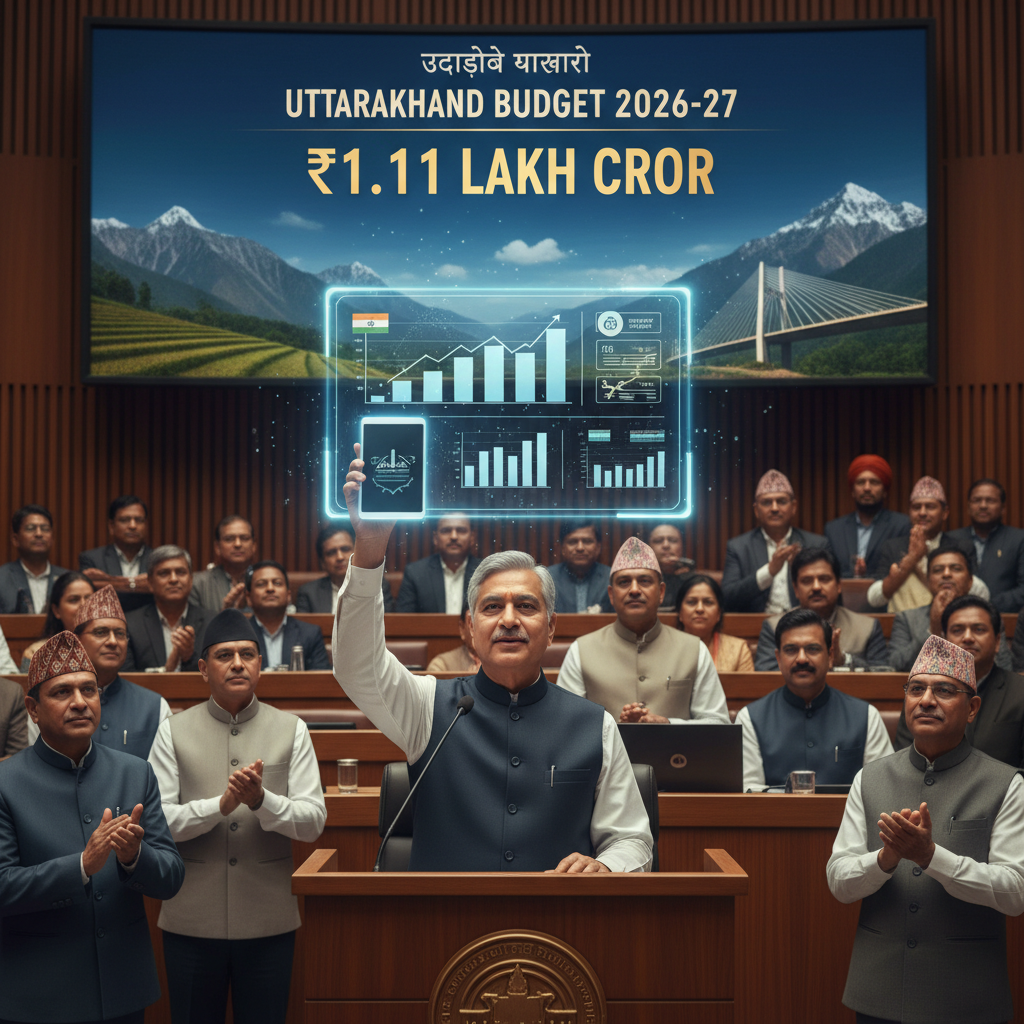
The Uttarakhand government, led by Chief Minister Trivendra Singh Dhami, unveiled a Rs 1.11 lakh crore budget for the financial year 2026‑27 on February 28, 2026. The plan sets a bold target of accelerating growth across critical sectors while maintaining fiscal prudence. By prioritising infrastructure, education, health, and rural upliftment, the administration aims to transform the state into a model of sustainable development. Analysts note that this budget reflects a shift towards a more inclusive growth trajectory, emphasizing welfare for marginalized communities alongside economic modernization.
Infrastructure Investment to Connect Remote Regions
One of the most prominent allocations is Rs 12,500 crore earmarked for road and bridge construction. The funding will focus on upgrading the Char Dham all‑weather highway, enhancing connectivity to pilgrimage sites, and expanding the network of National Highways that link border districts with the rest of India. In addition, Rs 8,000 crore is designated for increasing the state’s power generation capacity, with a particular emphasis on expanding hydro‑electric projects on the Ganges and its tributaries. These initiatives are expected to reduce electricity deficits, lower production costs for manufacturers, and improve access to remote villages.
Key projects include the Drona Canal Lift Irrigation Scheme, which will provide reliable water supply to over 25,000 hectares of cultivated land, and the Uttarakhand Rural Connectivity Programme, allocating Rs 1,500 crore to upgrade rural roads. Improved road conditions are projected to cut travel time by up to 40 % in hill districts, facilitating market access for farmers and enabling faster emergency response. 
Education and Skill Development for a Knowledge‑Based Economy
Education receives a significant boost with Rs 5,300 crore allocated for the upgrading of school facilities, construction of new primary schools in remote zones, and the rollout of digital learning platforms across 1,200 schools. The budget also includes a dedicated Rs 1,200 crore for the development of vocational training institutes, targeting youth empowerment and alignment with market demands.
Specific initiatives comprise:
- Scholarships for meritorious STEM students – up to Rs 5 lakh per annum for top‑performing learners pursuing engineering or medical courses.
- Establishment of 50 new ITIs focused on renewable energy, hospitality, and agro‑processing.
- Teacher training programmes – a Rs 300 crore fund to enhance pedagogical skills through digital tools.
These measures aim to increase Gross Enrollment Ratio (GER) at the secondary level from 78 % to 90 % by 2030, while equipping 500,000 youth with market‑relevant skills.
Healthcare Expansion and Universal Coverage
Healthcare is slated to receive Rs 7,800 crore for strengthening primary health centres (PHCs), expanding hospital networks, and procuring advanced medical equipment such as MRI and CT scanners. A flagship component is the Uttarakhand Universal Health Coverage Scheme, which will provide free insurance to families below the poverty line, covering up to Rs 5 lakh per household per year for secondary and tertiary care.
The health budget also prioritises:
- Construction of 30 new PHCs in underserved blocks.
- Deployment of tele‑medicine services to connect 150 remote villages.
- Launch of a COVID‑19 booster vaccination drive targeting high‑risk populations.
Experts predict that these investments could reduce the state’s infant mortality rate from 28 per 1,000 live births to below 20 by 2032, while improving life expectancy by 2.5 years.
Agriculture, Rural Development and Farmer Welfare
The agricultural sector, which supports over 65 % of the state’s population, receives targeted support through subsidies for irrigation, promotion of organic farming, and incentives for agro‑based industries. A Rs 2,000 crore fund for crop insurance aims to protect farmers against climatic uncertainties, while Rs 6,200 crore is allocated for the overall upliftment of agriculture.
Key programmes include:
- Subsidised micro‑irrigation – 50 % capital subsidy for drip and sprinkler systems.
- Organic certification assistance for 200,000 hectares of cultivated land.
- Agro‑processing clusters – Rs 3,500 crore for food parks in Rudrapur and Pantnagar.
Rural connectivity is further strengthened with Rs 1,500 crore earmarked for enhancing rural road networks, facilitating quicker market access for produce. The budget also introduces a Kisan Credit Card extension, offering an additional Rs 2 lakh credit limit for smallholder farmers cultivating high‑value crops.
Fiscal Management, Revenue Surplus and Sustainable Financing
From a fiscal perspective, the budget projects a revenue surplus of Rs 3,200 crore, underscoring the government’s commitment to fiscal responsibility. Debt servicing costs are expected to remain within manageable limits, maintaining a debt‑to‑GSDP ratio below 25 %. To finance the deficit, the state plans a blend of market borrowing and green bond issuances, aligning with national sustainability goals.
The administration has pledged to:
- Utilise green bonds worth Rs 1,000 crore for renewable energy and eco‑friendly infrastructure projects.
- Implement a performance‑linked incentive scheme for departments that meet expenditure and output targets.
- Publish quarterly fiscal disclosures to enhance transparency.
These measures are designed to attract private investment while safeguarding public finances against macro‑economic shocks.
Expert Opinions, Implementation Strategy and Stakeholder Engagement
Policy analysts have praised the budget’s balanced approach, highlighting its focus on infrastructure and human capital as drivers of long‑term economic resilience. However, some experts caution that the ambitious capital expenditure could strain fiscal deficits if revenue growth does not keep pace. Comparative analysis shows a notable shift from previous budgets, which allocated a larger share to capital spending without proportionate revenue measures.
In response, the government has announced the creation of a Budget Implementation Cell to monitor fund disbursement, address bottlenecks, and ensure timely project execution. Stakeholders — including industry bodies, civil society organisations, and academic institutions — have been invited to participate in collaborative forums, ensuring that the development agenda remains people‑centric.
Implementation timelines are set for the first phase of infrastructure projects to be completed by 2028, with mid‑term reviews scheduled annually to assess progress against key performance indicators (KPIs).
Future Outlook and Citizen Impact
If successfully executed, the 2026‑27 budget is poised to significantly improve quality of life for Uttarakhand’s 12.5 million residents. Rural families can anticipate better market access, reduced travel costs, and increased income stability through enhanced agricultural support. Students in remote regions will gain access to digital classrooms and scholarships, fostering a new generation of skilled professionals. Citizens will benefit from expanded healthcare coverage, reducing out‑of‑pocket expenses and improving health outcomes across demographics.
Long‑term, the state aims to position itself as a competitive destination for tourism, renewable energy investment, and sustainable agriculture, leveraging its natural assets — such as the Himalayas, forests, and rivers — to drive economic diversification. Continuous vigilance, adaptive policy‑making, and robust monitoring mechanisms will be essential to translate these ambitious plans into tangible outcomes for every household.
Stay updated with the latest Yojana schemes and government initiatives for better awareness and eligibility. For personalized guidance on accessing these benefits, reach out to us.