


Introduction
India’s government continues to roll out ambitious programmes that aim to accelerate economic growth, enhance social inclusion and safeguard the environment. In 2026, these initiatives are being refined through data‑driven monitoring, greater private‑sector collaboration and expanded fiscal allocations. For aspirants preparing for the UPSC Civil Services Examination, understanding the objectives, eligibility criteria and real‑world impact of these schemes is essential, as questions frequently probe the nuances of implementation and policy outcomes.
Strategic Landscape of Government Schemes
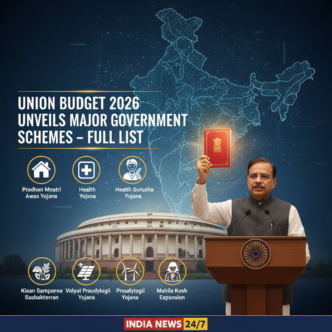
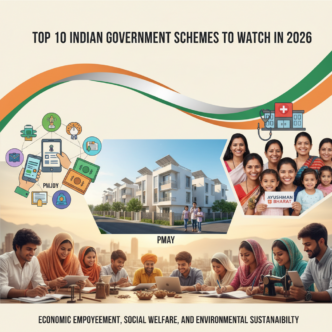
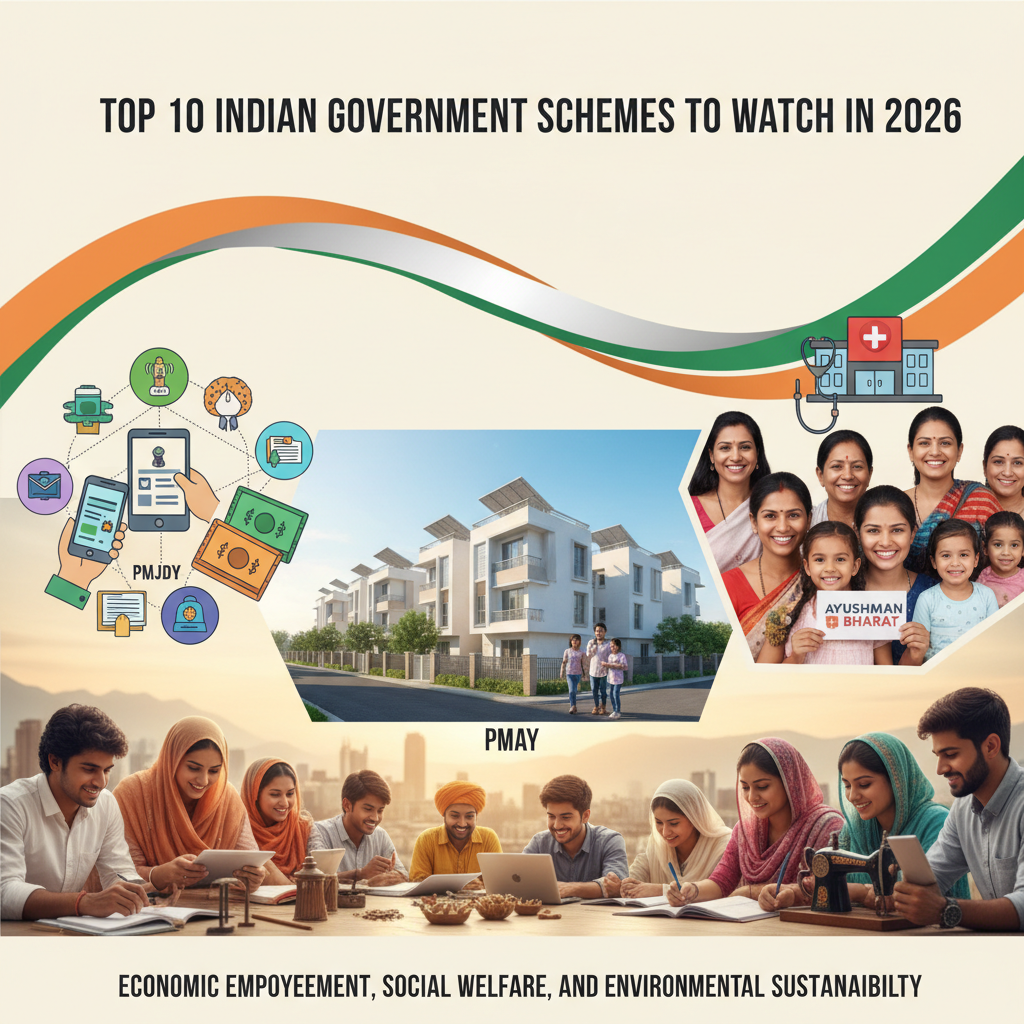
The current policy cycle is built around three interlocking pillars: economic empowerment, social welfare and environmental sustainability. Under the economic empowerment umbrella, the Ministry of Agriculture has reinforced the Pradhan Mantri Kisan Samman Nidhi (PM‑Kisan) to ensure a minimum income of ₹6,000 per year for small and marginal farmers, while the Self‑Employment and Talent Utilisation (SETU) Programme channels venture capital to youth‑led start‑ups. Social welfare efforts are coordinated through health coverage such as Ayushman Bharat – Pradhan Mantri Jan Arogya Yojana (AB‑PMJAY) and clean‑cooking missions like the Pradhan Mantri Ujjwala Yojana. Environmental stewardship is evident in the National Mission on Clean Ganga, the International Solar Alliance and the emerging Green Credit Scheme, which together signal a shift toward renewable energy and resource efficiency.
- Pradhan Mantri Jan Dhan Yojana (PMJDY) – Launched in 2014, this financial inclusion drive opened over 45 crore bank accounts, enabling direct benefit transfers and micro‑credit access.
- Pradhan Mantri Awas Yojana (PMAY) – Targets “Housing for All” by 2024, having sanctioned more than 30 million homes with credit‑linked subsidies for low‑income families.
- Ayushman Bharat – Pradhan Mantri Jan Arogya Yojana (AB‑PMJAY) – Provides a coverage of up to ₹5 lakh per family per year, serving over 10 crore beneficiary families.
- Sukanya Samriddhi Yojana (SSY) – A tax‑free savings scheme for girl children, accumulating assets exceeding ₹2 lakh crore.
- Deendayal Upadhyaya Grameen Kaushalya Yojana (DUGKY) – Aims to skill‑train 1 crore rural youth, linking employability with market demand.
Deep Dive into Key Schemes
Five flagship programmes have demonstrated the most pronounced impact during the 2025‑2026 fiscal year. Their operational frameworks, recent data and citizen‑centric benefits are outlined below. 
Pradhan Mantri Kisan Samman Nidhi (PM‑Kisan)
Designed to provide a guaranteed annual income of ₹6,000 to eligible farmer families, the scheme has transferred over ₹1.2 lakh crore to more than 12 crore beneficiaries in the current fiscal cycle. Payments are released in three equal instalments directly to bank accounts, ensuring transparency and minimizing leakage. The programme has been integrated with the Soil Health Card Scheme, encouraging judicious fertilizer use and promoting sustainable agronomic practices. State‑level monitoring dashboards now track disbursement timelines in real time, allowing swift corrective actions when anomalies arise.
Pradhan Mantri Ujjwala Yojana – Clean Cooking Fuel
Since its inception, the scheme has distributed over 10 crore LPG connections to households living below the poverty line, replacing traditional biomass fuels. Independent surveys indicate a 30 % reduction in respiratory ailments among women and children in fully covered districts. In 2026, the programme introduced a subsidy top‑up for families that transition to solar cookers, aligning with the broader renewable energy roadmap. The Ministry of Petroleum and Natural Gas reports that average LPG consumption per household has risen by 18 % year‑on‑year, reflecting improved affordability and sustained usage.
Ayushman Bharat – Pradhan Mantri Jan Arogya Yojana (AB‑PMJAY)
Operating under the National Health Protect Scheme, AB‑PMJAY offers free secondary and tertiary hospitalization to over 500 million vulnerable citizens. In the past twelve months, more than 1.5 crore hospital admissions have been authorized, translating into an estimated saving of ₹12,000 crore in out‑of‑pocket health expenditures. States such as Maharashtra and Tamil Nadu have augmented the scheme with specialty treatment packages for oncology, cardiology and neurosurgery, broadening its coverage beyond basic inpatient care. The scheme’s integration with the Ayushman Bharat Health Insurance Dashboard enables hospitals to instantly verify eligibility and process claims, reducing administrative delays.
Swachh Bharat Mission (Clean India Mission) – Phase Two
Building on the earlier phase, the second iteration focuses on achieving Open Defecation Free (ODF) status in all urban wards by 2026 while simultaneously strengthening solid‑waste management and recycling. By March 2026, over 2.5 million toilets have been constructed in urban slums, and more than 10 million school students have participated in hygiene‑awareness campaigns. The Ministry of Housing and Urban Affairs reports a 12 % decline in municipal solid‑waste dumping incidents in cities where the second‑phase interventions have been fully implemented. Partnerships with private waste‑management firms have introduced mechanised segregation units, improving recycling rates to 35 % in pilot municipalities.
National Education Policy (NEP) 2020 Implementation Grants
Although presented as a funding mechanism rather than a welfare scheme, the NEP‑linked grants support curriculum reform, digital classroom infrastructure and teacher‑training across 1.5 million schools. Early data shows a 15 % increase in enrollment for vocational courses at the secondary level, reflecting the policy’s emphasis on skill‑oriented education. The Ministry of Education has allocated ₹2,500 crore for the development of regional language textbooks and Open Educational Resources (OER), aiming to make learning materials accessible to students in remote areas. Pilot projects in Karnataka and Odisha have demonstrated a 20 % improvement in student attendance when digital labs are introduced in conjunction with teacher upskilling programmes.
Citizen Impact and Socio‑Economic Outcomes
The convergence of these initiatives has produced measurable improvements across key human‑development indicators. Rural poverty rates have fallen by an estimated 2 percentage points in the last year, while female labour‑force participation has risen modestly due to targeted skill‑training and entrepreneurship grants. Health metrics continue to trend positively; infant mortality rates have declined by 0.6 per 1,000 live births since 2023, a trend attributed to expanded insurance coverage and maternal‑health programmes under AB‑PMJAY. Financial inclusion metrics reveal that the share of banked adults has risen from 81 % to 88 % following the outreach of PMJDY, with micro‑credit uptake increasing by 22 % in rural blocks.
Moreover, digital initiatives such as Digital India and the widespread adoption of mobile banking have heightened financial literacy among previously unbanked populations. Citizens are now more aware of their entitlement benefits, leading to higher subsidy uptake and reduced leakages in welfare delivery. The Scheme Performance Dashboard, launched in early 2026, integrates real‑time data on expenditure, beneficiary reach and outcome metrics, enabling rapid policy adjustments and enhancing transparency for both policymakers and the public.
Policy Updates and Future Roadmap
Government communications indicate a sustained focus on data‑driven governance and public‑private collaboration. The upcoming fiscal budget earmarks a 12 % increase in funding for rural development programmes and an 8 % rise in allocations for urban housing, signalling continued investment in inclusive infrastructure. A new Green Credit Scheme is slated for rollout later in 2026, offering financial incentives to households and enterprises that adopt renewable energy solutions such as rooftop solar panels and LED lighting.
Innovation hubs like the Atal Innovation Mission are being leveraged to incubate start‑ups that can deliver services under existing schemes, fostering avenues for sustainable financing and scalability. Meanwhile, the Scheme Performance Dashboard will be upgraded to incorporate artificial‑intelligence‑based predictive analytics, allowing administrators to forecast implementation challenges and allocate resources proactively. These strategic moves underscore a commitment to adaptive, outcome‑oriented governance that aligns with the broader vision of a “New India” by 2030.
Stay updated with the latest Yojana schemes and government initiatives for better awareness and eligibility. For personalized guidance on accessing these benefits, reach out to us.