


Funding Cut Overview
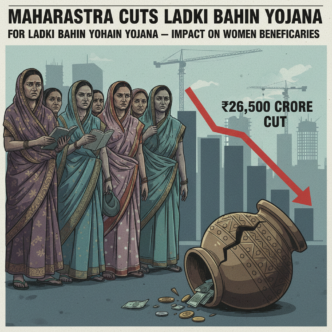
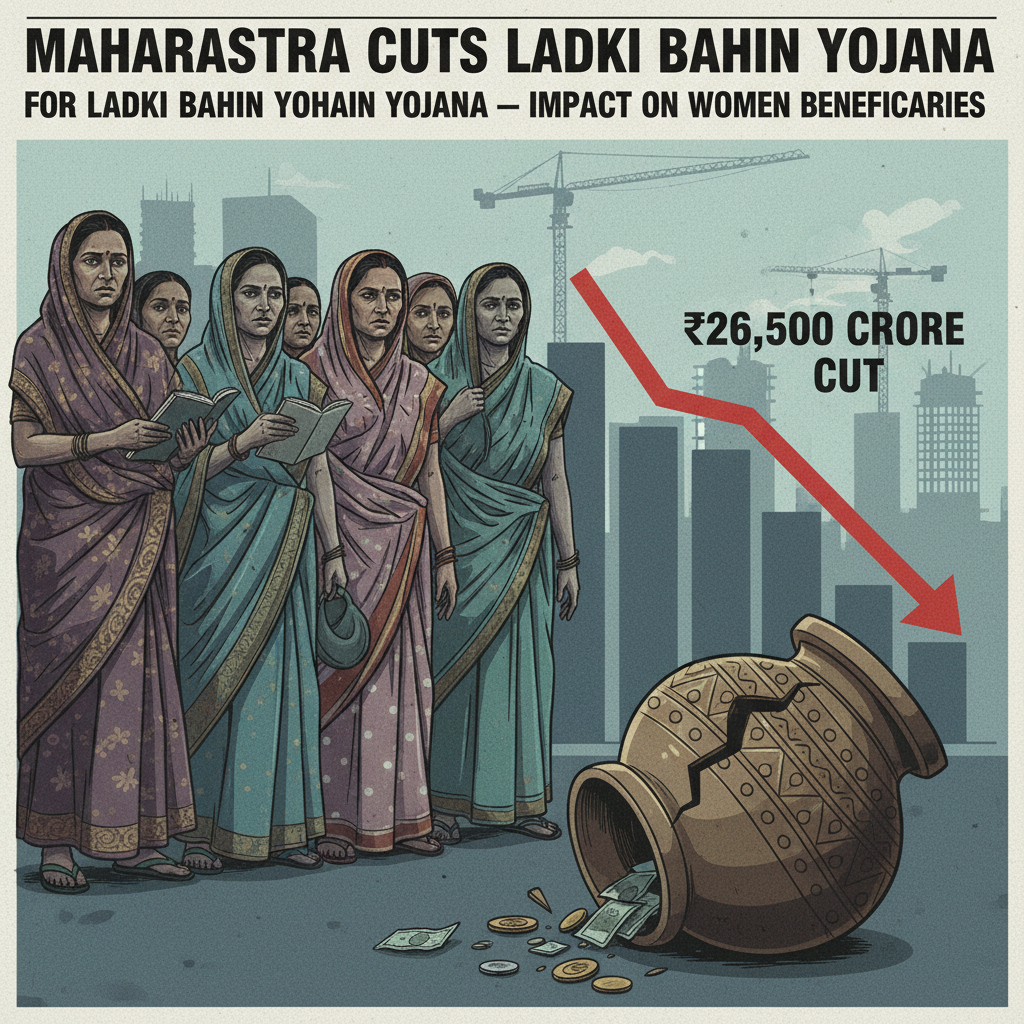
The Maharashtra government’s 2026‑27 budget announced a ₹26,500 crore reduction in the original funding earmarked for the Ladki Bahin Yojana, leaving only a fraction of the planned resources for the upcoming fiscal year. Presented on 1 March, the cut was justified by the finance ministry as a necessary adjustment to curb soaring debt‑service obligations and to prioritise large‑scale infrastructure projects such as metro rail extensions and water‑sanitation upgrades. Officials also highlighted the need to allocate additional funds for disaster response and public‑health emergencies, describing the move as a temporary fiscal recalibration rather than a permanent abandonment of the scheme.
While the reduction does not eliminate the programme entirely, it sharply curtails the budgetary envelope that was initially set at approximately ₹30,000 crore over five years, translating to an average annual allocation of ₹6,000 crore. The finance minister emphasized that the cut is “temporary” and that the state remains committed to women‑centric welfare, but analysts warn that the scaled‑down financial backing could jeopardise the scheme’s universality and its ability to meet the needs of over 1.2 million beneficiary households.
For more context on the state’s fiscal priorities, see the Maharashtra Budget 2026 analysis on The Hindu. 
Eligibility and Benefits of Ladki Bahin Yojana
Launched in early 2022, Ladki Bahin Yojana targets women from economically weaker sections (EWS) across Maharashtra. Eligibility is determined through the Socio‑Economic Caste Census (SECC) and aims to include households with an annual income below ₹2 lakh, as well as families classified as “below the poverty line” (BPL). The programme provides a monthly cash transfer of ₹1,500 directly to the bank accounts of eligible women, intended to cover nutrition, health care, education of children, and small income‑generating activities.
The scheme’s broader objectives include:
- Reducing gender‑based poverty gaps by offering a safety net that mitigates the cost of schooling and health expenditures.
- Encouraging school enrolment for girls, thereby decreasing dropout rates among economically vulnerable families.
- Stimulating micro‑enterprise by allowing beneficiaries to invest stipends in petty trades or skill‑development initiatives.
- Improving maternal and child health through increased household spending on nutrition and medical care.
Since its rollout, the programme has reached more than 1.2 million families in 36 districts, making it one of the most extensive cash‑transfer initiatives for women in India. Early monitoring reports have shown a modest rise in school attendance among beneficiary households and a measurable increase in savings rates, underscoring the scheme’s potential multiplier effect on local economies.
Impact of the Funding Reduction on Women Beneficiaries
The ₹26,500 crore cut threatens to suspend monthly stipends for a large share of the 1.2 million women currently enrolled in Ladki Bahin Yojana. With limited fiscal space, the state may either trim the list of eligible beneficiaries or reduce the per‑beneficiary amount. Both scenarios could reverse recent gains in gender‑related development indicators.
Key potential impacts include:
- School attendance decline – families may be forced to divert funds from education to basic necessities, leading to higher dropout rates for girls.
- Increased out‑of‑pocket health expenses – reduced cash flow could push households to rely on informal credit or forego medical visits.
- Weakening of micro‑enterprise activities – many women use the stipend as seed capital; cuts could stall small‑scale income‑generating projects.
- Higher vulnerability to child labour – diminished financial support may compel families to rely on child labour as a coping mechanism.
Civil society organisations such as the Maharashtra Women’s Forum have warned that even a partial withdrawal could exacerbate existing inequalities and undermine the state’s commitment to the United Nations Sustainable Development Goals (SDGs) related to gender equality.
Government Mitigation Strategies and Fiscal Context
In response to the funding crunch, the Maharashtra finance department has outlined several mitigation measures aimed at preserving core assistance for the most vulnerable while maintaining fiscal discipline.
- Prioritisation of poorest households – payments will be concentrated on families identified through the SECC as the most destitute, ensuring that the deepest pockets of need continue to receive support.
- Exploration of alternative financing – the government is negotiating corporate‑social‑responsibility (CSR) contributions from private sector players and is evaluating the issuance of “welfare bonds” to attract institutional investors.
- Phased‑rollout approach – a staggered implementation model is being considered to better manage cash‑flow constraints and to allow for recalibration of payment schedules.
- Audit and leakage reduction – a comprehensive audit of the scheme’s disbursement process is planned to identify and curb inefficiencies, potentially freeing up additional resources for targeted support.
These strategies are being framed within the broader context of Maharashtra’s debt‑management plan, which seeks to balance investment in critical infrastructure with the preservation of social welfare programmes. Officials argue that safeguarding Ladki Bahin Yojana’s most vulnerable beneficiaries aligns with the state’s long‑term socio‑economic roadmap.
Public Debate, Expert Opinions and Future Outlook
The funding cut has sparked a vigorous public debate involving policymakers, economists, academicians, and civil society groups. While some economists contend that fiscal tightening is essential to curb the fiscal deficit and to prioritise growth‑driving infrastructure, many experts argue that withdrawing support from a cash‑transfer scheme that directly addresses multidimensional poverty could have lasting social costs.
Key viewpoints include:
- Pro‑cut perspective – emphasises the need for fiscal prudence, warning that unsustainable welfare spending could jeopardise macro‑economic stability and deter private investment.
- Pro‑protection perspective – highlights evidence from similar schemes in neighbouring states that cash transfers generate a multiplier effect, stimulating local markets and improving human capital formation.
- NGO stance – calls for restoration of the original funding level and urges transparent dialogue between the government and affected communities.
Looking ahead, policymakers are exploring several viable pathways to sustain the Ladki Bahin Yohana vision:
- Re‑allocation of revenue streams – leveraging increased profits from state‑owned enterprises or seeking additional central‑government grants earmarked for women’s empowerment.
- Re‑structuring eligibility criteria – focusing on the most vulnerable cohort while introducing tiered payment levels based on income thresholds.
- Integration with conditional cash‑transfer frameworks – coupling cash assistance with education, health, and livelihood milestones to enhance efficiency and impact per rupee spent.
Continuous monitoring, transparent reporting, and stakeholder engagement will be crucial to evaluate the scheme’s performance and to guide adaptive policy adjustments. By maintaining a steadfast commitment to gender‑inclusive development, Maharashtra can navigate fiscal constraints while preserving the core mission of empowering its women citizens.
Stay updated with the latest Yojana schemes and government initiatives for better awareness and eligibility. For personalized guidance on accessing these benefits, reach out to us.