


Ladki Bahin Yojana Faces Potential Budget Cut; Opposition Demands Review
The Maharashtra government’s flagship Ladki Bahin Yojana, which provides a monthly cash transfer of ₹2,500 to women heads of financially vulnerable households, is now under intense scrutiny as whispers of a budget reduction circulate. Officials hint at broader fiscal consolidation, yet opposition parties accuse the administration of jeopardising a programme that has already lifted over 1.5 million families out of poverty. The debate centres on whether the scheme’s funding will be trimmed, re‑allocated, or protected in the upcoming fiscal year.
Understanding Ladki Bahin Yojana
Launched in the previous financial year, the Ladki Bahin Yojana targets women who are the primary earners in their families and belong to economically weaker sections (EWS). Eligible beneficiaries receive a direct benefit transfer of ₹2,500 each month, amounting to an annual assistance of ₹30,000. The scheme’s objectives include:
- Enhancing household income and reducing dependency on irregular wages.
- Encouraging financial independence and decision‑making power for women.
- Supporting educational expenses for children and healthcare costs for families.
- Stimulating micro‑enterprise activities and small‑scale entrepreneurship.
According to the state’s social welfare department, the programme currently serves more than 1.5 million women across urban and rural districts, with a higher concentration in tribal and remote regions where alternative support mechanisms are scarce. 
For a deeper dive into the scheme’s design and implementation, refer to the official Maharashtra Social Welfare portal or the encyclopedic overview on Wikipedia.
Budgetary Context and Potential Adjustments
In the latest budget speech, the Finance Minister highlighted a need for fiscal prudence, citing rising deficits and a push to prioritise infrastructure, health, and education. While the statement stopped short of specifying exact figures, insiders suggest that a modest re‑allocation of funds may be on the cards, potentially affecting non‑core welfare programmes like the Ladki Bahin Yojana. Financial analysts warn that any cut, even if proportionate, could reverberate across the scheme’s disbursement schedule and beneficiary trust.
State budget documents indicate that the total outlay for women‑centric welfare measures rose by 12 % last year, reflecting a policy shift toward gender‑focused empowerment. However, the current fiscal year’s projection shows a 5 % contraction in discretionary welfare spending, fueling speculation that the Ladki Bahin Yojana could be a target for trimming.
Political Firestorm: Opposition Calls for Review
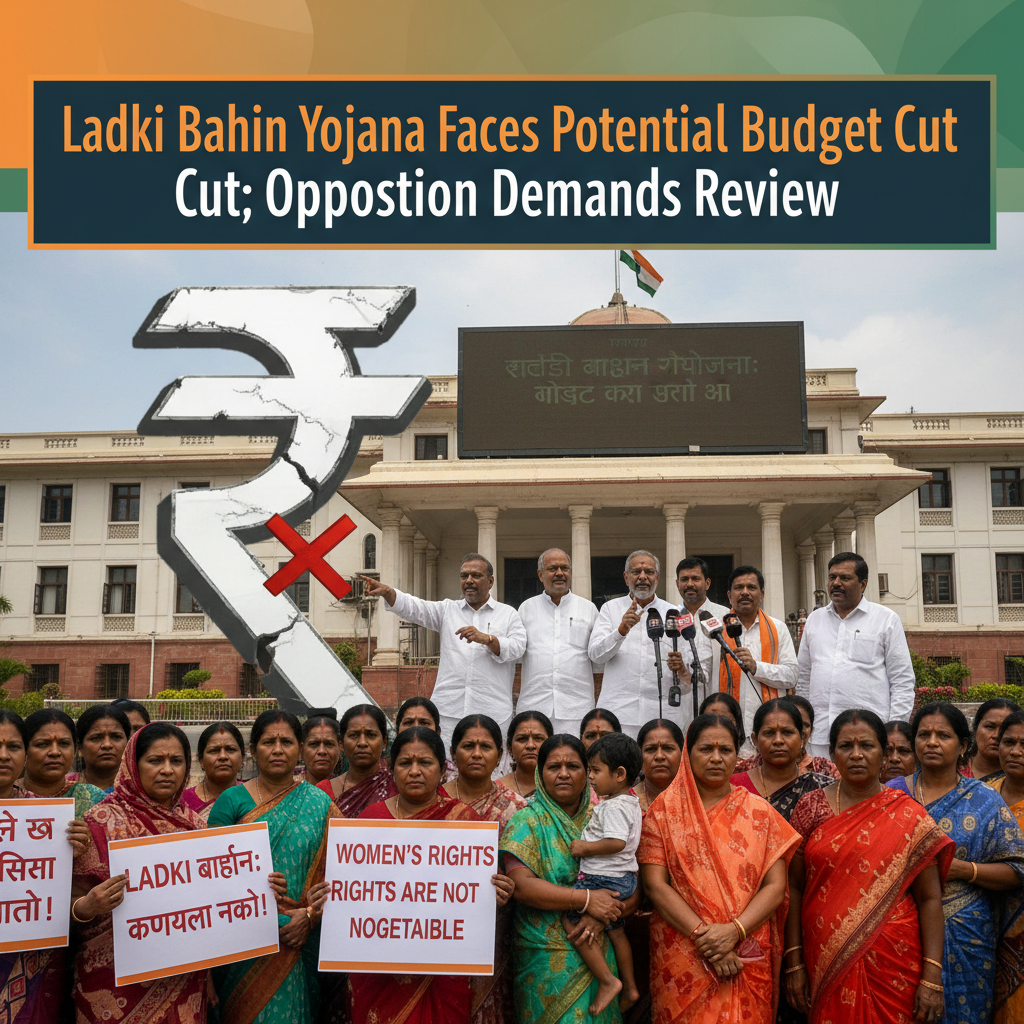
Opposition leaders have seized upon the rumored cut as evidence of governmental neglect. Parties ranging from the Congress to regional outfits have staged protests, demanding an immediate review of the proposed budget line. Their rhetoric underscores a broader critique: that the administration is betraying its promise to safeguard women’s welfare.
- Accusations of “political opportunism” for allegedly endangering a programme that has shown measurable improvements in school enrolment among beneficiary families.
- Calls for a parliamentary committee hearing to obtain transparent, audited accounts of the scheme’s expenditure and outcomes.
- Threats of legal action if the cut proceeds without proper stakeholder consultation.
Political commentators note that the issue has become a litmus test for the ruling coalition’s commitment to inclusive growth, especially as the state heads into an election cycle.
Ground Realities: Beneficiaries Speak
Women who have been receiving the monthly tranche under the Ladki Bahin Yojana describe the funds as a lifeline. Their stories illustrate the scheme’s tangible impact on day‑to‑day survival and long‑term aspirations.
- A 32‑year‑old farmer’s wife from Nanded reported that the cash transfer enabled her to purchase a milch cow, increasing her family’s dairy income by 30 %.
- A single mother in Nagpur used the assistance to enroll her two children in private school, breaking the cycle of dropout rates that previously plagued her community.
- Residents of a tribal village in Satara highlighted that the scheme funded a small tailoring business, which now supports six other households through ancillary sales.
These testimonies are echoed in surveys conducted by the Maharashtra Women’s Development Corporation, which found that 78 % of beneficiaries reported an improvement in household food security after the scheme’s rollout.
Expert Analysis and Implications
Economists and social sector experts caution that a cut to the Ladki Bahin Yohana could undermine the state’s broader socio‑economic objectives. Dr. Meera Joshi, a professor of public policy at the University of Mumbai, explains:
“The scheme functions as a stabiliser for low‑income households, especially in regions where formal credit markets are limited. Reducing its funding at a time when inflation is pressing erodes the modest safety net that many women depend on,” she said.
Potential implications of a budget cut include:
- Delayed or incomplete disbursements, leading to beneficiary frustration.
- Erosion of trust in government‑run welfare programmes, diminishing participation rates.
- Negative publicity that could influence voter perception ahead of upcoming elections.
From a policy standpoint, experts recommend preserving core funding while pursuing efficiency gains in administrative processes, such as digitising verification steps and reducing leakages.
Path Forward: Calls for Transparency and Safeguarding Funding
Stakeholders across the political spectrum and civil society have converge ed on a set of recommendations aimed at protecting the Ladki Bahin Yojana’s integrity while ensuring fiscal responsibility.
- Establish an independent audit panel to review budget allocations for women‑centric schemes annually.
- Introduce a transparent, real‑time dashboard that publicises disbursement amounts, beneficiary numbers, and impact metrics.
- Explore public‑private partnerships to supplement funding through corporate social responsibility (CSR) initiatives, especially for skill‑development components.
- Engage beneficiaries in policy dialogue to capture on‑ground feedback, ensuring that any adjustments remain people‑centric.
By adopting these measures, the Maharashtra government can balance its fiscal priorities with its commitment to gender equity, reinforcing the state’s reputation as a pioneer in progressive welfare policy.
Stay updated with the latest Yojana schemes and government initiatives for better awareness and eligibility. For personalized guidance on accessing these benefits, reach out to us.