



DC Budgam Assesses Implementation of PM Surya Ghar Muft Bijli Yojana
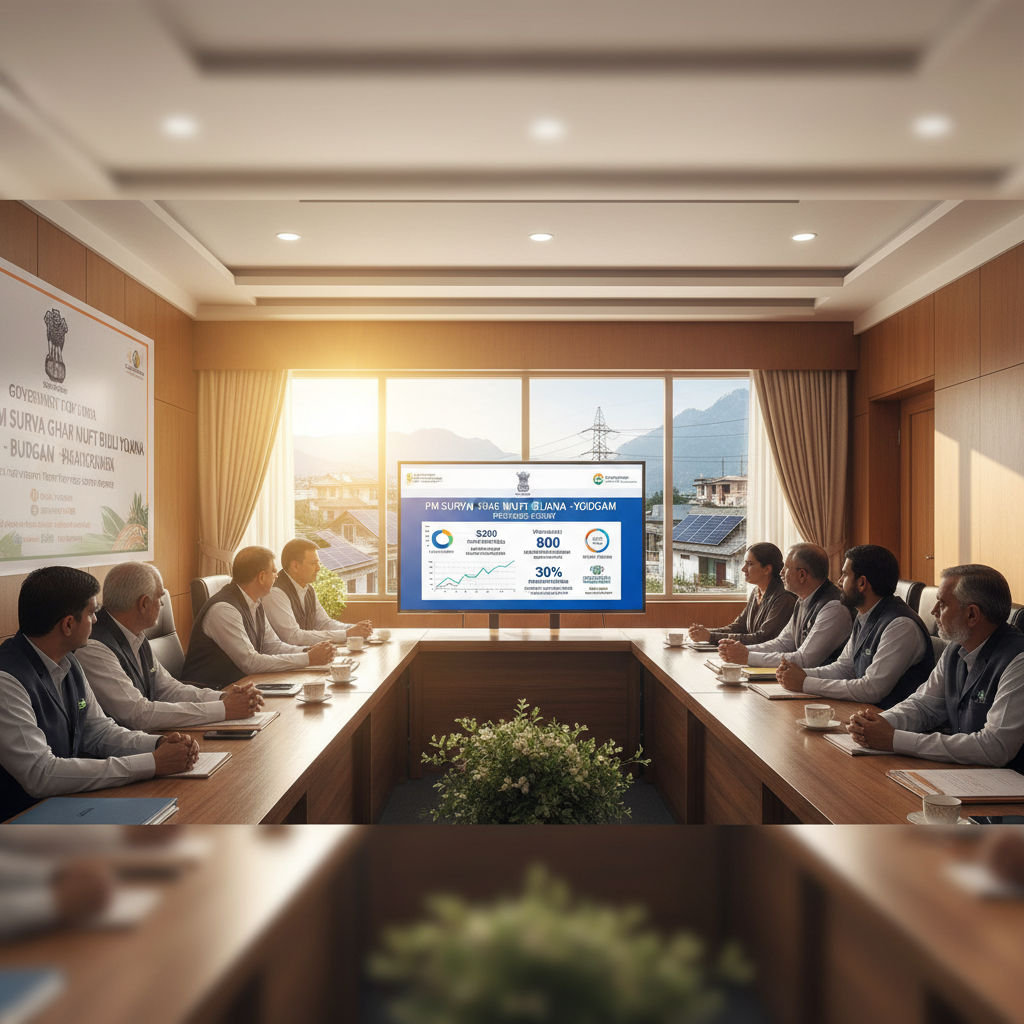
The District Commissioner (DC) of Budgam, in coordination with the Department of Commerce, recently convened a high‑level review meeting to evaluate the progress of the Prime Minister’s PM Surya Ghar Muft Bijli Yojana. The initiative, launched in 2023, promises free electricity to households that adopt rooftop solar photovoltaic (PV) systems in eligible areas of Jammu and Kashmir. By leveraging a 60 % capital subsidy and a zero‑up‑front‑cost model, the scheme aligns with India’s broader goal of achieving 500 GW of non‑conventional energy capacity by 2030 and seeking to reduce the nation’s dependence on conventional power grids.
Overview of PM Surya Ghar Muft Bijli Yojana
Officially known as the Press Information Bureau announcement on the PM Surya Ghar Muft Bijli Yojana, the programme targets residential consumers who own a roof with adequate sunlight exposure and possess an average monthly electricity consumption below a specified threshold. Eligibility criteria include:
- Residential property located in a utility‑connected or off‑grid zone within a designated solar‑potential zone.
- Household must hold a valid electricity connection and not exceed 2 kW of existing sanctioned load.
- The applicant must not have previously received central or state subsidies for rooftop solar under any other scheme.
- The household must consent to a 10‑year performance guarantee on the installed system.
The scheme provides a 60 % capital subsidy on the total cost of the solar installation, while the remaining 40 % can be financed through zero‑interest loans offered by state‑run banks. Additionally, beneficiaries receive a performance‑based incentive that offsets the first two years of electricity bills, after which the system is expected to generate sufficient power to meet the household’s consumption needs at no further cost. 
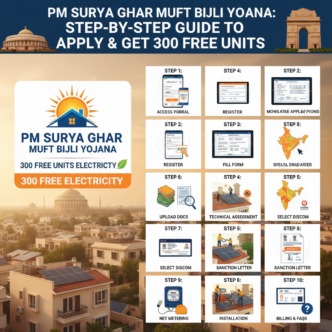
According to the Ministry of New and Renewable Energy (MNRE), the scheme also includes a dedicated online portal where applicants can upload required documents, track application status, and receive real‑time updates on subsidy disbursement. The portal integrates with state‑level solar aggregators that negotiate competitive rates with certified EPC (Engineering, Procurement, and Construction) contractors, ensuring cost‑effective installations.
Implementation in Budgam District
In Budgam, the DC has identified 3,200 eligible households for the first phase of the scheme, targeting an aggregated installed capacity of 12 MW of rooftop solar. The review meeting, attended by officials from the Rural Development Department, renewable energy experts from the Indian Institute of Technology (IIT) Jammu, and representatives of beneficiary associations, underscored the district’s proactive approach to implementation.
- Site surveys have been completed for 85 % of the identified households, with GIS mapping confirming optimal roof orientation and shading conditions.
- Partnerships with local solar installers have been formalised for 60 % of the targeted sites, enabling rapid deployment of certified EPC teams.
- Awareness campaigns were conducted in 30 % of Budgam’s villages, resulting in a 40 % increase in application submissions compared with the previous quarter.
The DC emphasized that the district’s implementation model mirrors the national scheme’s three‑pillar strategy: financial incentives, streamlined regulatory approvals, and community engagement. By integrating the state’s existing “Solar for All” financing facility, the DC aims to mitigate the upfront capital burden on low‑income households.
Performance Metrics and Expected Benefits
During the review, several performance metrics were examined to gauge the scheme’s impact on the ground. As of the latest reporting period, 800 solar systems have been commissioned across Budgam, collectively delivering an average generation of 3.5 kWh per day per household. Early adopters have reported a 30 % reduction in monthly electricity expenses, translating into annual savings of approximately INR 5,000 per family. On the environmental front, the scheme has contributed to the avoidance of an estimated 1,200 metric tons of CO₂ emissions per year, supporting Jammu and Kashmir’s climate‑resilient development agenda.
The district’s monitoring dashboard, currently under development, will provide real‑time visibility into key indicators such as installed capacity, average cost per kilowatt (currently averaging INR 45,000 per kW after subsidy), and consumer satisfaction scores. Preliminary surveys indicate that 78 % of beneficiaries rate their experience as “highly satisfactory,” citing both cost reduction and reliability improvements.
Economically, the scheme is projected to stimulate local employment by creating demand for solar technicians, maintenance crews, and ancillary services. The DC estimates that, once fully implemented, the initiative could generate approximately 1,500 direct and indirect jobs in the district, particularly benefiting youth and women seeking skill‑development opportunities in the renewable energy sector.
Challenges and Mitigation Strategies
While the progress is encouraging, the review identified several challenges that could impede the scheme’s scalability:
- Limited grid connectivity in remote habitations makes it difficult to integrate generated power, prompting concerns about curtailment.
- Financing constraints for households that lack collateral, despite the availability of zero‑interest loans.
- Delays in land acquisition for shared solar installations, particularly in densely populated villages where common roof spaces are scarce.
- Occasional gaps in community awareness, especially among senior citizens who may be skeptical about new technology.
To address these issues, the DC proposed a multi‑pronged mitigation plan:
- Leveraging the state‑run Solar Financing Scheme to provide zero‑interest micro‑loans, thereby reducing the financial barrier for low‑income families.
- Deploying mobile solar PV units as temporary power sources for off‑grid villages while permanent installations are underway.
- Conducting targeted outreach sessions in collaboration with local religious institutions, schools, and women’s self‑help groups to increase community acceptance and drive application rates.
- Establishing a “Solar Ambassador” program that trains and certifies local youth as field agents, enabling on‑ground assistance with paperwork, installation supervision, and post‑installation maintenance.
These strategies are expected to enhance the scheme’s resilience, ensuring that Budgam can meet its ambitious target of adding 4,800 additional households in the second phase.
Future Roadmap and Stakeholder Engagement
The DC outlined a comprehensive roadmap for scaling the PM Surya Ghar Muft Bijli Yojana in Budgam:
- Phase 2 aims to onboard an additional 4,800 households, with a focus on women‑led self‑help groups and youth apprenticeship programs for solar installation and maintenance.
- Partnerships with local educational institutions will facilitate certification courses in renewable energy technology, creating a skilled workforce capable of supporting long‑term system upkeep.
- Quarterly monitoring meetings will be convened with all stakeholders, and a public dashboard is slated for launch by the end of 2026, offering real‑time updates on installations, performance metrics, and financial disbursements.
- Strategic collaborations with private solar aggregators are expected to negotiate better rates for EPC services, further reducing the cost burden on beneficiaries.
Community involvement remains a cornerstone of the implementation plan. By integrating the scheme with existing livelihood programmes and encouraging participatory governance, the DC hopes to foster a sense of ownership among residents, thereby ensuring sustained operation and maintenance of the solar installations.
Overall, the review underscores the transformative potential of the PM Surya Ghar Muft Bijli Yojana to alleviate energy poverty, promote clean power generation, and stimulate economic development in Budgam. Continued collaboration among government agencies, private partners, and local communities will be essential to translate these ambitions into lasting, scalable outcomes.
Stay updated with the latest Yojana schemes and government initiatives for better awareness and eligibility. For personalized guidance on accessing these benefits, reach out to us.