



Chief Minister reaffirms farmer dignity and prosperity pledge
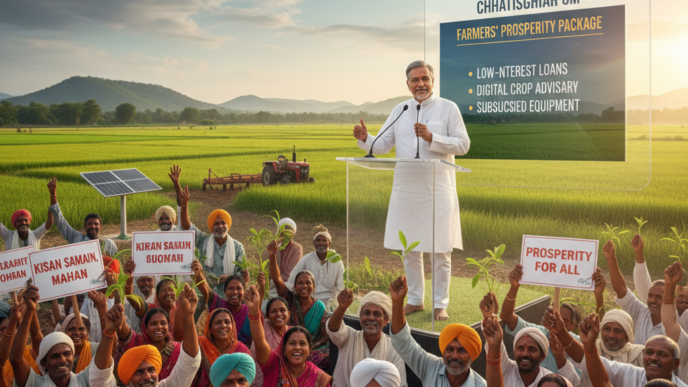
In a packed public meeting at Raipur’s Gita Bhavan, Chhattisgarh Chief Minister Bhupesh Baghel declared that the welfare of farmers remains the cornerstone of his government’s agenda. He emphasized that “the progress of the state is inseparable from the progress of the tillers of the soil,” and announced a renewed commitment to policies that restore respect, security, and economic opportunity to the agricultural community. The statement comes at a time when the state’s agrarian sector is navigating both bumper harvests and occasional droughts, making targeted interventions essential for long‑term stability.
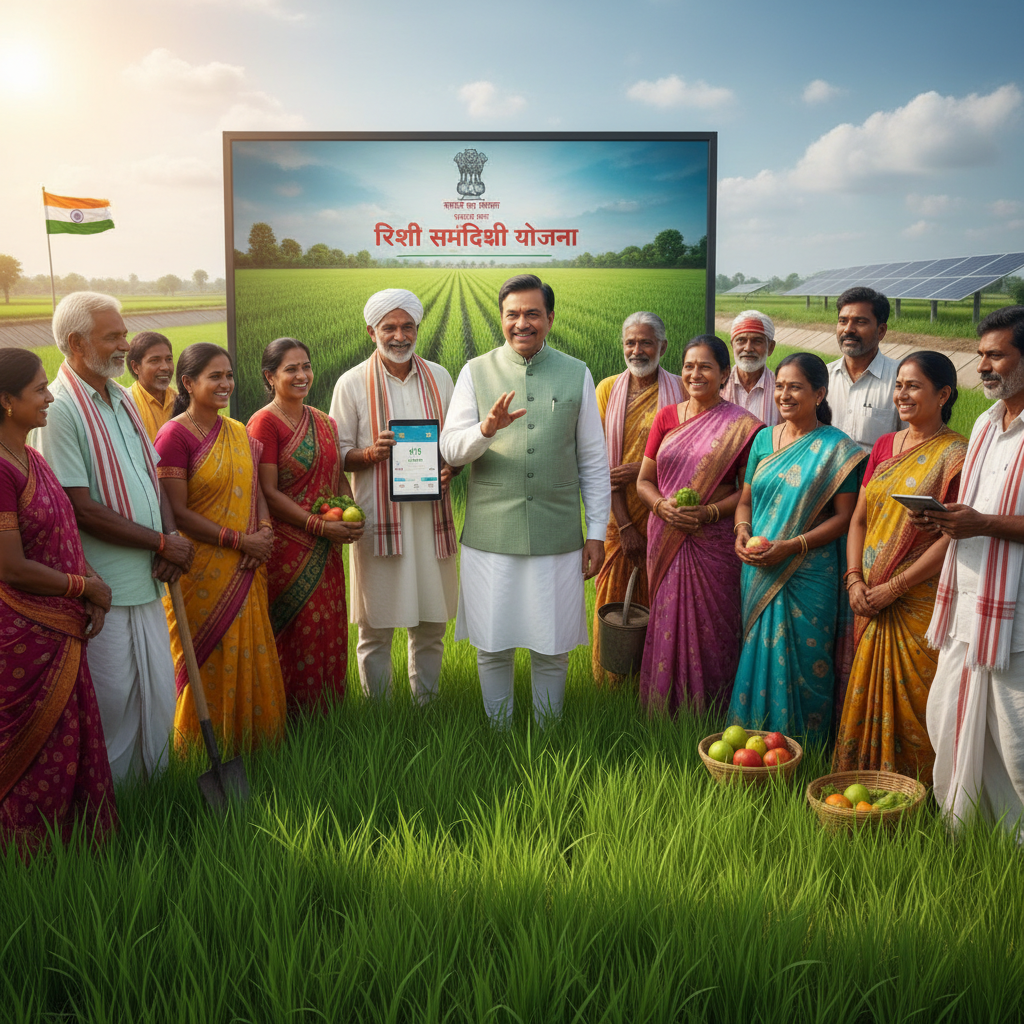
Political analysts note that the Chief Minister’s pledge is not merely rhetorical; it is backed by a series of concrete initiatives collectively branded as the Krishi Samriddhi Yojana. By linking financial incentives, technology dissemination, and market expansion, the administration aims to create a virtuous cycle where higher farmer incomes drive broader economic growth. The promise of “dignity and prosperity” now carries a detailed roadmap that will be rolled out over the next five years, with measurable targets attached to each component.
Comprehensive farmer welfare scheme: Krishi Samriddhi Yojana
The Krishi Samriddhi Yojana consolidates several previously scattered programmes into a single, coherent framework designed to lift farm incomes by approximately 30 percent by 2029. Its core pillars include expanded irrigation infrastructure, affordable credit, direct market linkage, and capacity‑building for climate‑smart practices. The scheme also places a strong emphasis on horticulture diversification, digital agriculture, and gender‑inclusive empowerment, ensuring that every segment of the farming population benefits from targeted support. 
Key components of the scheme are delivered through a mix of subsidies, revolving credit facilities, and technology pilots. For instance, small and marginal farmers can claim a 40 percent subsidy on modern irrigation equipment, while larger holdings gain access to low‑interest loans of up to ten lakh rupees. Additionally, the government will dispense a direct cash incentive of five thousand rupees per hectare to adopters of drip irrigation, micro‑sprinklers, and conservation agriculture techniques. These measures are intended to reduce input costs, improve water use efficiency, and boost overall productivity.
Financial support and subsidy enhancements are structured as follows:
- 40 % subsidy on solar‑powered pumps and drip‑irrigation kits for holdings up to 5 hectares.
- Low‑interest revolving credit up to ₹10 lakh for procurement of high‑value seeds and mechanisation tools.
- Direct cash incentive of ₹5,000 per hectare for climate‑smart practices, payable after verification through the state’s Agri‑Tech portal.
Such incentives are projected to lower the cost of cultivation by up to 18 percent, freeing capital for investment in fertilizer‑efficient practices and post‑harvest storage.
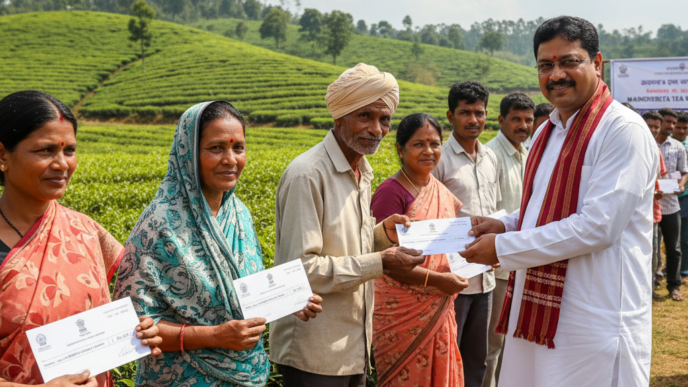
Loan waiver and credit facilitation form another critical strand. The administration will partially waive existing agricultural loans for families whose annual net income falls below ₹2 lakh, while establishing a state‑run credit corporation that offers interest rates 1.5 percentage points below the market average. This safety net is designed to break the cycle of debt and enable farmers to allocate resources toward high‑value crops such as mango, chilli, and turmeric, thereby enhancing income diversification.
Boosting horticulture and market access involves creating three horticulture clusters in the districts of Bilaspur, Raipur, and Dhamtari. Each cluster will be equipped with cold‑storage units, packing facilities, and linkages to private aggregators like Amazon India and Farmers Market India. By guaranteeing assured procurement at pre‑declared minimum prices, the scheme aims to secure better price realizations for fruits, vegetables, and spices, reducing post‑harvest losses by an estimated 12 percent.
The digital arm of the initiative will launch a farmer‑centric mobile application that provides real‑time weather forecasts, pest alerts, and best‑practice guides. Extension officers equipped with tablets will conduct on‑field training sessions, ensuring that even remote villages receive up‑to‑date agronomic advice. The app also integrates with the national PM-KISAN portal, allowing seamless transfer of subsidies directly into beneficiaries’ bank accounts.
Women empowerment in agriculture receives dedicated attention through capacity‑building workshops, micro‑enterprise grants, and a targeted 25 percent increase in women’s access to credit by 2027. Female farmers will be encouraged to form self‑help groups that can collectively lease equipment, market produce, and negotiate better terms with buyers. This focus is expected to raise women’s decision‑making participation in farm operations by at least one‑third within the next three years.
Implementation mechanisms and citizen impact
Eligibility for the Krishi Samriddhi Yojana is broadly defined to include all land‑holding farmers, with special categories for small (up to 2 hectares), marginal (up to 1 hectare), and landless agricultural labourers who are eligible for ancillary benefits such as skill‑training stipends. Registration is conducted online through the state’s Agriculture Department portal, after which beneficiaries receive a unique farmer ID that unlocks access to subsidies, credit, and digital services.
Early pilot tests in the districts of Bastar and Surguja have already demonstrated tangible improvements. In Bastar, participating farmers reported an average income uplift of 15 percent within the first cropping season, while in Surguja, adoption of drip irrigation led to a 22 percent reduction in water usage and a corresponding increase in yields for soybean and pulses. These case studies illustrate how targeted financial support, combined with technology transfer, can translate into meaningful livelihood upgrades for rural households.
The scheme’s citizen‑centric design also incorporates a grievance redressal portal that allows farmers to lodge complaints regarding delayed subsidy payments, loan processing bottlenecks, or irregularities in market pricing. Responses are mandated to be provided within 48 hours, and a quarterly performance dashboard will publicly display key metrics such as subsidy disbursement rates, loan waiver coverage, and horticulture cluster utilisation. This transparency is intended to build trust and ensure that the benefits reach the intended recipients without undue delay.
Monitoring, evaluation, and future outlook
A dedicated Monitoring & Evaluation Cell has been established under the Department of Finance, chaired by senior IAS officer Ramesh Chandra. The cell conducts quarterly field audits, publishes performance dashboards on its website, and coordinates with state‑run research institutions to assess the scheme’s impact on productivity, income distribution, and environmental sustainability. By integrating data from the Indian Meteorological Department, the cell can forecast drought risk and adjust irrigation subsidies accordingly, thereby enhancing resilience to climate variability.
Looking ahead, the Chhattisgarh government aims to expand the scheme’s scope to include livestock and fisheries, recognizing the growing importance of allied sectors in rural livelihoods. The ultimate vision is to transform the state into a model of “integrated agrarian prosperity,” where farmer dignity is measured not only by income levels but also by improved health outcomes, education access, and social inclusion. If the current trajectory holds, Chhattisgarh could achieve a 35 percent rise in agricultural Gross State Domestic Product by 2030, positioning the state as a benchmark for farmer‑focused development across India.
Stay updated with the latest Yojana schemes and government initiatives for better awareness and eligibility. For personalized guidance on accessing these benefits, reach out to us.