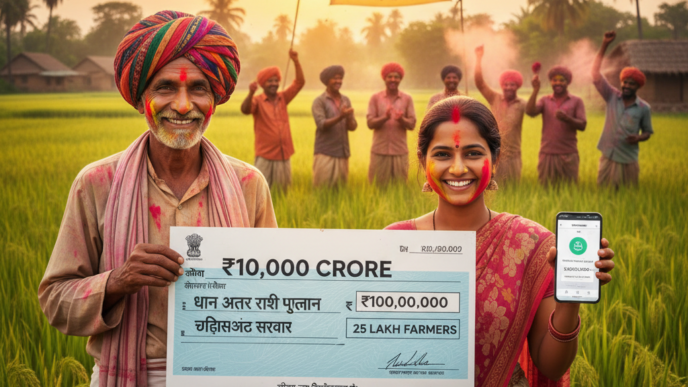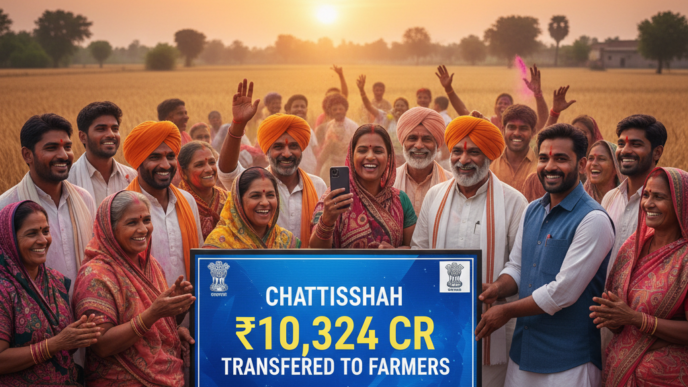



Chhattisgarh CM announces ₹10,000 crore paddy price differential payout
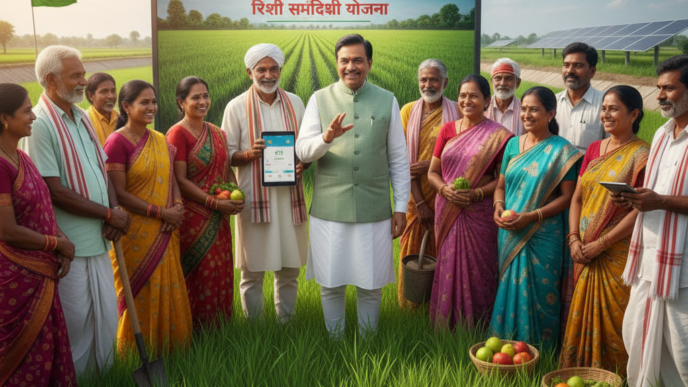
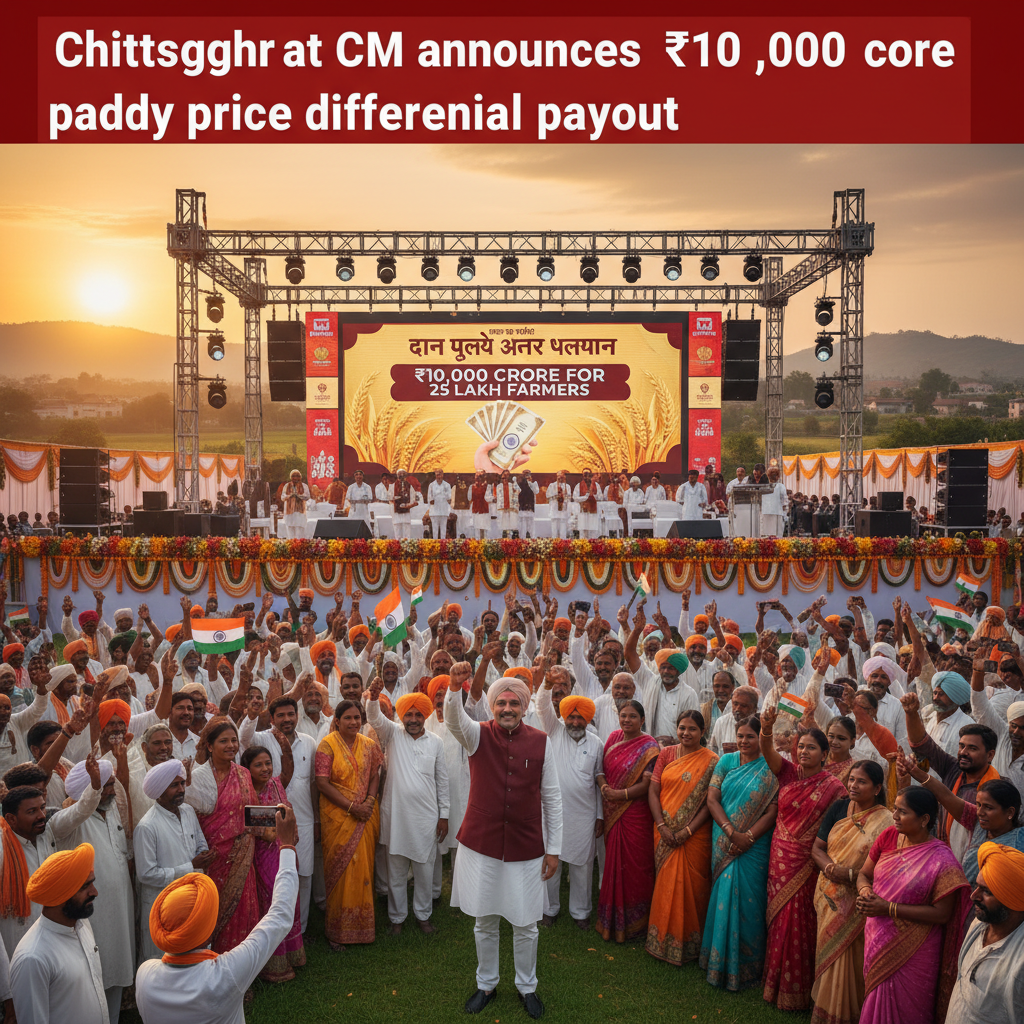
Chief Minister Vishnu Deo Sai of Chhattisgarh unveiled a transformative fiscal package that allocates ₹10,000 crore as a paddy price differential payout to over 25 lakh eligible cultivators across the state. The announcement, made just days before the Holi festival, positions the subsidy as a timely financial boost for the agrarian community and a strategic electoral gesture ahead of the forthcoming state elections. By earmarking this substantial sum, the government aims to bridge the gap between the state‑mandated procurement price and prevailing market rates, thereby safeguarding farmers against volatile commodity price swings and ensuring a remunerative return on their paddy harvest.
The disbursement mechanism will operate through direct bank credits, leveraging the existing Direct Benefit Transfer (DBT) infrastructure to minimise delays and administrative bottlenecks. The finance department has confirmed that the payout will be released in two installments: the first in March, coinciding with the onset of the Kharif sowing season, and the second in June, aligning with the post‑harvest period. This staggered release is intended to provide cash flow support at critical junctures, enabling farmers to invest in inputs, settle outstanding liabilities, and improve overall productivity.
Eligibility for the paddy price differential payout is defined by a clear set of criteria administered by the State Agricultural Marketing Board. Farmers must be registered landholders, possess up‑to‑date land records, and have cultivated paddy during the previous season. Verification will combine satellite imagery, agritech databases, and on‑ground inspections to confirm the actual area under paddy cultivation. The scheme extends benefits to small and marginal farmers, tenant cultivators, and sharecroppers who meet these registration thresholds, thereby broadening outreach to vulnerable segments of the rural population. 
According to official sources, the verification process will be overseen by a joint committee comprising representatives from the Agriculture Department, Finance Department, and the State Remote Sensing Application Centre. This committee will employ a multi‑tier verification system that includes satellite‑based monitoring, digital land‑record verification through the e‑Gram Swan portal, on‑site inspections by revenue officials, and real‑time data analytics to detect anomalies. Beneficiaries will receive a unique transaction ID for each instalment, enabling transparent tracking of funds in their bank statements. In addition, a dedicated grievance redressal helpline and an online portal will be made available to address complaints related to delayed payments or verification errors, ensuring accountability and farmer confidence.
Historical context of paddy differential subsidies in Chhattisgarh
Chhattisgarh’s commitment to supporting paddy growers dates back to the inception of the Bhuomukh Yojana in 2018, a modest per‑hectare bonus designed to incentivise paddy production in water‑rich districts. While the initial scheme offered a limited financial incentive, it laid the groundwork for a series of progressive agricultural subsidies, gradually increasing both the scale and scope of fiscal support. Subsequent initiatives such as the Kisan Kisan Sashaktikaran Yojana introduced additional bonuses tied to yield targets and market conditions, reflecting a growing recognition of the need for sustained income stabilization for farmers.
Political analysts interpret the current scaling of the paddy price differential payout as a decisive shift from symbolic gestures to substantive fiscal engagement. Dr. Raghavendra Mishra, a senior analyst at the Centre for South Asian Studies, notes that the move reflects a response to mounting agrarian discontent, especially in districts where farmer protests have gained momentum over the past few years. By delivering a cash infusion of ₹10,000 crore just before Holi, the government seeks to reinforce its pro‑farmer narrative and counteract opposition narratives that accuse it of neglecting rural welfare.
From a historical perspective, the escalation to a ₹10,000‑crore payout marks a quantum leap in state‑level agricultural support. The figure surpasses previous annual subsidy allocations by more than tenfold, underscoring the government’s intent to address structural vulnerabilities in the paddy marketing chain. This strategic investment is also viewed as an effort to align with national policy objectives aimed at ensuring remunerative prices for staple crops and reducing distress sales during periods of market oversupply.
Economic implications and expert perspectives
Economists and agronomists have offered nuanced assessments of the paddy price differential payout’s potential impact on the state’s agricultural economy. Dr. Anjali Rai, an agronomist affiliated with the Indian Institute of Technology Delhi, highlights that timely financial assistance can alleviate pressure on farmers to offload produce at distress prices, thereby encouraging investment in superior seeds, irrigation infrastructure, and mechanisation. She stresses that sustained subsidies must be complemented by long‑term investments in agricultural research, extension services, and market access to translate short‑term cash flows into genuine productivity gains.
Fiscal experts from the Chhattisgarh Finance Department assert that the ₹10,000‑crore allocation will be financed through a diversified mix of budgetary surplus, re‑allocation of central grants, and prudent borrowing. This approach aims to prevent an undue strain on state revenues while maintaining fiscal discipline. The department has indicated that the payout will be integrated into the broader fiscal roadmap, ensuring that the subsidy does not compromise other developmental priorities such as health, education, and infrastructure.
A recent survey conducted by the Center for Development Studies (CDS) projects that the influx of funds could generate a multiplier effect across the rural economy. Increased farmer income is expected to boost consumption expenditures, enhance creditworthiness, and stimulate savings. Ancillary sectors—including fertilizer distribution, farm‑machinery sales, agri‑logistics, and rural retail—are likely to experience heightened demand, creating employment opportunities and fostering economic diversification in agrarian regions. Moreover, the scheme may improve the overall credit ecosystem for farmers, enabling easier access to institutional financing for future agricultural ventures.
International perspectives also underscore the significance of the paddy price differential payout. The World Bank’s recent report on “Agricultural Support Programs in South Asia” cites Chhattisgarh’s initiative as a model for targeted income stabilization mechanisms that can cushion smallholder farmers against global commodity price volatility. The report recommends that such schemes be coupled with robust monitoring and evaluation frameworks to ensure fiscal efficiency and maximize developmental outcomes.
Implementation roadmap and monitoring mechanisms
The successful execution of the paddy price differential payout hinges on a well‑structured implementation roadmap that integrates technology, administrative oversight, and beneficiary engagement. At the heart of the process is a joint monitoring committee comprising officials from the Agriculture Department, Finance Department, and the State Remote Sensing Application Centre. This committee will supervise a multi‑tier verification system designed to ensure that only eligible cultivators receive the subsidy.
Key components of the verification system include:
- Satellite‑based monitoring of crop area to corroborate paddy sowing claims.
- Digital land‑record verification through the e‑Gram Swan portal, enabling seamless cross‑checking of land titles and cultivation histories.
- On‑site inspections conducted by revenue officials to validate physical presence and cultivation status.
- Real‑time data analytics to detect anomalies, duplications, or irregularities in the beneficiary database.
Upon successful verification, each eligible farmer will be credited with the applicable instalment via direct bank transfer. Beneficiaries will receive a unique transaction ID for each payment, facilitating transparent tracking in their bank statements. To facilitate grievance redressal, the government has established a dedicated helpline (toll‑free 1800‑123‑4567) and an online portal where farmers can submit complaints related to delayed payments, verification errors, or disputes over eligibility. The portal also provides a suite of self‑service tools, including document upload, status checks, and appeal filing.
In addition to technological safeguards, the implementation strategy emphasizes capacity building at the grassroots level. Revenue officials and extension workers will receive specialized training on the use of satellite data, digital record verification, and grievance handling procedures. This training is intended to reduce human error, enhance data accuracy, and foster a farmer‑centric approach to subsidy administration.
For broader outreach, the state plans to leverage existing farmer cooperatives, self‑help groups, and panchayat networks to disseminate information about the scheme, eligibility criteria, and disbursement timelines. Mobile banking units will be deployed to remote villages to assist farmers who face challenges in accessing digital banking services, ensuring that every eligible cultivator can receive the payout without undue hardship.
Political ramifications and future outlook
The timing of the paddy price differential payout announcement, strategically aligned with the Holi festival, reveals a calculated political calculus. By delivering a substantial financial windfall just before a major cultural celebration, the government seeks to amplify its popularity among rural voters, especially in districts where agrarian concerns have historically shaped electoral outcomes. The move is widely perceived as an attempt to consolidate the ruling party’s support base and to pre‑empt criticism from opposition parties that have capitalized on farmer discontent in recent years.
Political commentators suggest that the announcement serves a dual purpose: first, to reinforce the narrative of a “pro‑farmer” administration, and second, to neutralize the electoral advantage that opposition parties have gained through agrarian agitations and protests. By presenting a concrete, cash‑based incentive, the government aims to demonstrate tangible commitment to farmer welfare, thereby countering allegations of neglect and policy inertia. However, analysts caution that the true test lies not in the announcement itself but in the effective execution of the scheme and the measurable improvement in the socioeconomic conditions of the targeted farmers.
Looking ahead, policymakers envision integrating the paddy price differential payout into a comprehensive framework of agricultural reforms that encompass crop diversification, value‑addition, and climate‑resilient practices. Such an integrated approach seeks to move beyond short‑term income stabilization toward sustainable productivity gains and enhanced market competitiveness. If successfully implemented, the initiative could serve as a replicable model for other states grappling with similar challenges in the agricultural sector, potentially influencing national policy discourse on farmer subsidies and income support mechanisms.
In sum, the ₹10,000‑crore paddy price differential payout represents a landmark investment by the Chhattisgarh government, blending fiscal generosity with strategic political timing. While its immediate impact promises to alleviate farmer distress and stimulate rural consumption, the long‑term success of the scheme will depend on rigorous implementation, robust monitoring, and complementary reforms aimed at building a resilient and prosperous agricultural economy.
Stay updated with the latest Yojana schemes and government initiatives for better awareness and eligibility. For personalized guidance on accessing these benefits, reach out to us.