


Overview of the DDC Kupwara DLRC Meeting
The Deputy Commissioner of Kupwara, acting as chairperson of the District Level Review Committee (DLRC), convened a high‑level meeting on 27 February 2026 to assess the implementation status of various flagship welfare programmes across the district. The gathering brought together officials from the Rural Development Department, the Finance Ministry, the Social Welfare Directorate, and representatives of financial institutions. The primary agenda was to deliberate on strategies that would accelerate financial inclusion and ensure that every targeted household receives the intended benefits of centrally sponsored and state‑specific schemes. The chairperson emphasized that achieving saturation — meaning that every targeted household is covered — must become a measurable priority for the upcoming fiscal year.
Saturation Drive for Flagship Schemes and Financial Inclusion
During the session, the DDC highlighted three flagship schemes — Pradhan Mantri Jan Dhan Yojana, Pradhan Mantri Awas Yojana, and Pradhan Mantri Kisan Samman Nidhi — as focal points for saturation drives. Officials presented district‑level data indicating that current coverage stands at approximately 68 % for Jan Dhan, 55 % for Awas, and 72 % for Kisan Samman, underscoring significant gaps that need to be closed before the end of the fiscal cycle.
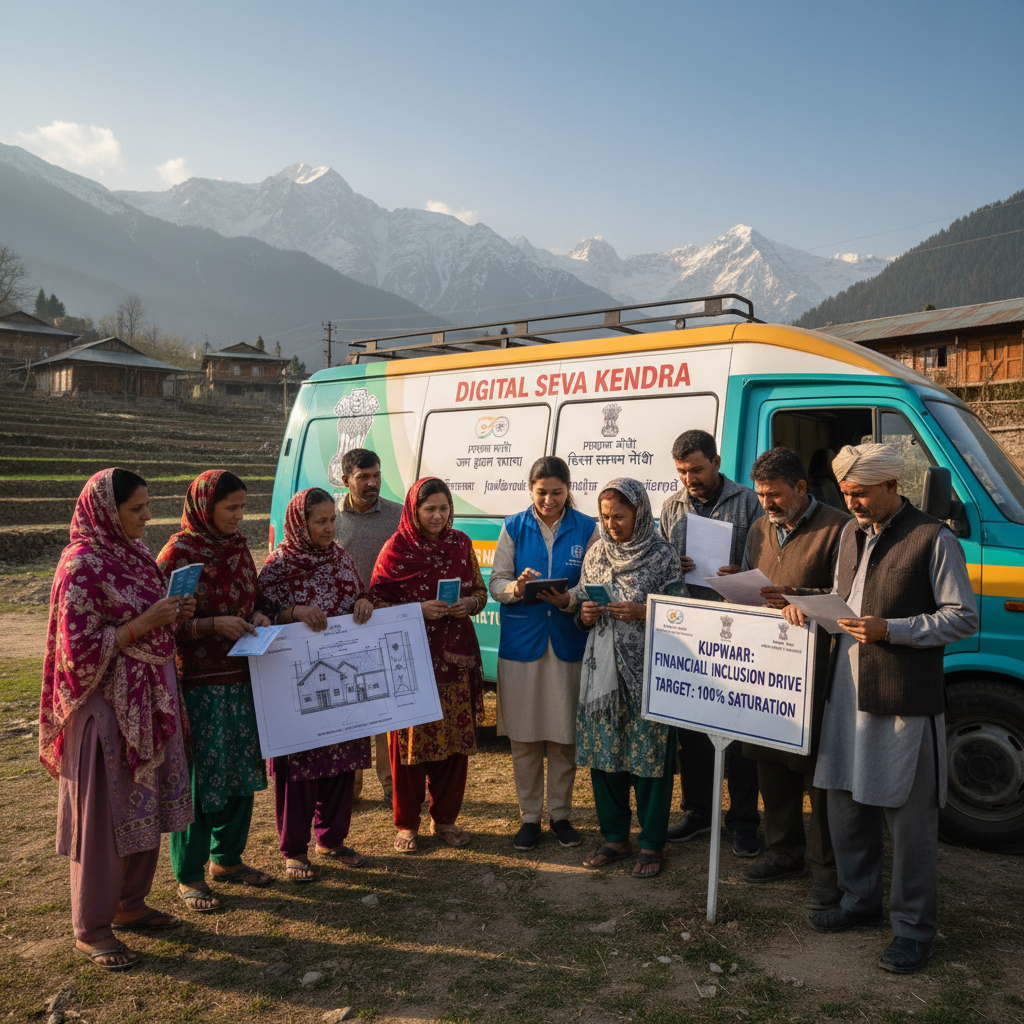
To address these gaps, the committee passed a resolution to launch a month‑long awareness campaign that will combine door‑to‑door outreach, mobile banking vans, and village‑level workshops. The campaign will also feature collaborations with local NGOs and self‑help groups (SHGs) to disseminate information about eligibility criteria, required documents, and the tangible benefits of each scheme. 
Financial inclusion remains a cornerstone of the Union Government’s agenda, and Kupwara has been identified as a priority zone due to its remote geography and lower penetration of banking services. The DDC called for an “intensive effort” to expand the network of banking correspondents, promote the use of mobile wallets, and simplify Know‑Your‑Customer (KYC) procedures for low‑income households. He suggested leveraging existing SHGs and panchayat‑level cooperatives as intermediaries for financial literacy campaigns. Moreover, the chairperson advocated for the integration of Aadhaar‑linked biometric authentication to reduce fraud and streamline account opening processes. By aligning these initiatives with the broader goal of saturating flagship schemes, the district aims to create a virtuous cycle where increased financial access translates directly into higher scheme uptake.
Implementation Strategies and Digital Monitoring
To translate the saturation goal into action, the DLRC recommended a multi‑pronged approach that addresses both technical and social barriers. First, a comprehensive mapping exercise will be conducted to identify households that have not yet been enumerated in any scheme database. This will involve door‑to‑door verification teams equipped with tablets that sync with the district’s central database in real time.
Second, a targeted enrollment drive will be launched in collaboration with local NGOs, focusing on remote habitations that lack regular banking presence. Third, the committee emphasized the importance of capacity‑building for frontline staff, ensuring that they are equipped with the latest digital tools for data entry and verification. Fourth, a feedback loop will be established wherein beneficiaries can report issues through a dedicated helpline, enabling rapid corrective measures.
Among the challenges identified are intermittent internet connectivity, cultural hesitancy toward formal banking, and logistical constraints of reaching dispersed settlements during harsh winter months. To mitigate these, the DDC instructed the Rural Development Department to explore the deployment of solar‑powered banking kiosks as a viable solution for off‑grid locations. These kiosks will operate on battery backup and solar panels, ensuring uninterrupted service even in remote high‑altitude villages.
The committee also resolved to adopt a unified digital dashboard that integrates data from banking correspondents, scheme enrolment portals, and grievance redressal systems. This dashboard will feature real‑time visualizations of coverage percentages, disbursement timelines, and identification of lagging blocks. Advanced analytics will be employed to predict bottlenecks and suggest corrective actions. The DDC instructed the IT wing of the Finance Department to collaborate with a private technology partner to develop a user‑friendly interface accessible to both officials and beneficiaries. Training sessions will be conducted for field staff to ensure proficient usage of the system. By centralizing data, the administration aims to enhance transparency, reduce duplication, and facilitate evidence‑based decision‑making.
Funding, Resources and Community Response
To sustain the ambitious saturation drive, the DDC emphasized the necessity of earmarking additional budgetary resources for the upcoming financial year. He proposed that a portion of the district’s own revenue, along with centrally‑sourced grants, be allocated specifically for capacity‑building, logistics, and monitoring activities. The finance wing will prepare a detailed budget proposal that aligns with the scheme‑specific targets, ensuring that funds are disbursed in a timely manner to the implementing agencies.
The DDC suggested exploring public‑private partnership models for the deployment of mobile banking units, which could bring down operational costs while extending reach to remote locales. Potential partners include fintech startups that specialize in offline transaction processing and community‑centric banking solutions.
Local leaders and civil society organisations have welcomed the renewed focus on scheme saturation, viewing it as a critical step toward reducing poverty and fostering inclusive growth. Representative bodies of SHGs expressed optimism that increased financial literacy will empower women and youth to manage household finances more effectively. Educational institutions have pledged to incorporate financial awareness modules into their curricula, thereby cultivating a generation that is better informed about entitlements and credit options. Early indicators suggest that the awareness campaign, once fully rolled out, could boost enrolment rates by an estimated 15‑20 % within the first quarter. Such an uplift would not only accelerate the achievement of saturation targets but also contribute to broader socio‑economic development indicators, including reduced income inequality and improved health outcomes due to greater access to nutrition‑related schemes.
Future Outlook and Policy Recommendations
The DDC concluded the meeting by outlining a roadmap for the ensuing fiscal year. He recommended that the district administration submit a detailed action plan to the Ministry of Finance, incorporating quarterly review checkpoints and transparent reporting of progress. Additionally, he called for the establishment of a dedicated monitoring cell that would coordinate with state‑level agencies to ensure alignment with national‑level objectives.
The chairperson also advocated for the inclusion of scheme saturation metrics in the district’s performance‑linked incentive framework, thereby linking administrative bonuses to measurable outcomes. Finally, he emphasized the need for continued stakeholder engagement, urging regular consultations with farmer cooperatives, women’s collectives, and youth groups to fine‑tune implementation strategies. By adopting these recommendations, Kupwara aims to set a benchmark for other districts in the Union Territory, demonstrating how targeted leadership can translate into tangible improvements in financial inclusion and scheme delivery.
Stay updated with the latest Yojana schemes and government initiatives for better awareness and eligibility. For personalized guidance on accessing these benefits, reach out to us.