


Executive Summary
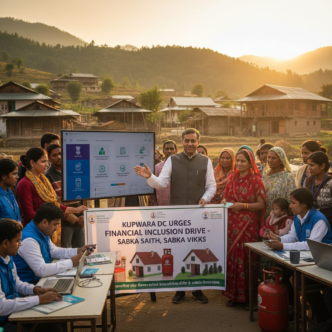
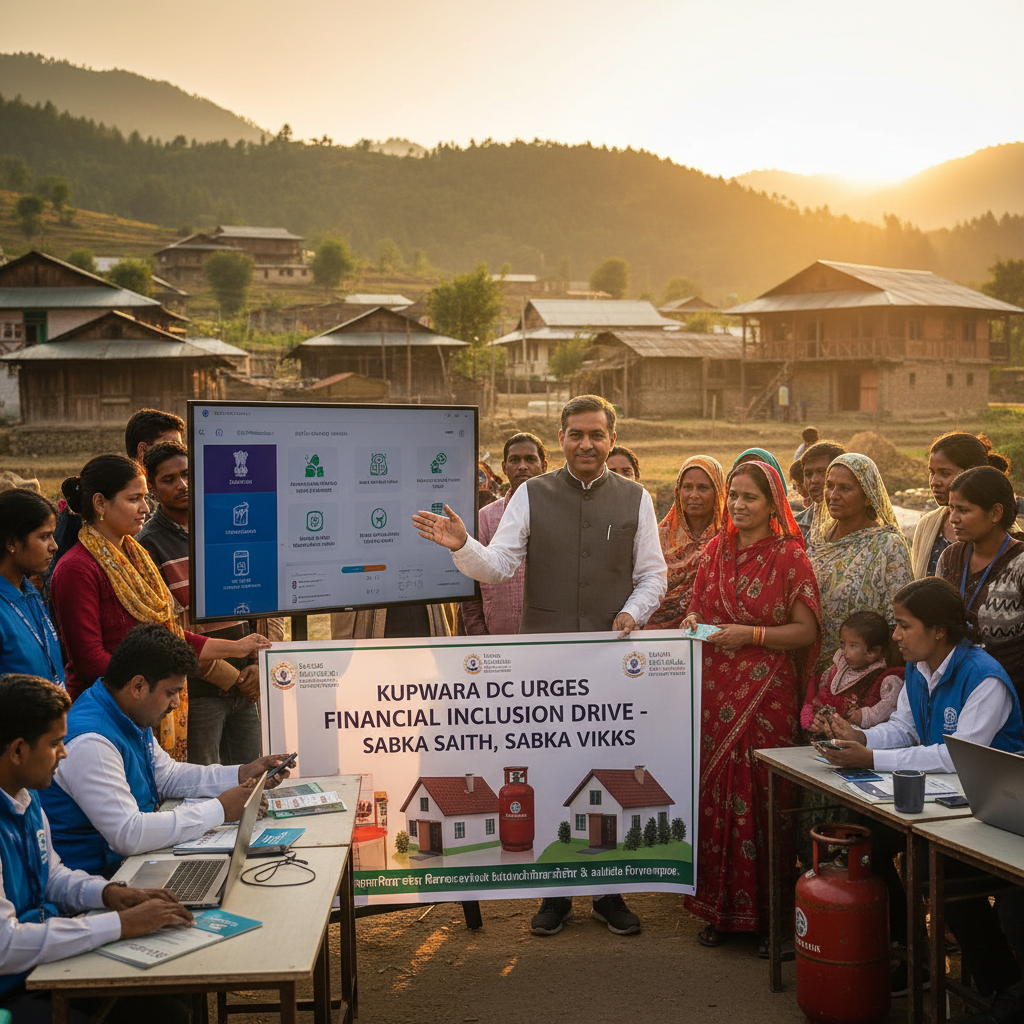
In a high‑level District Level Review Committee (DLRC) meeting convened by the Deputy Commissioner of Kupwara, the administration underscored an urgent imperative to accelerate financial inclusion across the district. The session, held at the Deputy Commissioner’s headquarters, placed the saturation of flagship government schemes at the forefront of the agenda, targeting areas such as rural development, health, education, and livelihood generation. Officials emphasized that achieving 100 % coverage of these schemes by the close of the fiscal year is not merely an aspirational goal but a measurable milestone that aligns with the national vision of “Sabka Saath, Sabka Vikas.” The DC highlighted the necessity of embedding financial inclusion within the core governance framework, rather than treating it as a peripheral activity. Real‑time monitoring dashboards, field outreach teams, and digital payment integration were identified as pivotal levers to ensure that every eligible household benefits from the intended welfare programmes. This coordinated push reflects a decisive shift toward accountability, transparency, and inclusive growth, positioning Kupwara as a benchmark district for other regions striving to deliver comprehensive scheme saturation.
Key Points Discussed
The meeting generated a consensus on several actionable priorities, each designed to remove bottlenecks in scheme delivery. Attendees reviewed a matrix of interventions that combine technological innovation with grassroots engagement, aiming to close the gap between policy intent and on‑ground impact. The discussion emphasized the importance of data‑driven oversight, community participation, and continuous feedback loops to refine targeting mechanisms.
- Comprehensive monitoring through real‑time dashboards that visualize scheme coverage at the block and village level.
- Field outreach teams to conduct awareness camps in far‑flung and remote habitations.
- Integration of digital payment platforms to enable seamless Direct Benefit Transfers (DBT) without interruption.
- Collaboration with banking correspondents to expand last‑mile connectivity in underserved areas.
- Beneficiary feedback loops to capture ground realities and adjust eligibility criteria dynamically.
Deputy Commissioner emphasized that financial inclusion cannot be relegated to a side‑project; it must be embedded in the district’s core agenda. He called on all departmental heads to adopt a proactive stance, insisting that the success of flagship schemes hinges on synchronized execution across finance, health, education, and rural development departments. 
Strategic Interventions Planned
To translate the vision of complete scheme saturation into tangible outcomes, the district has mapped out a multi‑pronged strategy that leverages both traditional outreach and cutting‑edge technology. Each intervention is designed to address a specific gap in the current implementation chain, ensuring that beneficiaries receive timely, unimpeded access to the subsidies and services they are entitled to.
The following initiatives form the backbone of the district’s action plan:
- Expanding Pradhan Mantri Jan Dhan Yojana (PMJDY) coverage by deploying mobile banking units to register unbanked households. These units will facilitate instant account openings and issue RuPay cards, thereby integrating millions of citizens into the formal banking ecosystem.
- Targeted subsidy pilots under Pradhan Mantri Awas Yojana‑Gramin (PMAY‑G) aimed at guaranteeing housing benefits for every eligible family. The pilot will employ geo‑tagged beneficiary lists and real‑time verification to prevent duplication.
- Strengthening Pradhan Mantri Ujjwala Yojana (PMUY) distribution through the addition of LPG vans to remote habitations, ensuring that cooking gas connections reach households that have previously remained offline.
- Digital literacy programme in partnership with local NGOs, designed to boost scheme awareness and enrollment rates among rural populations. The curriculum includes step‑by‑step tutorials on using mobile banking apps and understanding subsidy eligibility.
- Grievance redressal cells at the block level to expedite issue resolution, maintain beneficiary trust, and capture service delivery bottlenecks for rapid remediation.
Collectively, these measures aim to close the coverage gap, reduce leakages, and ensure that every eligible citizen in Kupwara reaps the full benefits of flagship schemes, thereby fostering socio‑economic empowerment and inclusive growth.
Stakeholder Collaboration
One of the most striking outcomes of the DLRC meeting was the active participation of diverse stakeholder groups, each providing valuable insights that will shape the implementation roadmap. Representatives from the banking sector outlined the readiness of correspondent banking networks to extend services to the most inaccessible villages, while civil society organizations highlighted cultural nuances that affect scheme uptake among different tribal and ethnic communities. Beneficiary groups shared on‑the‑ground experiences, pointing out barriers such as limited internet connectivity and language barriers that could impede enrollment.
The Deputy Commissioner assured that all feedback will be systematically incorporated into the action plan, reinforcing a collaborative governance model where the administration works hand‑in‑hand with stakeholders. This inclusive approach not only enhances the relevance of the interventions but also builds a sense of ownership among citizens, encouraging them to actively participate in the monitoring and evaluation process.
By fostering public‑private partnerships and leveraging the expertise of NGOs, the district aims to create a robust ecosystem that sustains financial inclusion beyond the immediate targets. Such collaborative mechanisms are essential for scaling successes and adapting quickly to emerging challenges, ensuring that the district’s efforts remain aligned with national priorities.
Implementation Timeline and Monitoring
The district administration has charted a detailed timeline that stretches from the current quarter through the end of the fiscal year, with clear milestones and performance indicators for each strategic intervention. A central command centre will oversee the rollout, integrating data from multiple sources to generate a live dashboard that tracks key metrics such as the number of new Jan Dhan accounts opened, housing subsidy disbursements completed, and LPG connections delivered.
Quarterly review meetings will be convened with departmental heads and stakeholder representatives to assess progress, identify deviations, and recalibrate strategies as needed. These meetings will feature a rigorous audit of beneficiary feedback, ensuring that any systemic issues are addressed promptly. In addition, independent third‑party auditors will be engaged to verify the integrity of the data and the transparency of fund flows, thereby reinforcing accountability.
To maintain momentum, the DC announced a set of performance-linked incentives for teams that achieve or exceed saturation targets ahead of schedule. These incentives are tied to measurable outcomes such as reduced grievance resolution times and higher enrollment rates in digital literacy programmes. By aligning rewards with results, the administration aims to motivate staff at all levels to pursue excellence in service delivery.
The monitoring framework also incorporates geo‑tagged beneficiary verification, ensuring that subsidies reach the intended recipients without duplication. This technology‑driven approach not only enhances accuracy but also provides a publicly accessible record of scheme performance, fostering trust and enabling citizens to verify that they are receiving the benefits to which they are entitled.
Stay updated with the latest Yojana schemes and government initiatives for better awareness and eligibility. For personalized guidance on accessing these benefits, reach out to us.