



Surrendered Naxals Find Permanent Homes Under PM Awas Yojana
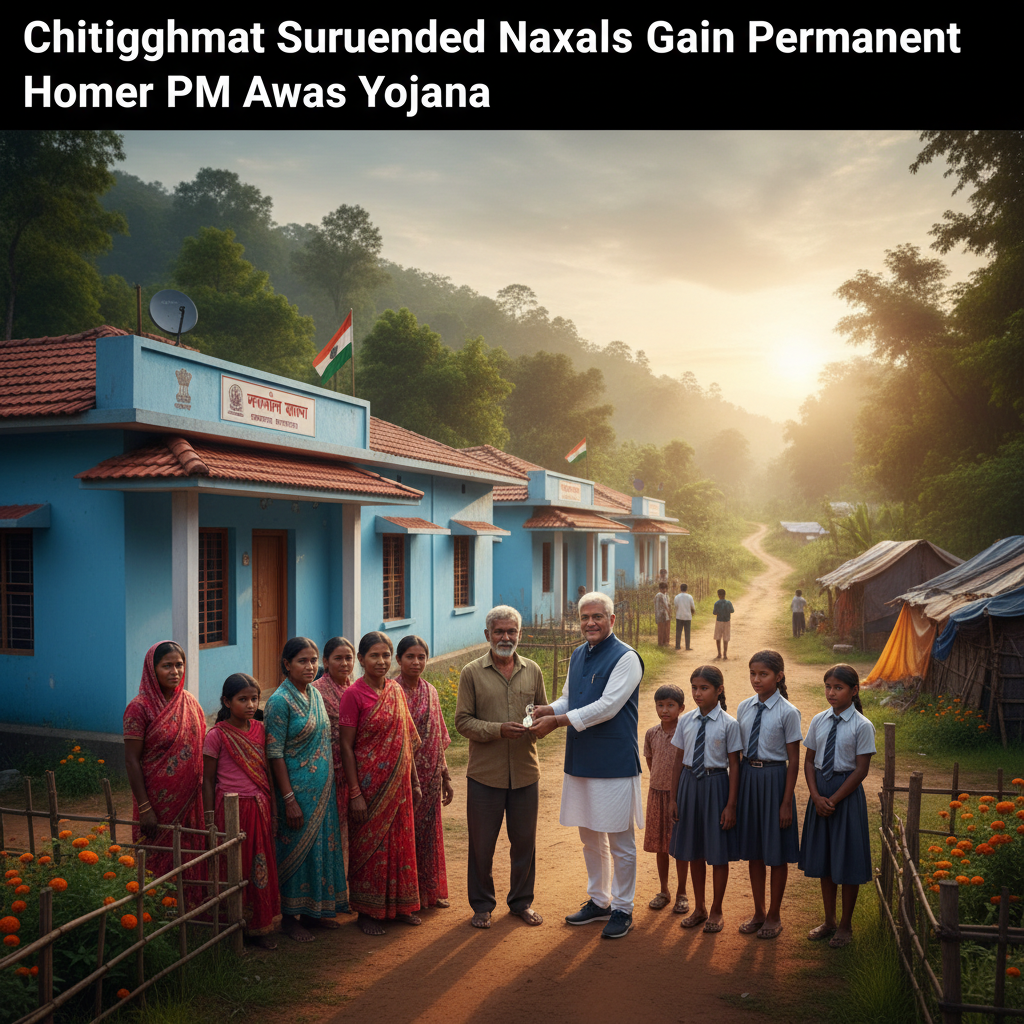
In a quiet forested corridor of Chhattisgarh, former Naxal cadres are trading camouflage for concrete. Recent government reports reveal that dozens of insurgents who have surrendered to security forces have been allotted permanent houses under the Pradhan Mantri Awas Yojana (PMAY). The initiative, part of a wider re‑habilitation drive, transforms erstwhile jungle hideouts into stabilised residential clusters, signaling a decisive shift from armed rebellion to mainstream citizenship.
Understanding PM Awas Yojana and Its Rural Housing Objective
Launched in 2022, the Pradhan Mantri Awas Yojana (PMAY) aims to achieve “Housing for All” by 2024, targeting both urban and rural poor. In rural areas, the scheme focuses on landless families through the Housing for All component, offering interest subvention, credit‑linked subsidies, and direct cash assistance for house construction. The programme emphasizes pucca (permanent) housing equipped with basic amenities such as toilets, electricity, and water connectivity. Eligibility is determined by socio‑economic criteria, including ownership of no pucca house,Below Poverty Line (BPL) status, and residing in scheduled tribal or remote regions. For a deeper dive, see the official PMAY portal.
From Jungle Hideouts to Pucca Houses: The Surrender and Allocation Process
The transition from armed insurgency to a roofed dwelling begins with a formal surrender before a district‑level committee. After thorough verification of background, criminal record, and genuine intent to renounce violence, each cadre is enrolled in a six‑month reintegration module. This module includes vocational training, counseling, and livelihood workshops. Housing allocation is contingent upon successful completion of the module, after which beneficiaries receive a fully‑fitted pucca house on government‑allotted plots. These homes typically feature two bedrooms, a kitchen, sanitary facilities, and a renewable energy source, replacing the temporary tarpaulin shelters once used in dense jungle camps. 
Impact on Communities and Government Reach
According to the Ministry of Rural Development, over 12,000 houses have been allotted under PMAY in Chhattisgarh since 2023. Of these, approximately 1,800 are specifically earmarked for former Naxalites who have opted for surrender. The state’s target is to double this figure by 2026, integrating housing incentives with broader livelihood programmes such as agriculture cooperatives and skill‑development initiatives.
Bullet points illustrate the tangible benefits:
- Improved school attendance for children of beneficiary families.
- Reduced exposure to coercive recruitment tactics.
- Enhanced access to basic utilities—electricity, water, and sanitation.
- Creation of community hubs that facilitate economic cooperatives.
These outcomes contribute to a measurable decline in local insecurity indices, as reported by the state police department’s latest annual security assessment.
Challenges, Collaborative Initiatives and Future Outlook
Despite the encouraging statistics, experts caution that housing alone cannot resolve the root causes of insurgency, such as economic marginalisation and land disputes. Social stigma remains a hurdle, as some returned cadres face resistance from neighbours reluctant to accept former militants. To address these issues, the Chhattisgarh government collaborates with NGOs, civil‑society groups, and private sector partners to provide continuous mentorship, micro‑enterprise grants, and psychosocial support.
Looking ahead, the administration plans to extend the scheme to other insurgency‑prone states, linking housing benefits with entrepreneurship schemes and rural employment guarantees. The vision is to construct a holistic reintegration ecosystem that not only furnishes a roof but also guarantees sustainable livelihood pathways, thereby reducing the risk of relapse into armed conflict. This forward‑looking approach underscores the government’s commitment to turning temporary safety nets into permanent foundations for peace.
Stay updated with the latest Yojana schemes and government initiatives for better awareness and eligibility. For personalized guidance on accessing these benefits, reach out to us.