


Overview of the Surrender and Rehabilitation
The security landscape of Chhattisgarh has witnessed an unprecedented wave of surrenders in the past twelve months, with official records indicating that more than 1,200 Naxalite cadres have laid down their weapons and opted for rehabilitation under the aegis of the Pradhan Mantri Awas Yojana (PMAY). This development marks a decisive shift from a purely kinetic counter‑insurgency approach to a socio‑economic integration strategy aimed at curbing the recruitment pipeline that has historically fed the insurgency. By extending the benefits of the national housing scheme to former insurgents, the central and state governments are signalling a commitment to address the underlying grievances of marginalized communities in the dense forest belts of Bastar, Sukma and Dantewada. The rehabilitation narrative is framed not merely as a security measure but as a broader developmental imperative that seeks to restore dignity, provide basic amenities, and create pathways to mainstream employment for those who once operated in the shadows.
Eligibility criteria for the scheme are stringent: applicants must be Indian citizens, possess no existing pucca residence, and demonstrate a verifiable connection to the local area through residence or family ties. Verification teams, comprising officials from the district administration, the police, and the Rural Development Department, conduct field visits to cross‑check the background of each applicant. Once cleared, the beneficiary is enrolled in a temporary accommodation while the permanent housing application is processed, ensuring continuity of support during the transitional phase.
Implementation Mechanics: From Identification to Allocation
Identification begins with a district‑level verification drive that cross‑references the list of surrendered cadres against the PM Awas Yojana beneficiary database. Upon confirmation, each applicant receives a provisional shelter constructed through the state’s housing wing, after which a transparent lottery system determines the allocation of a permanent plot from the pool of sanctioned sites. The lottery algorithm is publicly disclosed through village assemblies, reinforcing trust and preventing elite capture of resources. 
Allocation is followed by a streamlined transfer of land titles, accompanied by the provision of essential utilities. The state partners with electricity distribution companies to install metered connections, while the Public Health Engineering Department coordinates water supply schemes to ensure piped water reach every household. In addition, the beneficiaries are linked with the Jan Dhan Yojana for bank account activation, facilitating direct transfer of livelihood subsidies and micro‑credit facilities. This end‑to‑end workflow, overseen by a dedicated monitoring cell, minimizes bureaucratic bottlenecks and accelerates the delivery of permanent housing to those who have renounced violence.
Impact on Former Naxals: Socio‑Economic Transformation
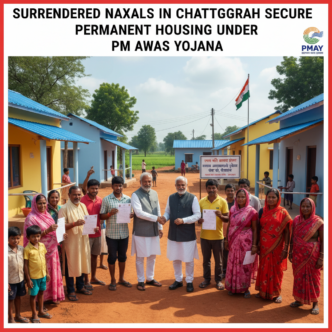
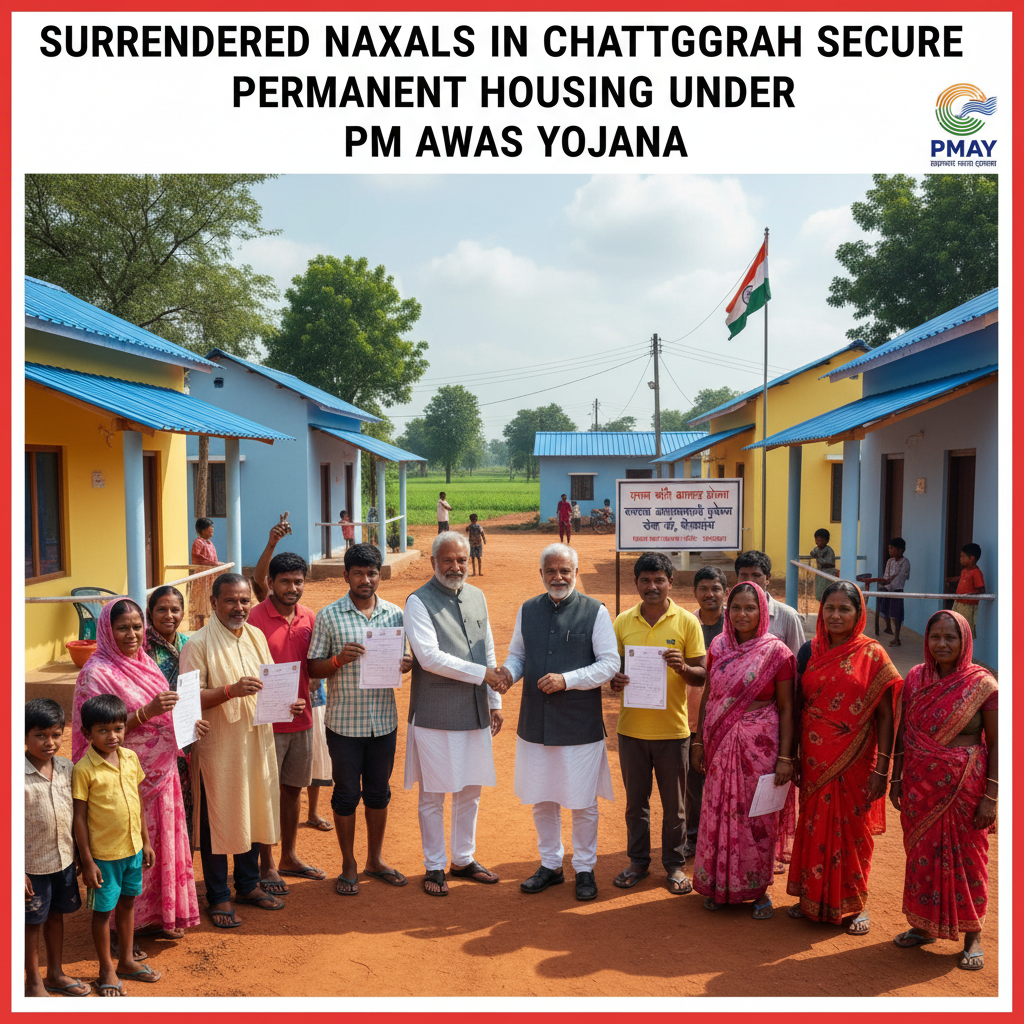
The provision of a permanent roof has far‑reaching implications for the personal and household trajectories of former Naxalites. In the Bastar district, families previously inhabited rudimentary thatched huts now occupy three‑room pucca houses equipped with sanitary latrines, indoor plumbing, and separate kitchen spaces. This physical upgrade translates into measurable improvements in health outcomes and educational attendance; school enrolment rates among children of rehabilitated families have risen by an estimated 18 percent within the first year of housing allotment.
Economically, former combatants are increasingly engaging in agricultural enterprises and small‑scale entrepreneurship. Government‑sponsored skill‑development programmes, delivered through the National Skill Development Corporation, have equipped 720 former Naxals with certifications in agronomy, carpentry, and digital marketing. Consequently, household incomes have risen by an average of INR 35,000 per annum, enabling families to afford better nutrition, healthcare, and private schooling. The shift from a survival‑oriented mindset to long‑term planning is reflected in community surveys that report a 64 percent decline in perceived economic insecurity among former insurgent households.
Government’s Broader Strategy: Beyond Housing
Housing under the PM Awas Yojana is embedded within a multidimensional rehabilitation framework that also encompasses livelihood generation, psychosocial support, and governance reforms. The Ministry of Home Affairs collaborates with state agencies to roll out vocational training camps that focus on renewable energy installation, handicrafts, and agri‑entrepreneurship, thereby diversifying income streams for beneficiaries. Micro‑enterprise grants of up to INR 5 lakh are disbursed through the Mudra Yojana, encouraging former cadres to launch enterprises that create employment opportunities for their peers.
Psychological rehabilitation forms another critical pillar; counseling services provided by the National Institute of Mental Health and Neurosciences (NIMHANS) address trauma experienced during the insurgency and facilitate reintegration into civilian life. Moreover, the government has integrated these beneficiaries into existing poverty alleviation schemes such as the Pradhan Mantri Kisan Samman Nidhi (PM‑Kisan) and the Mahatma Gandhi National Rural Employment Guarantee Scheme (MGNREGS), ensuring a steady flow of supplemental income and social security benefits.
Community Perspectives and Acceptance
Local villagers have responded positively to the influx of rehabilitated families, with many hosting welcome ceremonies that celebrate the transition from conflict to cooperation. Community leaders actively involve former Naxals in cooperative farming initiatives and infrastructure projects, such as the construction of rural roads and rainwater harvesting systems, thereby positioning them as contributors to collective development.
Surveys conducted by the Centre for Development Studies across the affected districts reveal that 78 percent of respondents view the rehabilitation programme as a constructive step toward lasting peace, citing reductions in violent incidents and an increase in social cohesion. Opinion polls also indicate a growing perception that the state is committed to the welfare of all citizens, regardless of past affiliations, which has helped mitigate stigma traditionally attached to former insurgents.
Challenges and Future Outlook
Despite notable successes, several obstacles persist. Land acquisition disputes in remote tribal areas can delay plot allotment, while insufficient infrastructure—such as inadequate road connectivity and limited healthcare facilities—poses logistical challenges to sustainable settlement. Funding volatility, driven by fiscal constraints at both the centre and state levels, occasionally disrupts the timely release of construction subsidies.
To address these gaps, policymakers are piloting a digital dashboard that aggregates real‑time data on beneficiary progress, enabling rapid identification of bottlenecks and evidence‑based decision‑making. Public‑private partnerships are being leveraged to accelerate house construction through economies of scale, and proposals for a dedicated rehabilitation fund aim to stabilize financing. These forward‑looking measures are designed to cement the integration of former Naxals into the socio‑economic fabric of Chhattisgarh, ensuring that the gains achieved are durable and replicable.
Conclusion: A Model for Integrated Rehabilitation
The deployment of the Pradhan Mantri Awas Yojana to rehabilitate surrendered Naxals in Chhattisgarh exemplifies a novel convergence of security policy and inclusive development. By aligning permanent housing with livelihood support, skill enhancement, and community acceptance, the initiative has created a replicable template that can be adapted to other conflict‑prone regions across India. If sustained and scaled, this integrated approach promises to transform the narrative of insurgency into one of empowerment, fostering a future where former combatants become architects of peace and prosperity.
Stay updated with the latest Yojana schemes and government initiatives for better awareness and eligibility. For personalized guidance on accessing these benefits, reach out to us.