




Madhya Pradesh Allocates ₹6,000 Crore for Land Registry of PM Awas Yojana Beneficiaries
In a landmark fiscal move, the Madhya Pradesh government has set aside ₹6,000 crore to fast‑track the registration of land titles for over 1.2 million beneficiaries of the Pradhan Mantri Awas Yojana (PMAY). The allocation, spread across the next three financial years, aims to clear a backlog of pending deeds, bring millions of low‑income households under formal property rights, and accelerate the state’s “Housing for All” vision.
Finance Minister Jyotiraditya Scindia announced the provision during the 2026‑27 budget presentation, emphasizing that secure land titles are the foundation of inclusive growth. “When a family holds a documented property, they gain access to formal credit, can invest in home improvements, and participate fully in the economy,” he said. The initiative aligns with the central government’s target of delivering two‑crore houses under PMAY and is being hailed as a potential model for other states grappling with similar registration bottlenecks.
Allocation Details and Implementation Strategy
Of the total ₹6,000 crore, 40 percent is earmarked for capital expenditure on digitisation infrastructure, 30 percent for recruitment and training of revenue staff, and the remaining 30 percent for operational costs such as awareness campaigns and grievance redressal. 
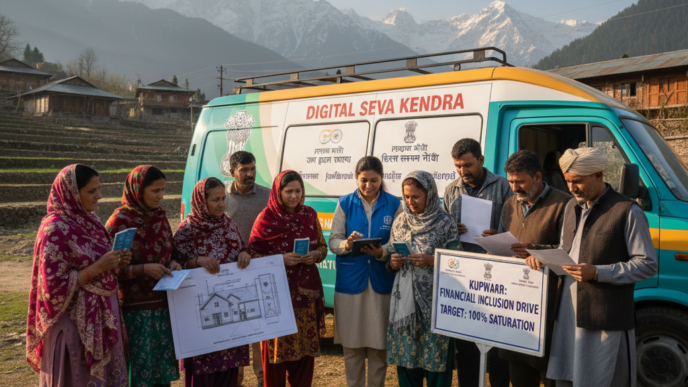
The implementation will be overseen jointly by the Department of Housing and Urban Development and the Revenue Department. A dedicated Project Management Unit will track milestones, conduct quarterly audits, and ensure transparent utilisation of funds. The first phase (FY 2026‑27) will focus on high‑burden districts – Indore, Bhopal, Gwalior, and Jabalpur – where the pending title backlog exceeds several hundred thousand records.
Key components of the rollout include:
- Digitisation of land records through a GIS‑based mapping platform to create a unified spatial database.
- Deployment of blockchain‑enabled documentation to make title deeds tamper‑proof.
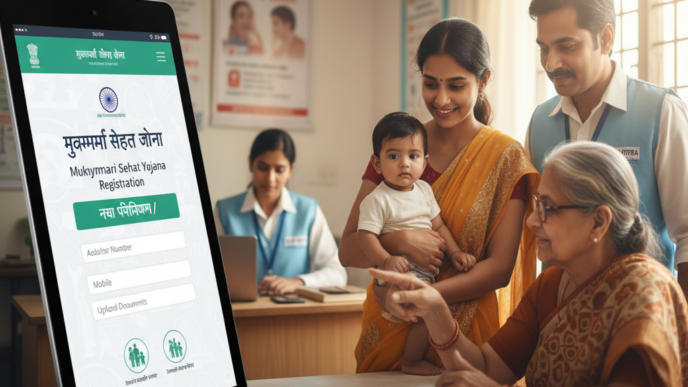
- Integration with the national PMAY portal for real‑time tracking of registration status.
- Recruitment of additional Sub‑Registrar staff to slash the average processing time from 90 days to under 30 days.
- Targeted outreach for women‑headed households to guarantee equitable access to title deeds.
According to the state’s revenue ministry, the initiative will generate more than 1.2 million legal property titles, reducing the current backlog of approximately 2.3 million pending land records. Early pilots in the Indore Municipal Corporation have already demonstrated a 25 percent reduction in processing time when GIS tools were employed.
For real‑time monitoring, citizens can track their application status on the official PMAY portal (pmaymis.gov.in), which now features a state‑specific “Land Registry” module.
Benefits and Socio‑Economic Impact
Secure land titles are expected to unlock collateral for credit, stimulate micro‑enterprise activity, and generate a multiplier effect of up to 1.5 percent of Madhya Pradesh’s gross domestic product over the next five years. Economists estimate that formalising property rights will reduce litigation costs by an estimated ₹350 crore annually, freeing judicial resources for other priorities.
The scheme also carries significant gender implications. Women constitute about 42 percent of PMAY beneficiaries nationwide, yet historically face barriers in obtaining title deeds. The state’s targeted outreach program includes gender‑sensitive awareness drives and dedicated assistance counters, aiming to ensure that women receive equal ownership rights.
Environmental benefits are emerging as well. The integration of renewable‑energy retrofits into newly registered homes is slated for inclusion in future phases, encouraging sustainable building practices and reducing long‑term utility costs for low‑income families.
Social inclusion is further reinforced through community‑driven monitoring mechanisms, where local NGOs and panchayat members can flag irregularities, thereby curbing corruption and ensuring transparent utilisation of the allocated funds.
Challenges and Governance Framework
Despite the ambitious scope, several challenges loom. The sheer scale of digitising land records across urban and tribal regions demands robust inter‑departmental coordination. Any lapse in data integrity could compromise the entire programme, exposing beneficiaries to disputes or even land grabs.
Political and fiscal uncertainties also pose risks to timely fund disbursement. Stakeholders have called for the establishment of an independent oversight committee, comprising members from the Planning Commission, civil society, and technical experts, to monitor progress and recommend course corrections.
Data privacy concerns have been raised regarding the use of blockchain and GIS technologies. The state government has assured that all personal data will be anonymised and stored in accordance with the Information Technology Act, 2000, and the upcoming Personal Data Protection Bill.
Logistical hurdles in remote tribal blocks, where land ownership patterns are often communal, will require tailored approaches such as participatory mapping and consensus‑building with community elders.
Future Outlook and Conclusion
Madhya Pradesh’s ₹6,000‑crore investment marks a pivotal turning point in the state’s housing agenda. By confronting the entrenched issue of land registration, the government not only fulfills a critical promise to millions of citizens but also sets a benchmark for other Indian states.
Looking ahead, the programme will expand beyond title registration to incorporate slum rehabilitation components, renewable‑energy retrofits, and community‑driven monitoring. If executed effectively, the initiative could reduce the state’s housing deficit by an estimated 15 percent within the next five years.
Overall, the allocation exemplifies how targeted fiscal measures, technological innovation, and inclusive governance can converge to deliver “Housing for All” and pave the way toward sustainable, equitable urban development.
Stay updated with the latest Yojana schemes and government initiatives for better awareness and eligibility. For personalized guidance on accessing these benefits, reach out to us.