


Abhay Yojana Property Tax Waiver Overview
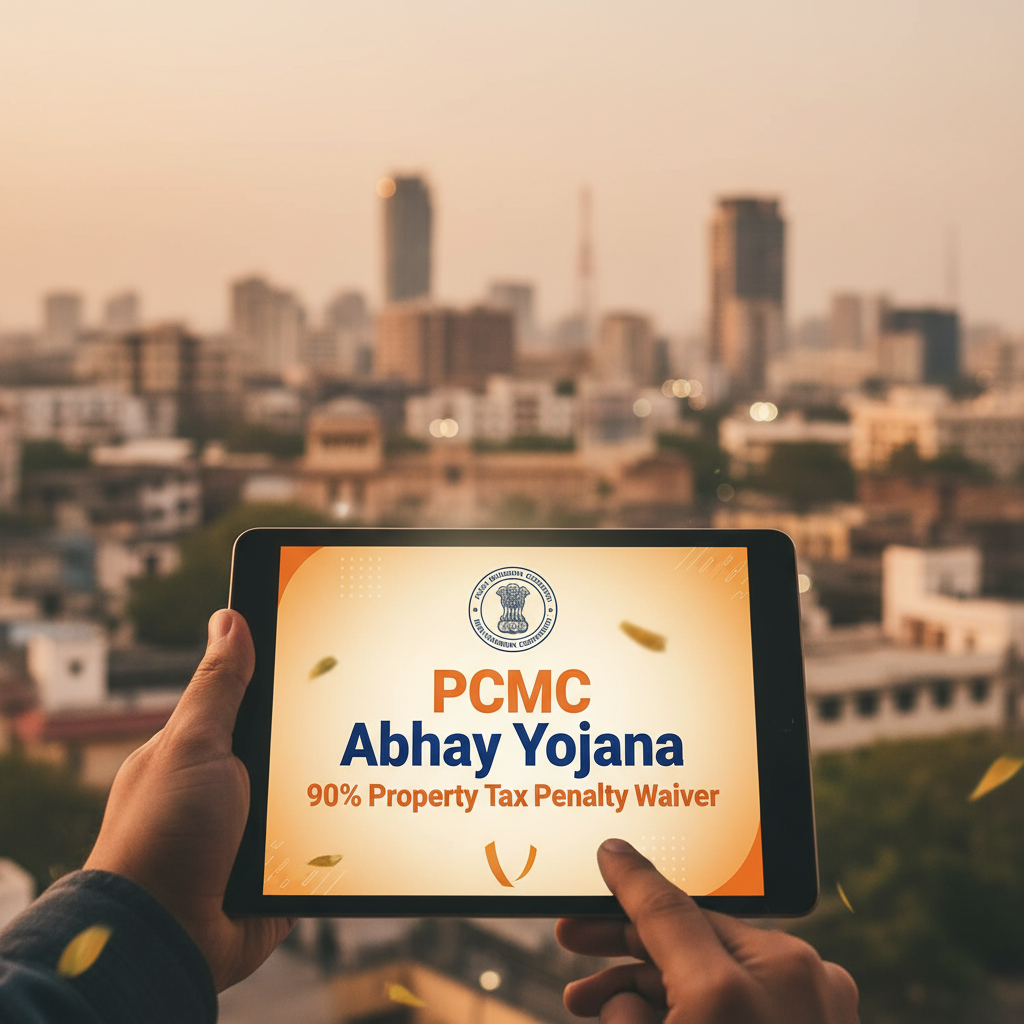
The Pune Municipal Corporation (PMC) has introduced a targeted fiscal relief programme known as the Abhay Yojana property tax waiver. Officially launched in March 2026, the initiative promises a 90 percent reduction on penalty amounts for property owners who have fallen behind on their municipal tax payments. By offering a substantial discount on overdue charges, the scheme aims to incentivise timely compliance while providing a safety net for citizens facing genuine financial hardship. The programme is part of a broader strategy to improve revenue predictability and foster a culture of responsible civic participation across the city’s diverse property base.
Understanding the Scheme: What Is Abhay Yojana?
Abhay Yojana is specifically designed to address accumulated property tax arrears that have built up over recent fiscal years. In contrast to blanket tax exemptions, this scheme focuses on waiving penalty components only, leaving the principal tax liability intact. Property owners who clear the outstanding principal within a stipulated window can benefit from a drastic cut in financial penalties, turning an otherwise escalating debt into a manageable payment. This approach not only eases the fiscal burden on defaulters but also reinforces the principle that core revenue obligations must still be honoured.
The rollout reflects a nuanced understanding of urban finance: penalties can deter compliance when they become disproportionately large, yet they also serve as a tool for maintaining municipal solvency. By calibrating relief to a fixed percentage—up to 90 percent—PMC seeks to balance immediate fiscal relief with long‑term revenue stability. Early data from pilot districts indicate that eligible households are responding positively, with many opting to regularise their status before the deadline of December 2026. 
Key Features and Waiver Structure
The architecture of the Abhay Yojana property tax waiver rests on four core pillars that together define its eligibility and impact:
- High Penalty Waiver: Up to 90 percent of accrued penalty charges can be forgiven for qualifying applicants.
- Principal Tax Clearance Requirement: The waiver is granted only after the applicant settles the full principal amount of the tax due.
- Dual Applicability: Both residential and commercial properties within the PMC jurisdiction are eligible, provided they meet the defined criteria.
- Retroactive Scope: The scheme covers dues accrued up to the fiscal year 2025, allowing owners of older arrears to benefit from the relief.
These features are reinforced by a transparent application window that runs from 1 March 2026 to 31 December 2026. Applications are processed within 15 working days, after which the approved applicant must remit the cleared principal within 30 days. Successful settlement triggers a final waiver confirmation within five working days, ensuring that the financial benefit is realised promptly and predictably.
Eligibility Requirements and Application Process
To qualify for the Abhay Yojana property tax waiver, property owners must satisfy a clear set of conditions that safeguard against misuse and ensure equitable distribution of relief:
- The property must be situated within the Pune Municipal Corporation limits.
- Outstanding tax dues must not exceed INR 5 lakh; properties above this threshold are excluded.
- Applicants must not have received a similar penalty waiver in the preceding two fiscal years.
- A formal application accompanied by supporting documents—such as title deeds, tax payment history, and identity proof—must be submitted.
Prospective applicants have the flexibility to apply either online or offline. The online route involves logging into the official PMC portal (https://www.pune.gov.in) and navigating to the “Abhay Yojana” section, where an interactive form guides users through each required field. Offline applicants can visit any regional office, collect the printed form, and submit it along with photocopies of the necessary documents. The reviewing authority conducts a verification check, typically completing the assessment within 15 working days of submission.
Once approved, the applicant receives an official directive outlining the exact amount of principal tax that must be cleared. Payment must be made within 30 days of approval, after which the waiver is formally recorded and the penalty component is removed from the property’s tax ledger. Detailed instructions and downloadable forms are available at the PMC’s dedicated Abhay Yojana page (https://www.pmunc.gov.in/abhay-yojana).
Financial and Civic Impacts of the Waiver
The implementation of the Abhay Yojana property tax waiver carries significant implications for both municipal finances and citizen welfare. From a fiscal perspective, the immediate revenue loss due to the penalty waiver is offset by an anticipated increase in overall tax compliance. Historical evidence from similar schemes in other Indian cities suggests that when penalties are perceived as fair and conditional, defaulting rates decline, ultimately stabilising long‑term revenue streams.
For citizens, the most tangible benefit is a reduction in financial stress. By forgiving up to 90 percent of penalty accrued over several years, the scheme enables property owners—especially low‑ and middle‑income households—to regain financial footing and allocate resources toward essential expenditures such as education, healthcare, or small‑business operations. Moreover, the streamlined application process reduces bureaucratic friction, making it easier for residents to regularise their tax status without lengthy court battles or costly legal interventions.
On a civic level, the waiver reinforces the social contract between the municipal government and its taxpayers. It signals that the administration recognises genuine hardships while still upholding the principle that taxes must be paid. This balanced approach is expected to cultivate higher levels of voluntary compliance, improve public trust, and ultimately contribute to more efficient planning and delivery of services such as waste management, street lighting, and infrastructure maintenance.
Expert Insights and Future Outlook
Urban development specialists and economists have weighed in on the potential of the Abhay Yojana property tax waiver to reshape municipal fiscal dynamics. Dr. Swati Deshmukh, an economist at the University of Pune, notes that “when citizens perceive that the administration is willing to offer targeted relief for genuine hardships, they are more likely to engage positively with tax obligations.” Her research underscores that conditional waivers can serve as powerful leverages for improving revenue predictability without compromising fiscal health.
Similarly, urban planners highlight that the scheme could act as a catalyst for broader reforms in property taxation, encouraging the adoption of technology‑driven payment platforms and real‑time arrears monitoring. If the pilot phase demonstrates measurable improvements in compliance and revenue stability, PMC may consider expanding the waiver to cover ancillary dues such as water and electricity charges, thereby creating a more comprehensive relief framework.
Looking ahead, the corporation has pledged to conduct a rigorous post‑implementation review after the first fiscal cycle. Key performance indicators—including the number of applications received, the proportion of successful waivers, and the subsequent change in arrears rates—will inform future policy adjustments. Stakeholder feedback, gathered through public consultations and digital surveys, will also shape the evolution of the programme, ensuring it remains responsive to emerging economic realities.
Practical Tips for Applicants
For property owners contemplating an application under the Abhay Yojana property tax waiver, several best‑practice recommendations can maximise the chances of a smooth approval:
- Gather Documentation Early: Assemble title deeds, previous tax payment receipts, and identity proof well before the application window opens.
- Check Penalty Caps: Verify that the accumulated penalty on your property does not exceed the scheme’s eligibility threshold.
- Use the Online Portal: The digital route minimizes processing delays and provides instant acknowledgment of submission.
- Monitor Deadlines: Submit applications as soon as possible; early filings often receive faster reviews.
- Pay Principal Promptly: Ensure that the principal tax amount is transferred within 30 days of approval to avoid forfeiture of the waiver.
Applicants are also encouraged to consult the PMC’s “Helpdesk for Taxpayers” (https://helpdesk.pune.gov.in) for clarifications on any step of the process. By staying informed and proactive, property owners can leverage the waiver to clear their dues at a fraction of the original cost, thereby safeguarding their financial well‑being and contributing to the city’s fiscal resilience.
Stay updated with the latest Yojana schemes and government initiatives for better awareness and eligibility. For personalized guidance on accessing these benefits, reach out to us.