


Overview of PM Kisan Yojana
Pradhan Mantri Kisan Samman Nidhi (PM‑Kisan) is a flagship welfare programme of the Government of India that provides a direct cash transfer of ₹6,000 per year to eligible small and marginal farmer families. The amount is distributed in three equal instalments of ₹2,000 each, typically every four months, to smooth agricultural income and reduce reliance on informal credit. Launched in December 2019, the scheme has already covered over 120 million beneficiaries across the country, making it one of the world’s largest cash‑transfer initiatives. The programme is designed to meet day‑to‑day expenses such as seeds, fertilizers, farm labour and household needs, thereby bolstering farm productivity and rural livelihoods.
Officially, the scheme aims to supplement the income of farm households, improve credit discipline, and encourage investment in agricultural inputs. By delivering funds directly to bank accounts linked to Aadhaar, the initiative minimises leakage and ensures that assistance reaches the intended beneficiaries without intermediaries. The official portal (pmkisan.gov.in) provides a dashboard where farmers can track disbursements, download receipts and lodge grievances. For a broader understanding of the scheme’s design, see the detailed entry on Wikipedia.
22nd Instalment Release Timeline
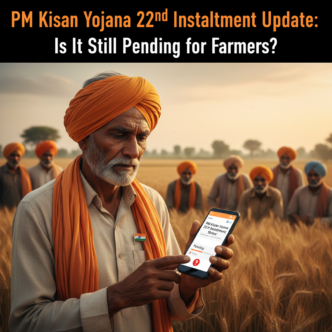
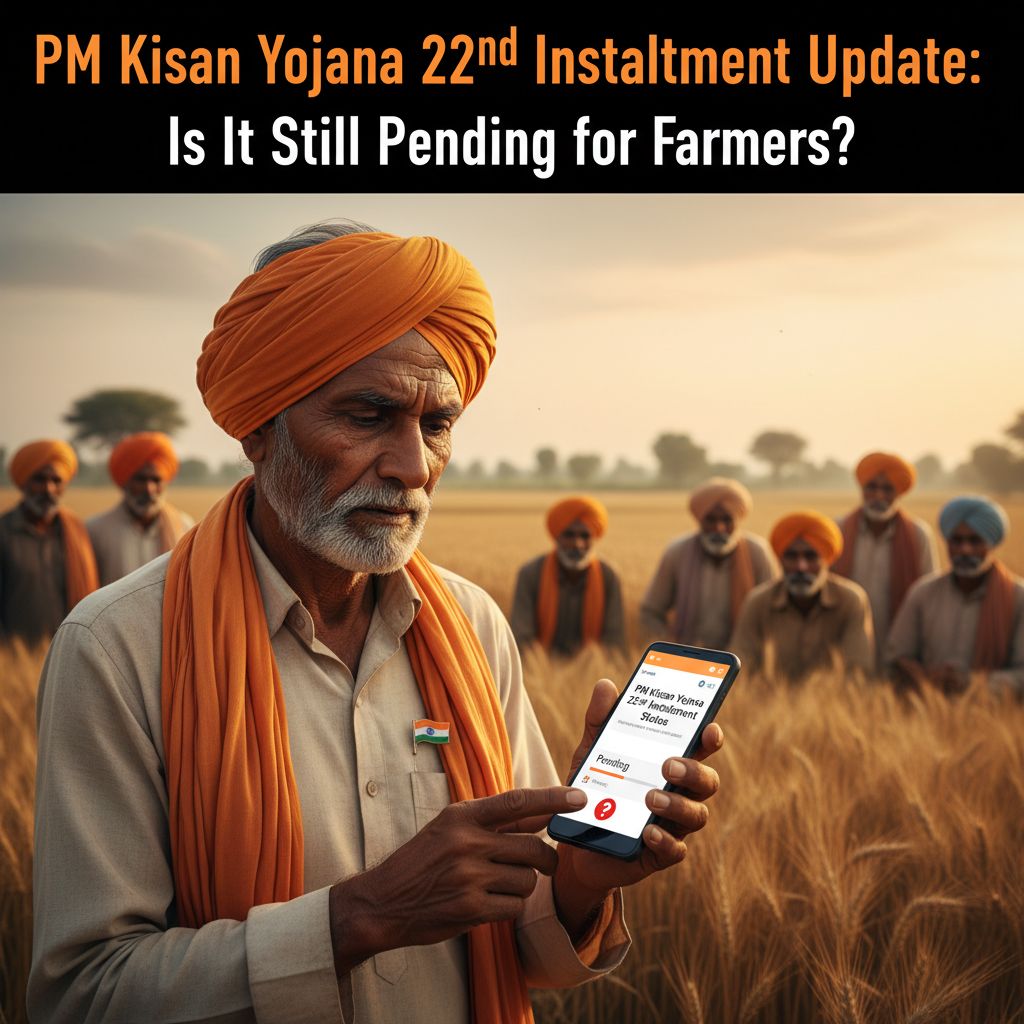
The 22nd instalment of PM‑Kisan marks the second payment cycle of the 2024‑25 fiscal year, scheduled for release after the first instalment of the subsequent 2025‑26 financial year. Historically, instalments are rolled out in a staggered fashion: the first instalment covers April‑July, the second August‑November, and the third December‑March. In August 2025, the Ministry of Agriculture and Farmers’ Welfare announced that the 21st instalment would be credited by the end of September, and the 22nd instalment would follow in early December 2025. However, as of early February 2026, many farmer groups in states such as Punjab, Madhya Pradesh and Odisha have reported that the funds have not yet appeared in their accounts, sparking widespread concern and a flurry of queries on social media. 
Official communications from the Ministry indicate that the 22nd instalment should be triggered automatically once the verification of beneficiary data for the previous cycle is completed. The delay, however, is not uniform across all states; while some have credited the instalment ahead of schedule, others are still pending due to procedural bottlenecks. The Ministry has pledged that all pending payments will be cleared before the end of the fiscal year in March 2026, but the exact timeline remains subject to state‑level implementation challenges.
Reasons Behind the Delay
Multiple factors have been cited for the lag in releasing the 22nd instalment. First, the verification of beneficiary databases requires cross‑checking land‑record certificates, Aadhaar numbers and linked bank details. In several states, outdated land‑records or mismatches between Aadhaar and bank information have necessitated manual re‑verification, slowing the pipeline. Second, technical glitches in the electronic funds transfer (EFT) gateway used by the National Payments Corporation of India (NPCI) have intermittently disrupted the seamless crediting of amounts to farmer bank accounts. Third, state‑level audits of land‑ownership documents have identified pending documentary submissions, especially in regions where tenancy arrangements are prevalent but not yet formalised. Finally, occasional delays in the release of state‑wise fund allocations from the central treasury have added to the overall lag.
To address these issues, the Ministry has issued an advisory urging all state agriculture departments to expedite data validation, update Aadhaar‑bank linkages and deploy additional technical support staff to monitor transfers in real time. A special review meeting is slated for the first week of March 2026, where senior officials will assess the progress of pending instalments and formulate a corrective action plan to prevent recurrence.
Eligibility Criteria and Application Process
Eligibility for PM‑Kisan revolves around land‑holding size. A family is considered eligible if it owns cultivable land up to a ceiling of two hectares. The scheme is inclusive of all farmer families regardless of caste, creed, religion or region, provided they meet the land‑holding criterion. Additionally, families classified as small or marginal farmers under the Ministry’s definition are also covered. Applicants must submit an online or offline application that includes an Aadhaar‑linked bank account number, a self‑declaration of eligibility, and documentary proof of land ownership (such as a mutation register or land‑record certificate). Once the details are verified by the local agriculture office, the benefit is transferred directly to the beneficiary’s bank account via the NPCI platform (NPCI).
For those unsure about their eligibility, the official PM‑Kisan portal offers an eligibility checker tool. Moreover, the portal provides step‑by‑step guidance on uploading documents, linking bank accounts and tracking payment status. Farmers encountering issues can approach the nearest Krishi Vigyan Kendra (KVK) or the district agriculture office for assistance.
Impact on Rural Incomes and Farmer Community
Recent surveys conducted by the Indian Council for Research on International Economic Relations (ICRIER) highlight the positive impact of timely PM‑Kisan instalments on rural incomes. The study reveals that over 70 % of beneficiary households reported an increase in cash flow after receiving each instalment, which they predominantly channelled towards agricultural inputs such as seeds, fertilisers and pesticide. A significant portion also used the funds for education and health expenses, thereby improving human development indicators in farming families. Additionally, the scheme has reduced dependence on high‑interest informal loans; beneficiaries cited a decline in the need to borrow from money‑lenders, leading to better credit discipline.
However, thebenefits are contingent upon punctual disbursement. Delays in instalment releases have, in some cases, eroded farmer confidence and heightened anxiety about meeting immediate agricultural expenses. Community leaders emphasize that a reliable payment schedule is essential to sustain the socio‑economic upliftment that PM‑Kisan promises. Moreover, the scheme has spurred greater digital literacy among farmers, as many now regularly check their bank statements and use the PM‑Kisan mobile application to stay abreast of disbursement dates.
Government Response and Action Plan
In light of the reported delays, the Ministry of Agriculture and Farmers’ Welfare released an advisory on 30 January 2026, directing all state agriculture departments to expedite verification of beneficiary data and streamline the electronic transfer process. The advisory recommends the deployment of additional technical support teams to monitor real‑time fund flows and to resolve any technical bottlenecks in the NPCI gateway. A high‑level review meeting is scheduled for the first week of March 2026, where officials will evaluate the status of pending instalments across states and outline corrective measures to ensure that all arrears are cleared before the end of the fiscal year.
The Ministry has also announced plans to integrate advanced data analytics into the verification workflow, aiming to reduce manual checks and accelerate the clearance of pending payments. By doing so, the government hopes to reinforce the credibility of the PM‑Kisan scheme and safeguard the livelihoods of millions of small and marginal farmers who rely on these instalments for their agricultural and household needs.
Steps Farmers Can Take to Resolve Delays
Farmers who have not yet received the 22nd instalment are advised to undertake a series of proactive measures. First, they should verify that their Aadhaar and bank details are up‑to‑date on the PM‑Kisan portal; any discrepancy can be rectified by submitting a request for correction through the portal’s “Update Details” feature. Second, they must ensure that all required land‑record documents are in order and have been uploaded to the respective state agriculture office. Where documents are missing, farmers can approach their local KVK for guidance on obtaining duplicate certificates. Third, raising a grievance through the portal’s dedicated helpline or via the toll‑free number (1800‑11‑2333) can expedite the attention of the concerned department.
- Check payment status regularly on pmkisan.gov.in.
- Update Aadhaar‑bank linkage as soon as any change occurs.
- Contact KVKs for assistance with document verification.
- Use the grievance redressal channel to report pending instalments.
Future Outlook and Upcoming Instalments
Looking ahead, the Ministry has confirmed that the 23rd instalment is scheduled for release in July 2026, contingent upon the successful completion of the verification cycle for the 2025‑26 fiscal year. The government has expressed confidence that the corrective actions taken after the 22nd instalment delay will streamline the payment process and prevent further slippage. Stakeholders, including farmer organisations and state officials, remain vigilant and are calling for greater transparency in the rollout schedule to maintain trust among the farming community.
Meanwhile, the PM‑Kisan mobile application continues to serve as a vital tool for real‑time notifications about instalment releases, eligibility updates and grievance status. By leveraging digital platforms and strengthening state‑level coordination, the scheme is poised to enhance its efficiency and reach, ensuring that India’s agrarian backbone receives the financial support it needs to thrive.
Stay updated with the latest Yojana schemes and government initiatives for better awareness and eligibility. For personalized guidance on accessing these benefits, reach out to us.