


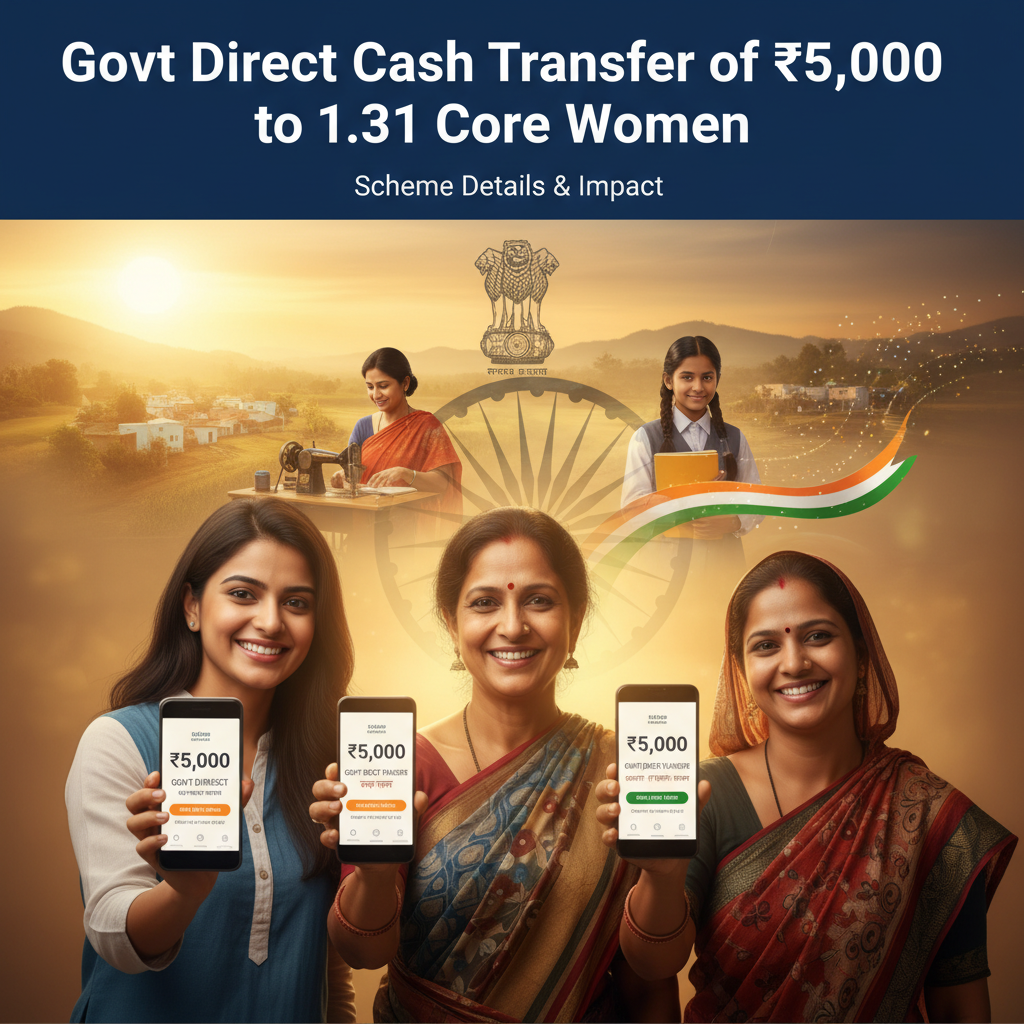
Overview of the Direct Cash Transfer Scheme to Women
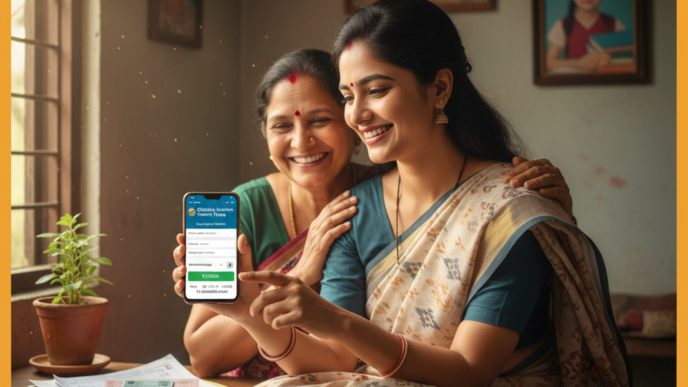
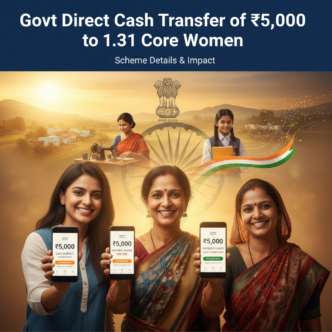
The central government has announced a targeted welfare initiative that will credit ₹5,000 directly into the bank accounts of over 1.31 crore women across India. Dubbed the ₹5,000 cash transfer women scheme, the programme was unveiled in the latest Union Budget and is designed to provide a modest but meaningful financial boost that can be channelled toward household expenses, education, health, or small‑scale entrepreneurship. By leveraging the existing Direct Benefit Transfer (DBT) infrastructure, the scheme seeks to ensure that every rupee reaches the intended beneficiary without leakage or intermediation.
The rollout is being coordinated by the Ministry of Women and Child Development in partnership with the Ministry of Finance, and it builds on the success of earlier cash‑transfer programmes such as the Pradhan Mantri Kisan Samman Nidhi and the PM‑Kisan Samman Nidhi. According to officials, the scheme is expected to benefit families living below the poverty line, widows, and women from marginalized communities, thereby advancing the government’s broader agenda of gender‑focused financial inclusion.
Eligibility Criteria and Application Process
Eligibility for the ₹5,000 cash transfer women scheme is strictly defined to prevent duplication with other welfare programmes. Women aged 18 to 60 who are not already covered under any other central cash‑transfer initiative are eligible. Priority is given to: 
- Families classified as Below Poverty Line (BPL) in the Socio‑Economic Caste Census (SECC).
- Widows and single‑parent households.
- Women belonging to Scheduled Castes, Scheduled Tribes, and Other Backward Classes.
- Beneficiaries of the Pradhan Mantri Jan Dhan Yojana who hold an Aadhaar‑linked bank account.
Applicants must possess a valid Aadhaar‑linked bank account to facilitate seamless credit. The application process is largely automatic: eligible women are identified through existing government databases, including the SECC and the Jan Dhan registry. However, interested individuals can also self‑register on the official scheme portal, upload residence proof, income certificates (where applicable), and a recent photograph, and track their application status in real time.
For detailed guidance on eligibility and documentation, prospective beneficiaries can refer to the Ministry of Women and Child Development website or consult the Direct Benefit Transfer portal.
Implementation Mechanism and Disbursement Details
The scheme will be implemented through the robust DBT platform, which has already demonstrated its efficiency in delivering subsidies to farmers, students, and other target groups. Once the beneficiary list is finalised, the credit of ₹5,000 will be transferred directly to the linked bank account, typically in the first month of the fiscal year. The transfer is a one‑time credit, but there are plans to explore periodic instalments in future budgets.
Key implementation steps include:
- Data sharing between the Ministry of Women and Child Development and the Ministry of Finance to identify eligible beneficiaries.
- Automatic enrollment using SECC and Jan Dhan Yojana records.
- Real‑time monitoring of credit Credits via the DBT dashboard.
- Technical safeguards to address any delays caused by system glitches, with a dedicated monitoring cell to flag and resolve issues promptly.
To mitigate the challenge of Aadhaar‑linked bank account coverage, the government is partnering with regional rural banks, cooperative credit societies, and private fintech firms to open new accounts where none exist. This outreach effort is expected to ensure that even women in remote rural pockets can receive the transfer without unnecessary hurdles.
Economic Impact and Early Case Studies
Early assessments suggest that the infusion of ₹5,000 per beneficiary will have a measurable multiplier effect on local economies, especially in rural and under‑developed regions. By providing women with a discretionary cash pool, the scheme is expected to stimulate micro‑enterprise activity, increase household savings, and enhance consumption patterns.
In Odisha, a pilot test conducted in three districts reported a 12% increase in average household savings within three months of disbursement. Beneficiaries used the funds to purchase sewing machines, invest in small‑scale dairy operations, and cover school fees for their children. Similarly, in Uttar Pradesh, women from self‑help groups reported a surge in demand for handicrafts and tailoring services, leading to modest income growth and greater financial autonomy.
Experts from the National Institute of Public Finance and Policy (NIPFP) note that while a one‑time Rs 5,000 credit alone may not trigger long‑term economic transformation, it can serve as a catalyst when paired with skill‑development programmes and access to micro‑credit. The scheme is also expected to improve health and nutrition outcomes, as women are more likely to allocate additional resources toward child immunisation, dietary diversity, and prenatal care.
Policy Rationale, Expert Opinions, and Future Outlook
The underlying policy rationale for the ₹5,000 cash transfer women scheme aligns with the government’s broader vision of gender empowerment and financial inclusion. By directly targeting women, the initiative seeks to enhance decision‑making power within households, reduce gender‑based economic disparities, and promote a more equitable distribution of financial resources.
Social sector analysts emphasise the importance of gender‑sensitive monitoring to ensure that the funds are not diverted to male household members. They also recommend integrating the scheme with existing women‑centric programmes such as the Mahila Kisan Sashaktikaran Yojana and the National Mission for Empowerment of Women, thereby creating a holistic ecosystem of support.
Economists caution that while the immediate fiscal outlay of the scheme is modest compared to overall budgetary allocations, its long‑term socioeconomic returns could be significant if coupled with complementary interventions in education, healthcare, and entrepreneurship. Plans are already underway to expand the beneficiary base in subsequent fiscal years and to pilot periodic tranches of financial assistance, potentially paving the way for a more sustained cash‑transfer model.
Overall, the ₹5,000 cash transfer women scheme represents a strategic step toward inclusive development, offering both immediate relief and a foundation for broader empowerment initiatives. As the programme rolls out nationwide, continued data collection and impact evaluation will be crucial to refine its design and maximise its benefits for women across India.
Stay updated with the latest Yojana schemes and government initiatives for better awareness and eligibility. For personalized guidance on accessing these benefits, reach out to us.