


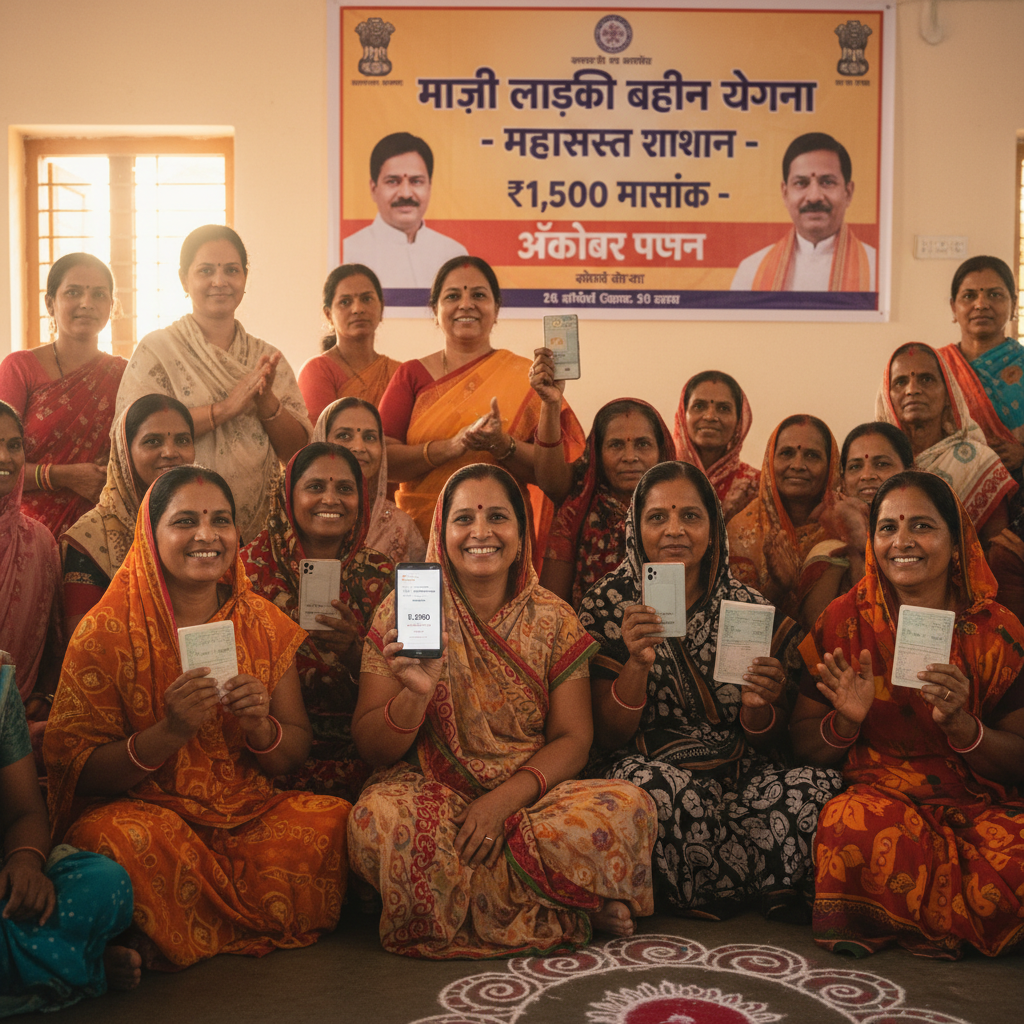
Overview of Majhi Ladki Bahin Yjona
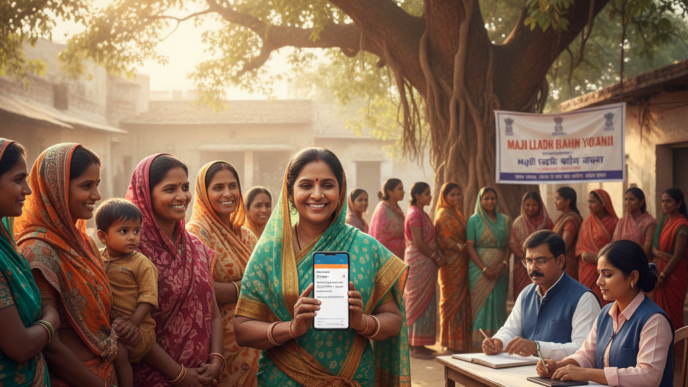
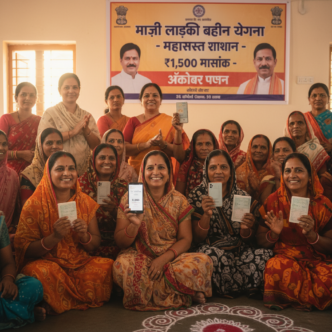
The Maharashtra government has launched the Majhi Ladki Bahin Yojana, a landmark cash‑transfer programme aimed at uplifting women from economically vulnerable households. Beginning in October 2025, eligible women will receive a steady monthly stipend of ₹1,500 directly into their bank accounts. The initiative is part of a broader state agenda to promote gender parity, alleviate poverty, and accelerate socio‑economic development across both rural and urban districts. By leveraging the Direct Benefit Transfer (DBT) architecture, the scheme seeks to minimise intermediaries, curb leakages, and ensure that financial assistance reaches the intended beneficiaries without delay.
Eligibility Criteria and Priority Groups
To enrol in the Majhi Ladki Bahin Yojana, applicants must fulfil a set of clearly defined conditions:
- Residency: Must be a resident of Maharashtra for a minimum of six months preceding the application date.
- Gender and Age: Must be a female citizen who is at least 18 years old.
- Income Threshold: Household’s annual income must not exceed ₹3 lakh, as verified by the state’s poverty‑line assessment.
- Exclusivity: The applicant should not be receiving any other direct cash‑transfer benefit from the Maharashtra government.
- Banking Linkage: Must possess a valid bank account that is linked to an Aadhaar number.
Special preference is accorded to widows, divorcees, and single mothers, reflecting the government’s focus on the most vulnerable segments of society. According to the official notification, these priority groups will be fast‑tracked during the verification stage to expedite benefit delivery. 
For a comprehensive view of the eligibility framework, interested parties can refer to the Maharashtra Social Welfare Portal, which hosts detailed guideline documents and FAQs.
Application Process and Technological Interface
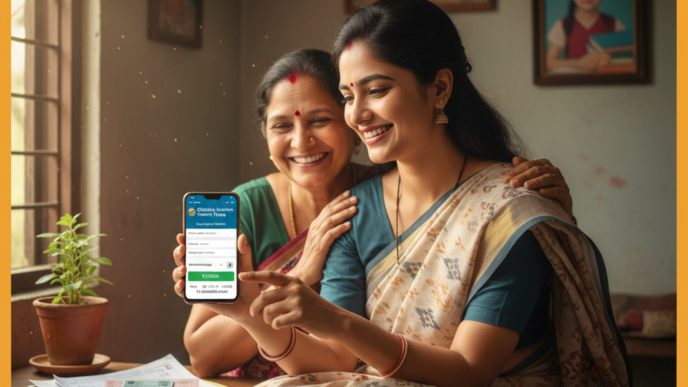
The application workflow has been engineered for maximum accessibility, especially for women residing in remote villages. Applicants can initiate the process through either of two channels:
- Online Submission: The state‑run Maharashtra Social Welfare Portal allows candidates to upload requisite documents, track application status, and receive instant acknowledgements.
- Offline Visits: Women may also approach the nearest District Social Welfare Office, where staff assist in completing the enrollment formalities.
Required documentation includes a recent passport‑size photograph, a proof‑of‑residence certificate, an income verification letter, and a copy of the bank account details linked to Aadhaar. Once the documents are uploaded, applicants receive a unique reference number and an acknowledgment receipt. The verification phase typically spans up to 15 working days; upon successful scrutiny, the inaugural ₹1,500 tranche is credited directly to the beneficiary’s bank account.
In rural locales, the scheme is disseminated through village panchayats and block development offices. Community volunteers conduct door‑to‑door awareness drives, guiding prospective applicants through the digital submission steps and helping them navigate the portal’s interface.
Funding, Budgetary Allocation, and Direct Benefit Transfer Mechanism
The initial phase of the Majhi Ladki Bahin Yojana is backed by a substantial financial allocation of ₹1,200 crore, earmarked to support approximately 800,000 women beneficiaries within the first fiscal year. This funding is sourced from the state’s fiscal surplus and is strictly designated for direct cash transfers, thereby keeping administrative overhead to a minimum. By integrating the DBT platform, the government ensures that each rupee reaches the intended recipient’s account without diversion, mirroring best practices observed in other Indian welfare schemes such as the Pradhan Mantri Kisan Samman Nidhi.
State Finance Minister Ajit Pawar highlighted during the launch that the programme exemplifies Maharashtra’s commitment to fiscal prudence and social equity. He underscored that the scheme’s scalability will be assessed after the first year, with potential enhancements to the stipend amount or beneficiary count based on impact evaluations.
For stakeholders interested in the technical underpinnings of DBT, the DBT India portal provides an in‑depth look at the architecture that underpins transparent cash‑transfer initiatives across the country.
Early Impact Assessments and Voices from the Ground
Pilot implementations in districts such as Nanded, Hingoli, and Satara have already yielded encouraging outcomes. Beneficiaries report heightened confidence in managing household expenditures, improved ability to fund children’s education, and increased participation in local decision‑making forums. A recent survey conducted by the Maharashtra Institute of Development Studies revealed that 68% of respondents experienced a measurable uplift in their families’ nutritional intake, while 54% noted a reduction in compulsive borrowing from informal lenders.
“Receiving ₹1,500 each month has transformed my ability to plan for my daughters’ schooling,” shares Ranjana Deshmukh, a farmer’s wife from Nanded. “It has also empowered me to contribute to community meetings, something I never imagined before.”
These early anecdotes align with broader gender‑empowerment objectives, echoing findings from global studies that cash‑transfer programmes can act as catalysts for women’s economic independence and social agency. The state government plans to publish a comprehensive impact report at the end of the fiscal year, detailing quantitative metrics and qualitative case studies.
Challenges, Mitigation Strategies, and Technological Innovations
Despite its promising design, the Majhi Ladki Bahin Yojana confronts several implementation hurdles. Key among them are accurate beneficiary identification, prevention of duplicate registrations, and ensuring banking accessibility in far‑flung hamlets where financial institutions are scarce. To address these concerns, the state has forged partnerships with fintech firms to roll out mobile‑based banking solutions that enable beneficiaries to receive transfers via USSD codes, thereby bypassing the need for physical bank branches.
Additionally, a robust biometric verification system, integrated with the Aadhaar database, is being piloted to curb duplicate applications and fortify the integrity of the enrolment process. Awareness campaigns conducted through regional radio stations, social‑media micro‑targeting, and community‑level roadshows have proven effective in reaching illiterate and digitally‑unaware populations.
These mitigation measures are documented in a detailed guideline released by the Department of Social Justice, which can be accessed here. Continuous monitoring and feedback loops with NGOs, self‑help groups, and local panchayats are also integral to refining the scheme’s outreach and operational efficiency.
Future Roadmap and Potential Expansion
Looking ahead, the Maharashtra government has articulated a clear roadmap for the Majhi Ladki Bahin Yojana. After the completion of the inaugural fiscal year, an independent evaluation will assess the programme’s impact on poverty alleviation, gender equity, and fiscal sustainability. Based on the findings, policymakers may consider scaling up the monthly stipend, expanding the beneficiary cohort, or replicating the model for other vulnerable groups such as senior citizens and persons with disabilities.
Discussions are already underway to integrate the scheme with complementary initiatives like the Maharashtra Women’s Education Programme, aiming to create a synergistic ecosystem that couples financial support with educational incentives. Stakeholder engagement forums, including consultations with civil‑society organisations and academic institutions, will shape the next phase of the programme, ensuring that it remains inclusive, responsive, and future‑ready.
Stay updated with the latest Yojana schemes and government initiatives for better awareness and eligibility. For personalized guidance on accessing these benefits, reach out to us.