



Chandigarh’s Enhanced Rooftop Solar Subsidy Scheme
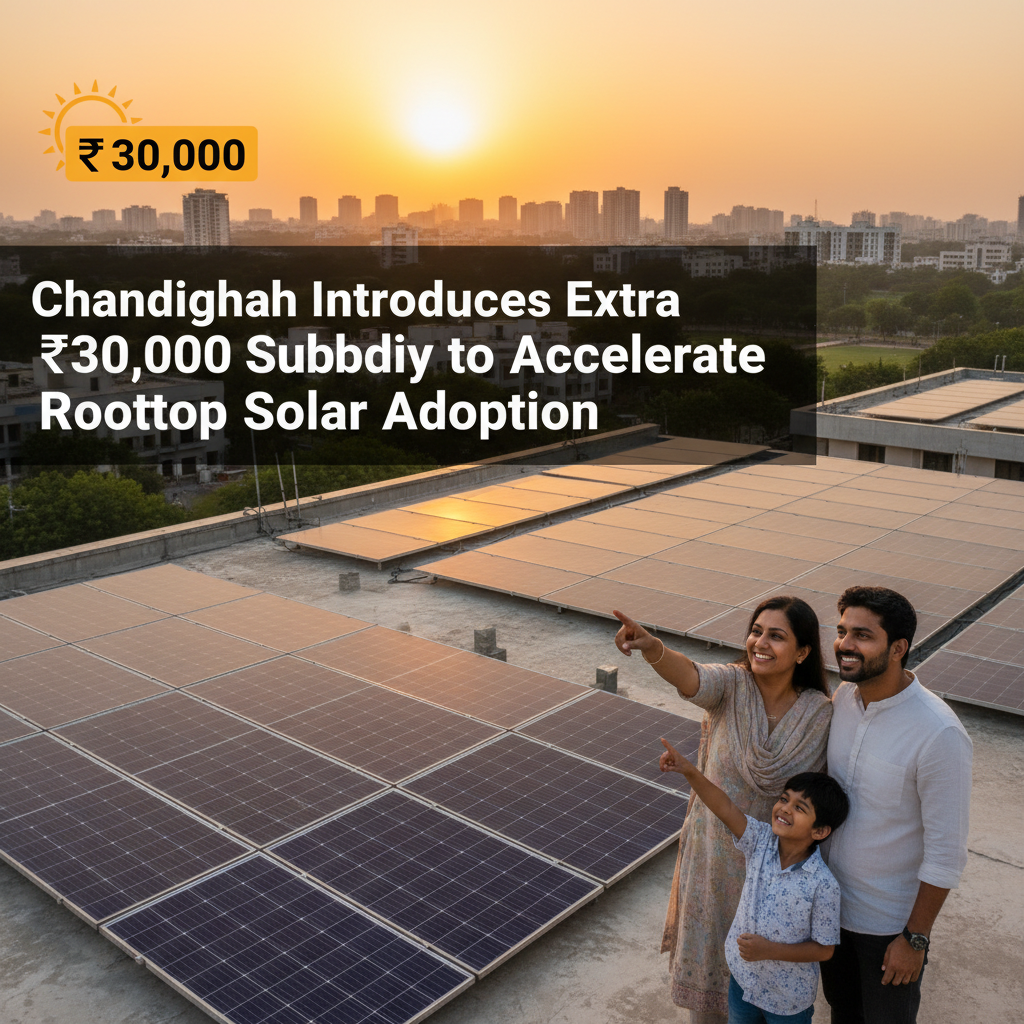
The Chandigarh administration has unveiled an additional incentive of ₹30,000 for households and commercial establishments that install rooftop solar photovoltaic (PV) systems. This move is part of the union territory’s broader strategy to accelerate clean energy adoption, reduce dependence on conventional power sources, and meet its ambitious target of 500 MW of solar capacity by 2027. By layering a state‑specific subsidy on top of the central government’s solar roof scheme, the administration aims to lower the upfront cost barrier that has traditionally deterred many potential adopters. The initiative underscores Chandigarh’s commitment to becoming a model green city and aligns with national objectives of sustainable development. Residents can expect tangible reductions in electricity bills, while the city moves closer to its climate‑resilient infrastructure goals.
Key Details of the Extra ₹30,000 Subsidy
Under the enhanced program, the maximum subsidy amount per approved system is capped at ₹30,000. The benefit is available to both residential and commercial installations, provided the capacity does not exceed 10 kW per unit. In addition to the financial grant, eligible participants can also claim accelerated depreciation benefits under the Income Tax Act, further improving the economic attractiveness of solar projects. The subsidy is designed to be disbursed after successful installation and verification, ensuring that funds are allocated only to genuinely completed projects. This approach helps maintain transparency and prevents misuse of public funds, fostering a trustworthy environment for investors and citizens alike.
- Maximum subsidy amount: ₹30,000 per approved system.
- Applicable to both residential and commercial installations.
- Additional benefit: accelerated depreciation benefits under the Income Tax Act.
- Eligibility capped at 10 kW capacity per unit.
Eligibility and Application Process
Prospective adopters must follow a straightforward three‑step procedure to avail the subsidy. First, applicants conduct a preliminary feasibility study using the online solar calculator available on the Chandigarh Renewable Energy Agency (CREA) portal. Second, they submit a project proposal that includes detailed technical specifications and a quotation from an approved solar EPC (Engineering, Procurement, and Construction) contractor. Third, after installation is complete, they obtain a completion certificate from an accredited inspection agency and upload the document on the portal for subsidy release. The entire workflow is streamlined to be completed within 60 days, minimizing bureaucratic delays and expediting financial support to applicants. For detailed guidance, applicants can refer to the official scheme page on the CREA website here. 
Impact on Residential and Commercial Sectors
Since the initial subsidy was introduced in 2023, Chandigarh’s rooftop solar capacity has surged from 12 MW to 28 MW, reflecting growing acceptance among citizens. Industry analysts predict that the extra ₹30,000 grant could boost annual additions by 15‑20 %, accelerating the union territory’s progress toward its 500 MW target. In the residential sector, the payback period for a typical 5 kW system has been compressed from 7‑8 years to under 5 years, thanks to the combined central and state incentives. This reduction makes solar projects financially viable for middle‑income households, encouraging wider adoption. Commercial users, such as hotels and retail chains, are leveraging the subsidy to meet corporate sustainability targets and enhance their green branding, while also benefiting from lower operating costs and improved brand perception.
Policy Context and Future Outlook
The new subsidy aligns with the objectives of India’s National Solar Mission, which aims to install 100 GW of solar capacity nationwide by 2030. By integrating state‑level incentives with central schemes, Chandigarh exemplifies a cooperative federal model that can be replicated by other union territories and states seeking to accelerate clean energy transitions. Experts note that the subsidy’s timing is critical, coinciding with easing supply‑chain disruptions and stabilizing module prices, which together create a favorable environment for demand stimulation. However, they caution that financial incentives alone may not suffice without complementary measures such as streamlined permitting, robust awareness campaigns, and accessible financing for low‑income households. To address these gaps, CREA plans to launch a pilot program for battery storage integration and a low‑interest loan scheme for solar projects, further enhancing the economic viability of rooftop solar installations across the city.
Looking ahead, the administration envisions a comprehensive ecosystem where rooftop solar, energy storage, and smart grid technologies converge to deliver reliable, clean power round the clock. Stakeholders, including private investors, EPC contractors, and civil society groups, are optimistic that continued policy focus will enable Chandigarh to surpass its 500 MW target ahead of schedule, setting a benchmark for other urban centers across India. The city’s proactive stance not only contributes to national renewable energy goals but also showcases how localized incentives can drive large‑scale environmental and economic benefits. For citizens eager to participate, the pathway is now clearer, with streamlined processes, attractive financial returns, and robust governmental support creating a compelling case for solar adoption.
Stay updated with the latest Yojana schemes and government initiatives for better awareness and eligibility. For personalized guidance on accessing these benefits, reach out to us.