


Overview of Delhi Lakhpati Bitiya Yojana
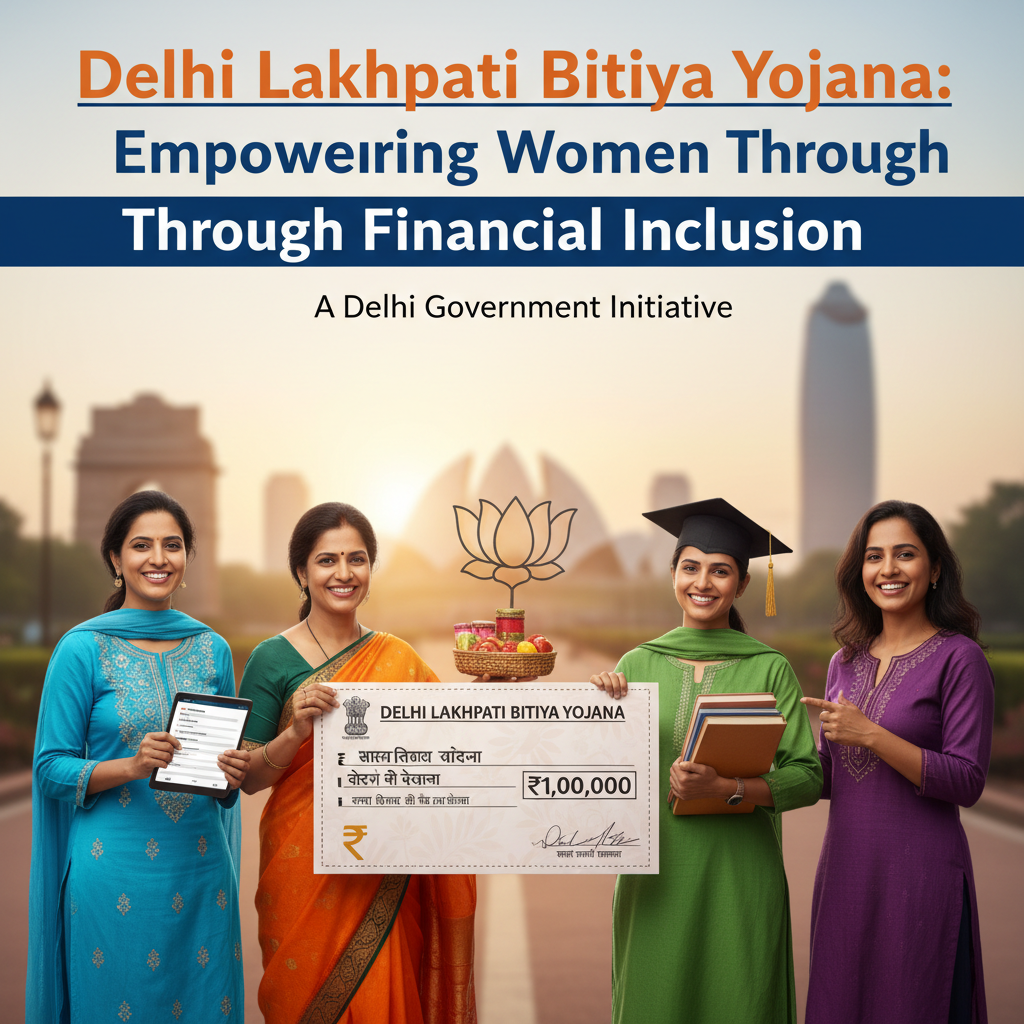
The Delhi Lakhpati Bitiya Yojana is a flagship welfare initiative launched by the Delhi Government to uplift women from economically vulnerable backgrounds. Under this scheme, eligible female beneficiaries receive a one‑time cash infusion of ₹1,00,000, which can be channelled into entrepreneurial ventures, educational pursuits, or any livelihood‑enhancing activity. The programme is part of a broader strategy to foster gender‑balanced economic development in the National Capital Territory and to reduce the gender wage gap that has persisted across urban and rural pockets of Delhi.
Objective and Vision
The primary objective of the Lakhpati Bitiya Yojana is to catalyse financial inclusion for women who traditionally face barriers to credit and capital. By providing a definitive monetary boost, the scheme aims to:
- Stimulate micro‑enterprise creation among low‑income women.
- Enable higher education and skill‑development for female heads of households.
- Reduce dependency on informal lending mechanisms that often trap beneficiaries in debt cycles.
- Promote a culture of asset building among families living below the poverty line.
At its core, the vision is to embed economic empowerment within the social fabric of Delhi, aligning with national goals of gender equality and financial inclusion. 
Key Features
Designed with simplicity and transparency in mind, the scheme offers several distinctive features:
- Direct cash transfer: A lump‑sum of ₹1,00,000 is credited directly to the beneficiary’s bank account, eliminating intermediaries.
- Eligibility focus: Priority is given to women aged 18‑45 who reside in Delhi for at least two years and belong to households earning less than ₹3 lakh annually.
- Multi‑channel application: Applicants may submit their requests through the Delhi Government Welfare Portal or at designated municipal offices, ensuring accessibility for both digital and offline users.
- Community verification: Selections are validated by local panchayat or ward committees, which cross‑check applicants against existing socio‑economic databases.
- Linkage with skill programmes: Successful recipients are encouraged to enrol in skill‑development courses offered by the Delhi Skill Development Mission, enhancing long‑term employability.
These elements collectively aim to minimise bureaucratic delays while maximising reach across the city’s diverse demographic landscape.
Eligibility Criteria
Prospective beneficiaries must satisfy a clear set of criteria to ensure that assistance reaches those most in need:
- Applicant must be a female citizen of Delhi.
- Age must fall within the 18‑45 year bracket at the time of application.
- Residency requirement: Minimum continuous residence of two years in Delhi.
- Household income threshold: Annual family income must not exceed ₹3 lakh, verified through income certificates.
- Exclusions: Women who are already regular recipients of comparable cash assistance programmes, such as the National Family Benefit Scheme, are ineligible.
These parameters are periodically reviewed by the Directorate of Women and Child Development to adapt to evolving economic conditions and to prevent duplication of benefits.
Application Process
The application journey has been streamlined to cater to both online‑savvy and offline applicants:
- Interested candidates begin by visiting the official Delhi Benefits Portal or stepping into the nearest municipal office.
- They then fill out the comprehensive application form, providing personal details, bank account information, and a set of supporting documents.
- Required documentation typically includes an Aadhaar card, residence proof (such as a utility bill), an up‑to‑date income certificate, and a recent passport‑size photograph.
- After submission, local authorities conduct a verification exercise, which may involve field visits or liaison with community leaders.
- Selected applicants receive an electronic notification, followed by a direct credit of ₹1,00,000 into their specified bank accounts, usually within 30 days of approval.
This systematic approach not only expedites fund disbursement but also builds trust in government‑delivered financial aid.
Implementation and Monitoring
Oversight of the Lakhpati Bitiya Yojana rests with the Directorate of Women and Child Development in partnership with the Finance Department. A dedicated monitoring committee conducts quarterly audits to verify that:
- Funds are credited only to verified beneficiaries.
- Utilisation aligns with the declared purpose—be it entrepreneurship, education, or health‑related expenditures.
- There is no diversion or misreporting of assistance.
The committee also publishes periodic performance dashboards, which are accessible to the public via the scheme’s official website. These dashboards display metrics such as total outlays, number of beneficiaries per district, and success stories that illustrate the scheme’s tangible impact.
Impact and Expected Outcomes
Pilot data from the first fiscal year reveal compelling outcomes:
- Over 5,000 women have launched micro‑enterprises ranging from handicrafts to food‑service outlets.
- More than 2,300 beneficiaries have enrolled in skill‑development programmes, with placement rates exceeding 65 %.
- Household financial stability surveys indicate a 30 % reduction in reliance on informal credit sources among recipients.
These early indicators suggest that the scheme is not merely a cash transfer but a catalyst for broader socio‑economic upliftment. By fostering entrepreneurship, the programme contributes to increased labour‑force participation among women, which, in turn, accords with Delhi’s economic development roadmap.
Future Prospects
Building on the encouraging pilot results, the Delhi Government has announced an expansion plan for the upcoming fiscal year:
- An additional 10,000 women across the city’s 11 districts will be targeted, with a special focus on underserved zones such as outer‑ring suburbs.
- The scheme will be integrated with the national Skill India initiative, providing concurrent training modules on digital literacy, financial management, and market access.
- Advanced data analytics will be employed to identify eligible households that have not yet applied, thereby improving outreach through community radio and social media campaigns.
These ambitions underscore a commitment to scaling the programme while preserving its core principles of transparency, inclusivity, and empowerment.
Conclusion
The Delhi Lakhpati Bitiya Yojana stands as a transformative stride toward gender‑responsive economic policy. By delivering a decisive financial injection directly to women who are often excluded from traditional banking ecosystems, the programme not only addresses immediate monetary needs but also seeds long‑term resilience and self‑sufficiency. As the scheme evolves, it promises to amplify women’s participation in Delhi’s informal and formal economies, thereby contributing to a more equitable and prosperous society.
Stay updated with the latest Yojana schemes and government initiatives for better awareness and eligibility. For personalized guidance on accessing these benefits, reach out to us.